Serving Hendersonville, TN & nearby
(615) 413-4734
Hendersonville, TN

Why Garage Door Repair Costs Depend on When Your Hendersonville Home Was Built

Most Hendersonville homes went up between 1958 and 2005, median 1990 - meaning older doors without insulation. See what that means for local repair costs.

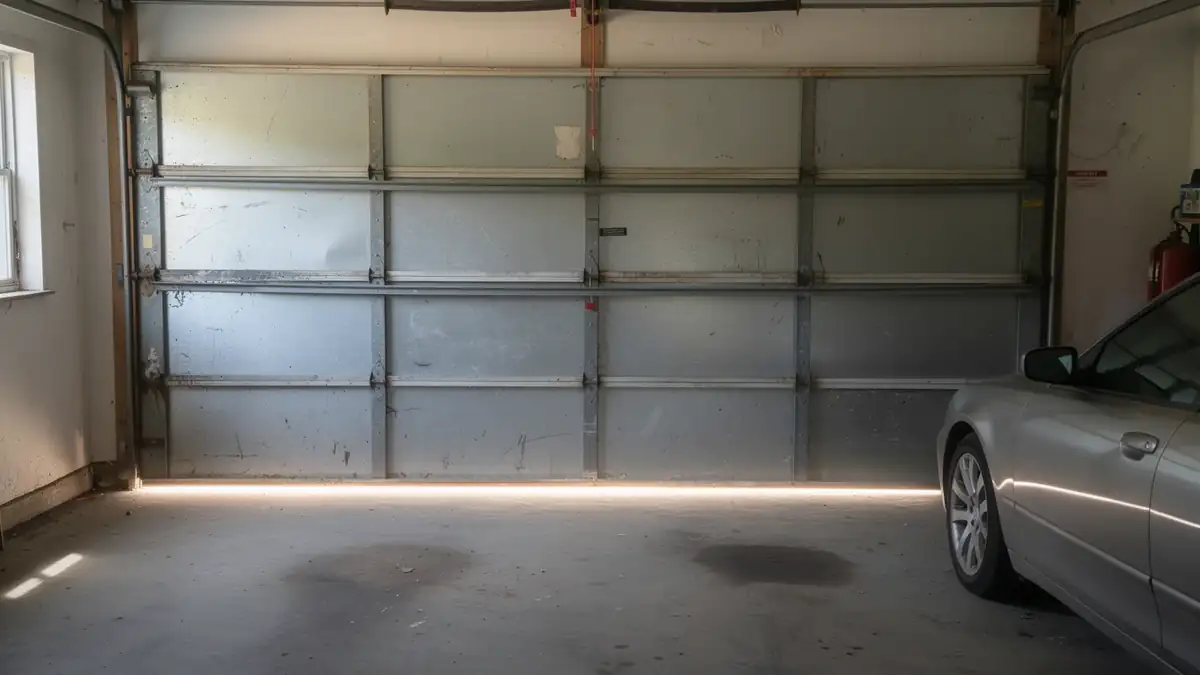
The garage door is closed with a gap at the bottom, and a car is parked inside.

The Cost of This Job

What a job costs here has a lot to do with when the house went up. Across the service area the typical home dates to 1990, with the build-out running from 1958 through 2005. A door from the early end of that range is a different animal from one installed in the late 90s - different track hardware, different panel thickness, sometimes a non-standard width that nobody stocks locally. If your door is original to a house from the 1958-1970 stretch, a repair can mean waiting on a part instead of a same-week fix, because that hardware isn't common anymore. On the newer end of the range, parts are easier to find and a repair is usually the cheaper path. We'll always tell you straight when a door's age and condition mean replacement makes more financial sense than another repair - patching a 1960s door with parts pulled from two different eras usually costs more over time than starting fresh. We don't guess at a number without seeing the door and the opener, because the spread between a simple spring swap and a full replacement is wide, and guessing a price over the phone does nobody any favors.

What Local Conditions Do

Hendersonville sits in a cold-moderate climate band, and that matters more for garage doors than people expect. Steel contracts in cold air, and on an uninsulated door - which is common on homes from the earlier end of the 1958-2005 build range - that contraction shows up as a loud pop or a track that binds on the first truly cold morning of the year. Moisture is the other half of it. A garage with no insulation runs closer to outdoor temperature, so humid air condenses on the inside of the panel and on metal hardware, which speeds up rust on rollers, hinges, and the bottom of the track. None of this is dramatic weather - no named storms, no flood events we can point to - it's just steady seasonal cycling wearing on hardware that was never built with insulation in mind. If your door was installed before insulated cores were standard, that cycling is working on bare steel every winter, not on a sealed panel. That's the piece that gets missed: it's not one bad night, it's forty winters of the same small temperature swing.

Checking It Yourself

Before you call anyone, a few minutes in the garage will tell you a lot. Open the door and look at the panel edge - a cut cross-section or a service hatch will show you whether there's a foam core inside or just bare steel with a liner skin. If your house falls in the older half of the 1958-2005 range, bare steel is common. Next, run a hand along the weatherstripping at the bottom and sides; if it's cracked, flattened, or missing chunks, cold air and moisture are getting past it regardless of what's inside the panel. Check the springs too - a torsion spring mounted above the door on a single shaft is standard on newer installs, while some older setups still use side-mounted extension springs, which behave differently under stress and age. Listen for grinding or popping when the door moves on a cold morning; that's usually contraction working against stiff or rusted rollers, not a sign the opener is failing. One honest limit here: insulation retrofitting a panel that's already decades old rarely makes sense on its own. If the core's gone and the steel is original, you're usually better off pricing a new door than trying to insulate the one you have.

The Problem

The real issue in this area isn't poor installation or bad luck - it's timing. A big share of the roughly 34,671 owner-occupied houses across this service area went up before insulated garage doors were the default choice, somewhere in that 1958-2005 window with the midpoint sitting at 1990. Doors built on the earlier side of that span were made for a time before insulation rules shaped what went into a standard door, so they're bare steel panels doing a cold-climate job they were never designed for. That shows up as higher heating bills if the garage is attached, condensation dripping onto parked cars, and hardware that ages faster than it should. It's not a defect and it's not something the original builder did wrong - it's just a door built to a different standard than what's common now. The fix isn't always a full replacement; sometimes new weatherstripping and attention to the springs buys years. But once the steel itself is the problem, no amount of sealing closes that gap. Knowing which category your door falls into - sealing issue versus steel issue - is the first real decision point, and it comes straight from how old the house is.
How it works

From “it’s stuck” to “it’s fixed”

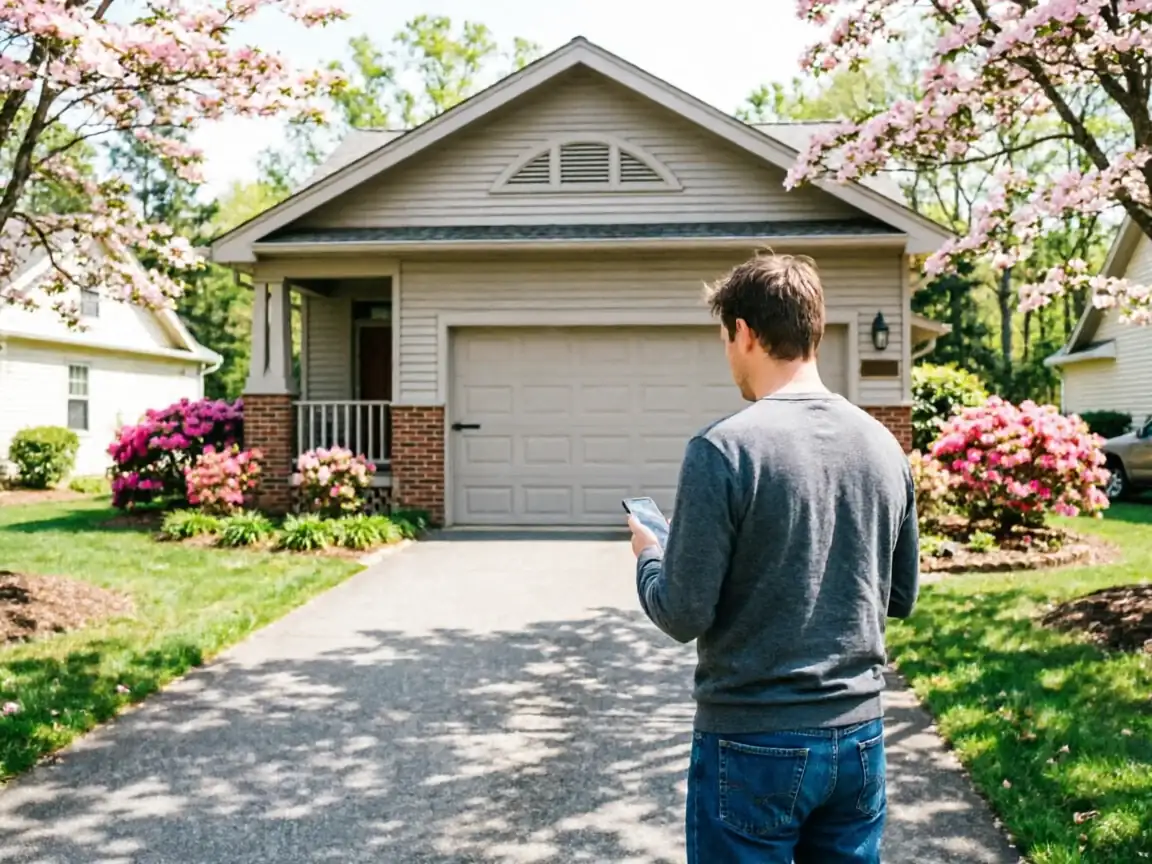
A man stands in a driveway looking at his phone, facing a house with a garage.
1

Tell us what’s wrong

Describe the symptom - won’t open, loud bang, opener runs but the door won’t move.

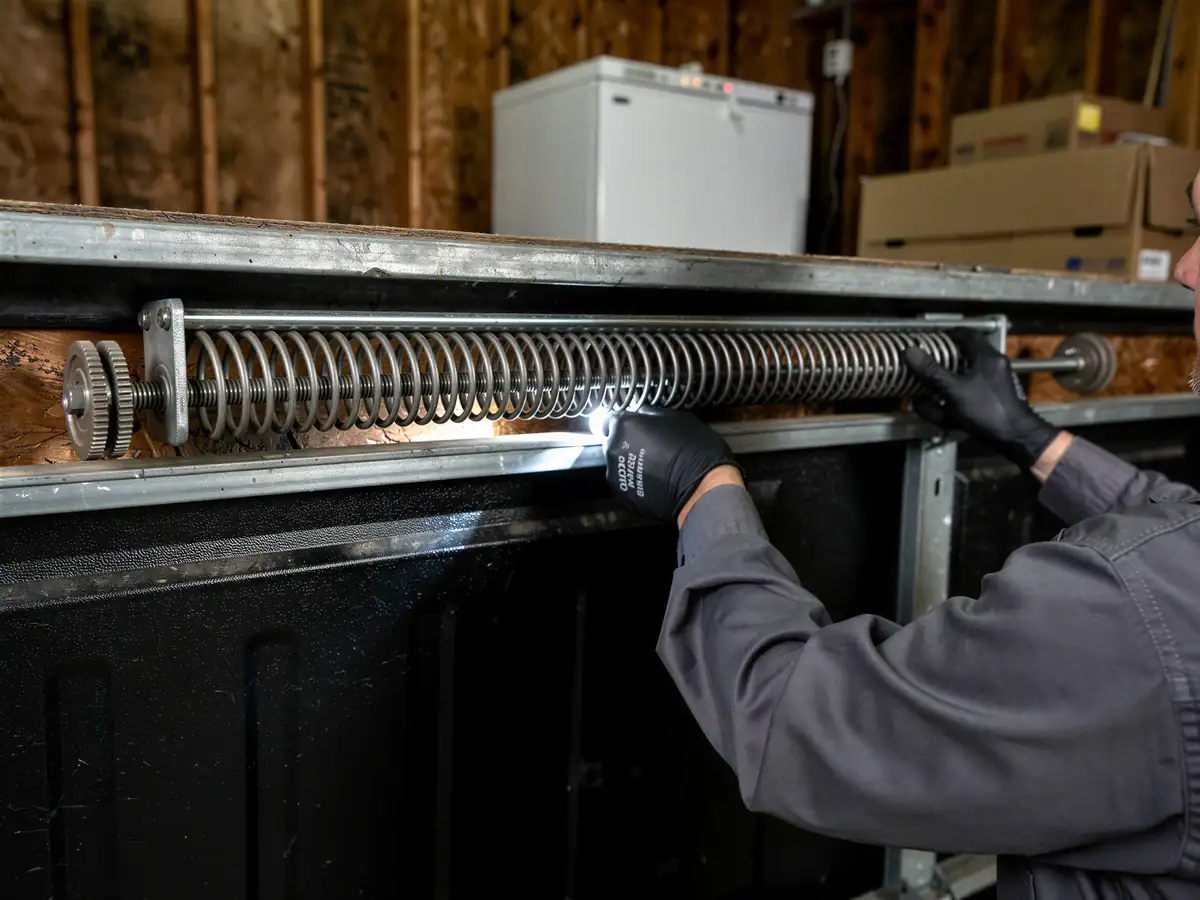
A technician shines a flashlight on a garage door torsion spring.
2

On-site diagnosis

A technician tests the door under power and by hand and finds what actually failed.

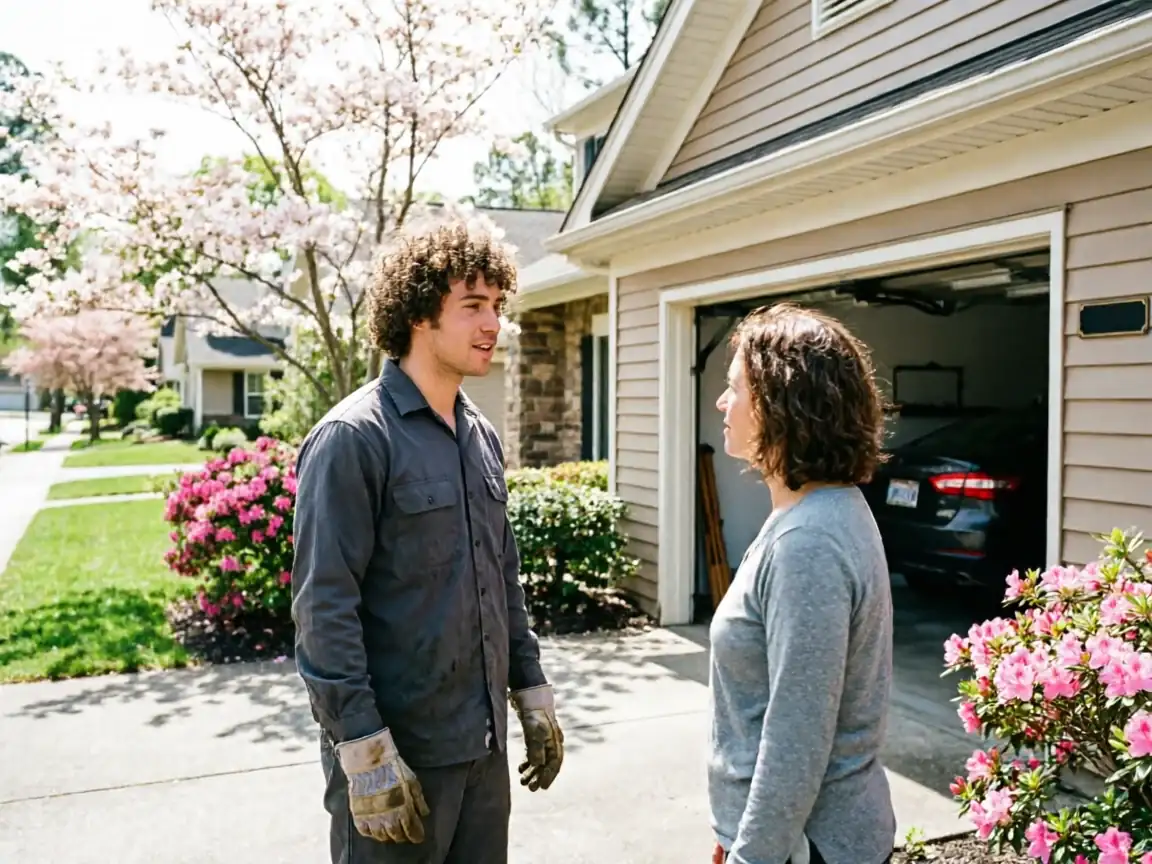
A technician wearing work gloves talks to a woman in front of an open garage.
3

Clear, up-front plan

You get the fix that’s needed and what drives the cost - before any work starts.

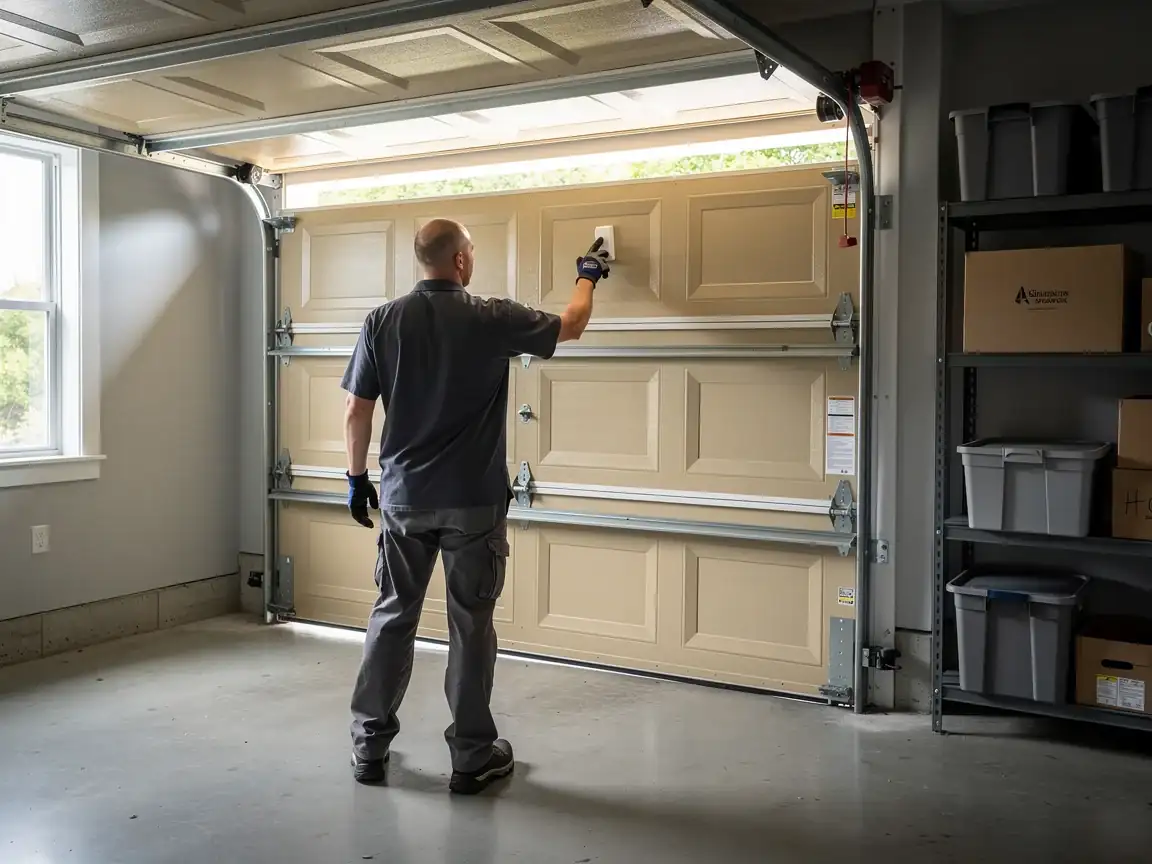
A technician in a gray uniform is pressing a button on a beige garage door.
4

Repaired & tested

The repair is done, the door is set true and tested, and the work area left clean.

Not sure which repair your door needs in Hendersonville, TN? Describe what it’s doing - every job starts with a diagnosis.

How we work

What to expect

Diagnosis first

Every visit starts by finding what actually failed - not a pre-written parts list.

The right part for the door

Springs and openers matched to the door’s weight and age, so the fix holds up.

Straight answers

When a repair makes more sense than a replacement - or the reverse - you hear it plainly.

Clean, careful work

Tension released safely, hardware set true, the door tested under power before we leave.

What we do

Garage Door Services

Repair and installation work for Hendersonville homes and businesses.

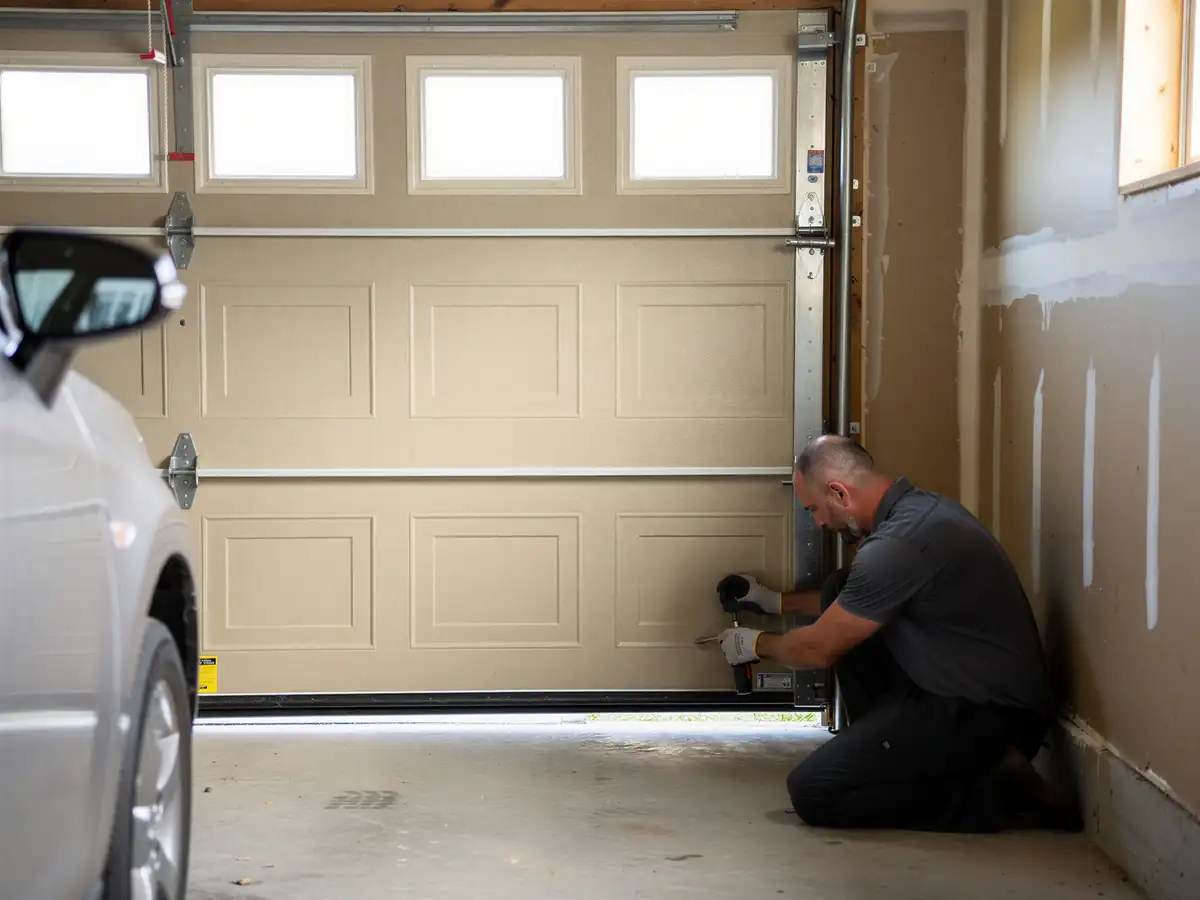
A technician kneels to work on the bottom panel of a beige garage door.

Garage Door Repair

Garage door repair for Hendersonville homes built mostly in the 1980s and 90s, where original hardware and cold snaps wear out springs and openers early.

Learn more
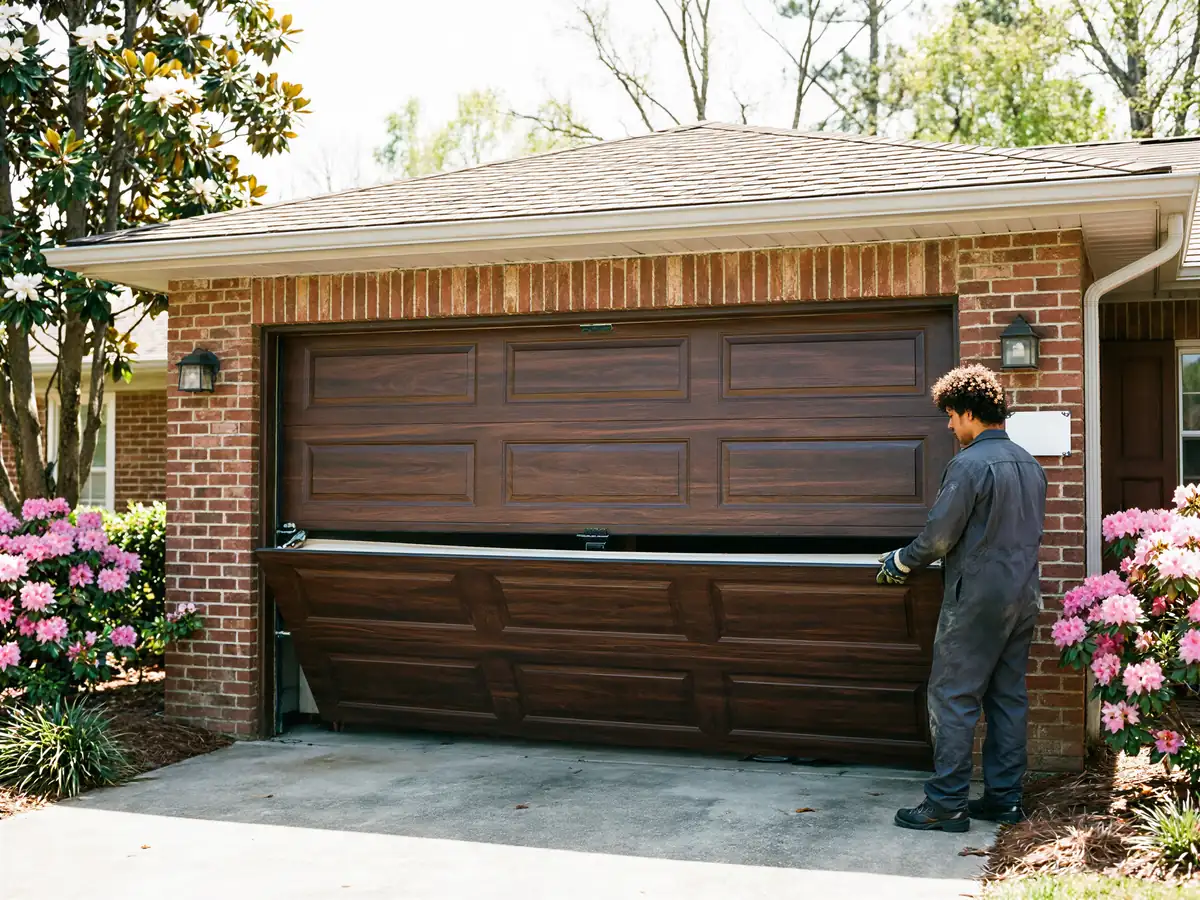
A technician in a gray jumpsuit works on a brown garage door on a brick house.

Garage Door Installation

New garage door installation for Hendersonville, TN houses built 1958-2005, matched to the cold-moderate climate and the original openings of the area's 1980s-90s stock.

Learn more
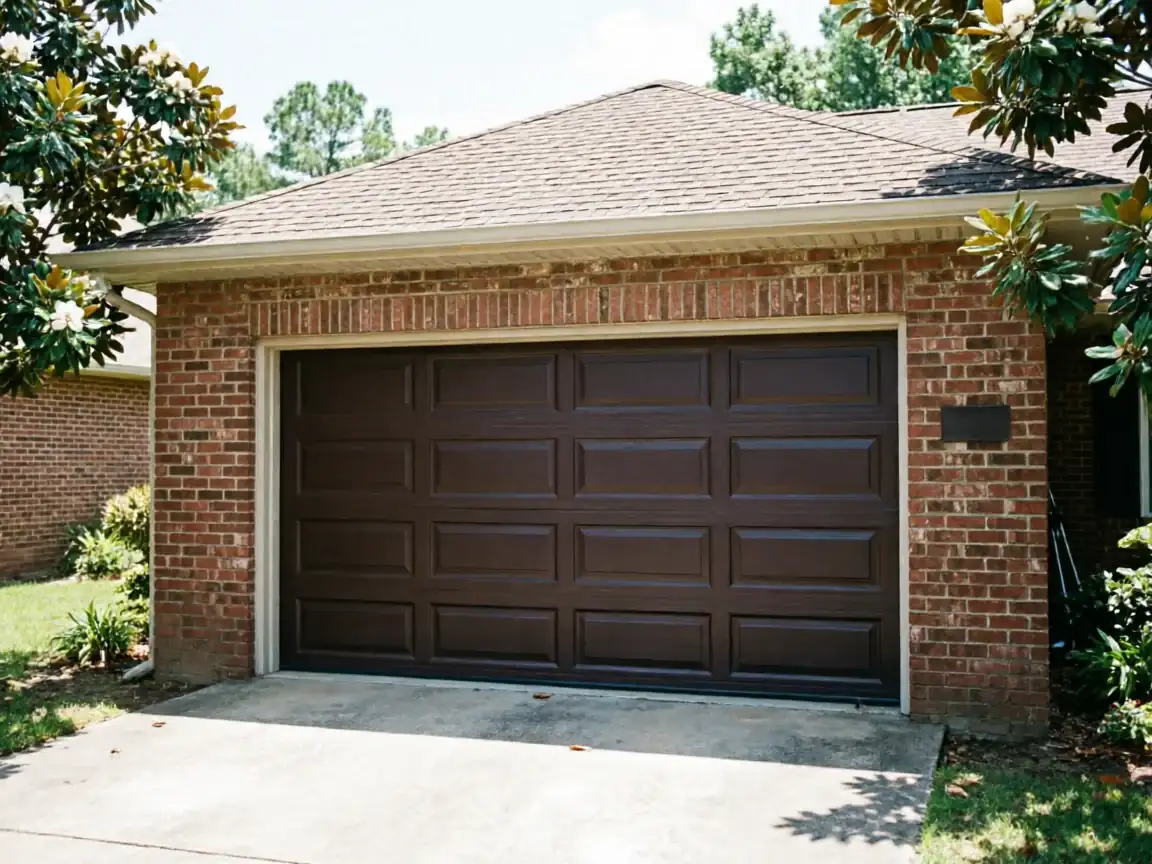
The house has a brown garage door, brick walls, and a brown roof.

Garage Door Service

Garage door service for Hendersonville homes built 1958-2005, where cold-season swings and aging torsion hardware cause most of the calls we get.

Learn more
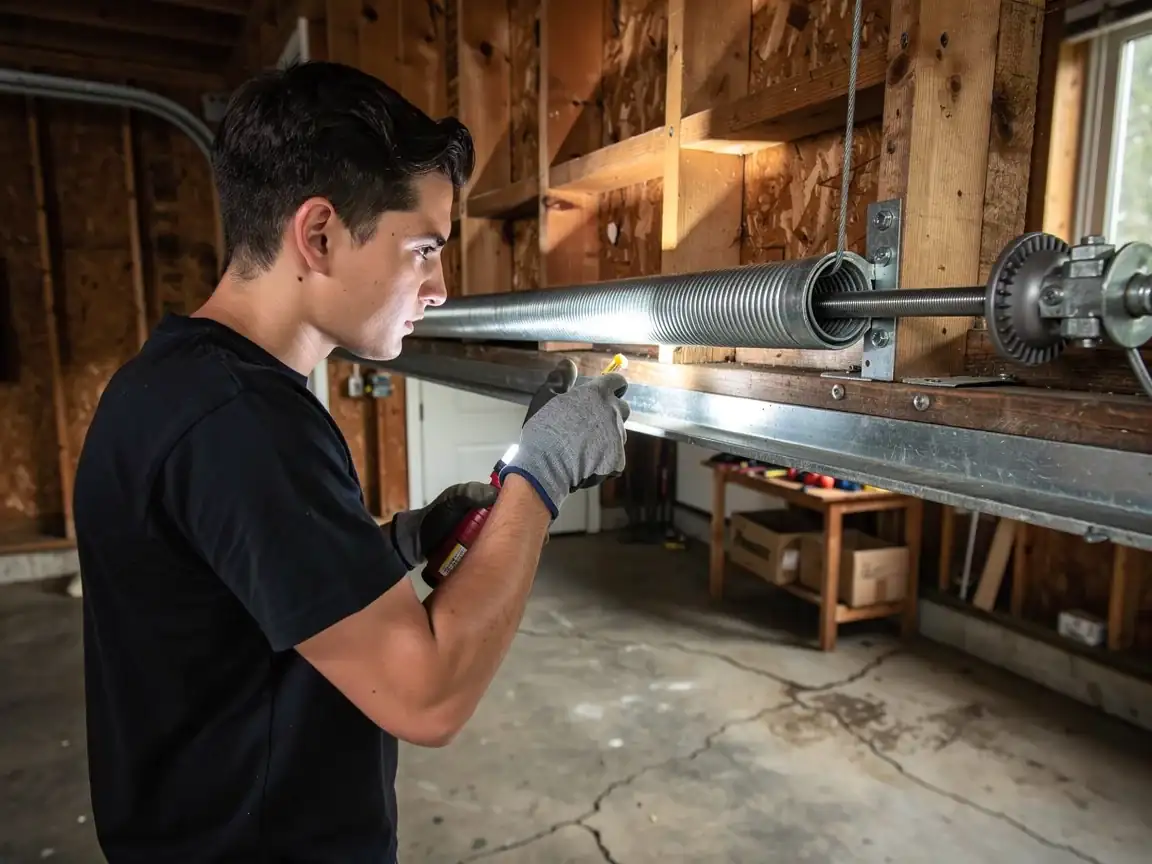
A technician in black gloves works on a garage door torsion spring.

Spring Repair

Broken torsion springs show up often in Hendersonville's 1958-2005 housing stock. Here's why cold winters strain springs and what a proper repair takes.

Learn more
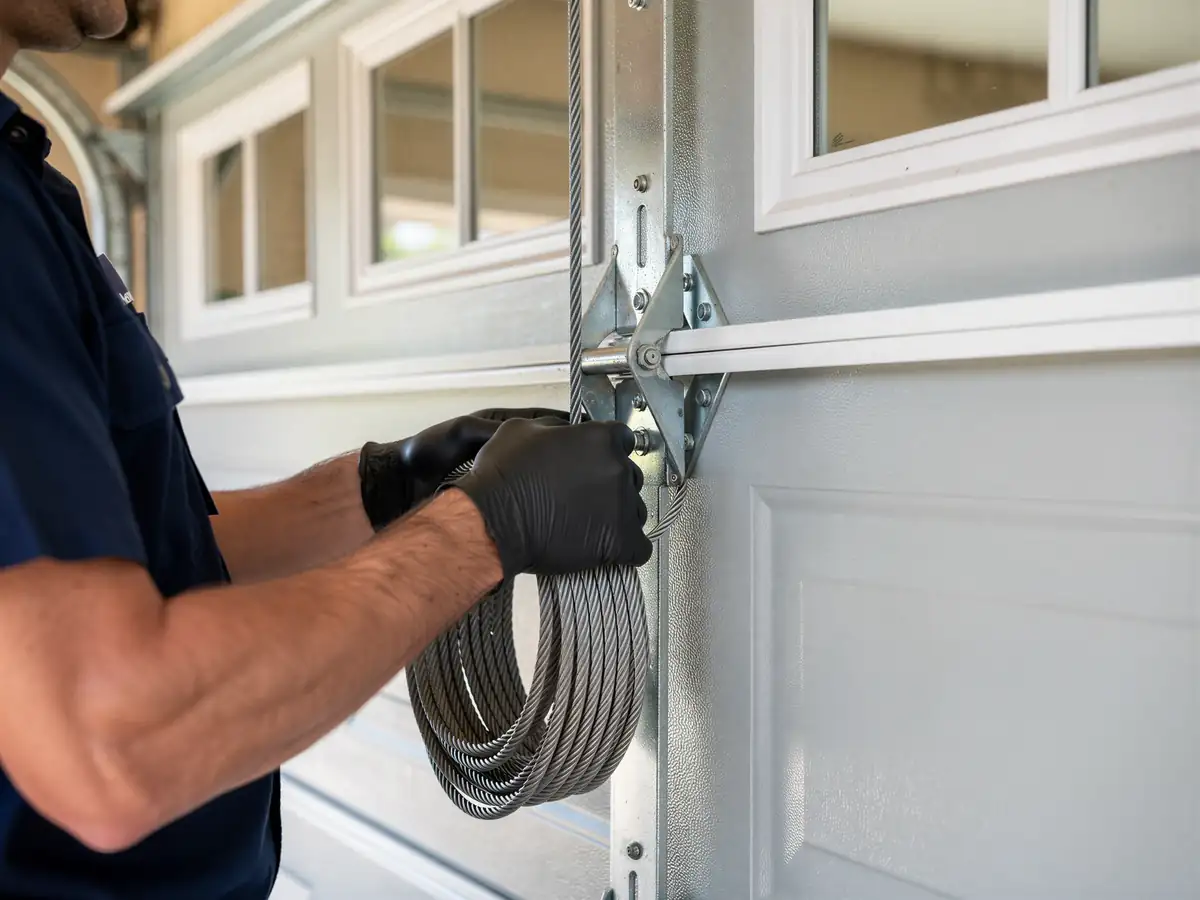
A technician wearing black gloves holds a coiled garage door cable.

Cable Repair

Broken or frayed garage door cables in Hendersonville homes fail fast once winter hits. See why older torsion setups wear out here and what repair involves.

Learn more
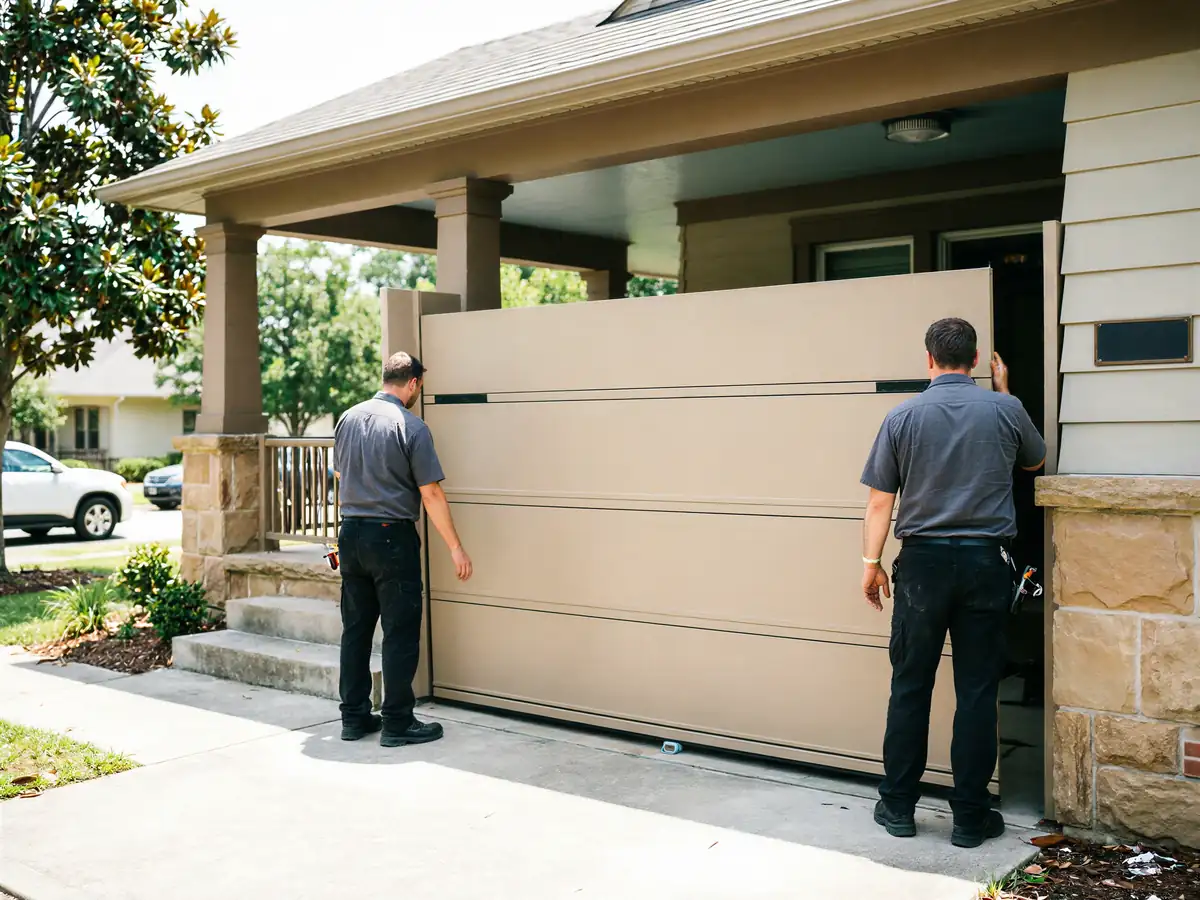
Two technicians install a tan garage door on a house.

Panel Replacement

Dented, cracked, or rusted garage door panels are common on the 1980s-90s steel doors that fill Hendersonville-area neighborhoods. Here's why, and what fixing it actually takes.

Learn more
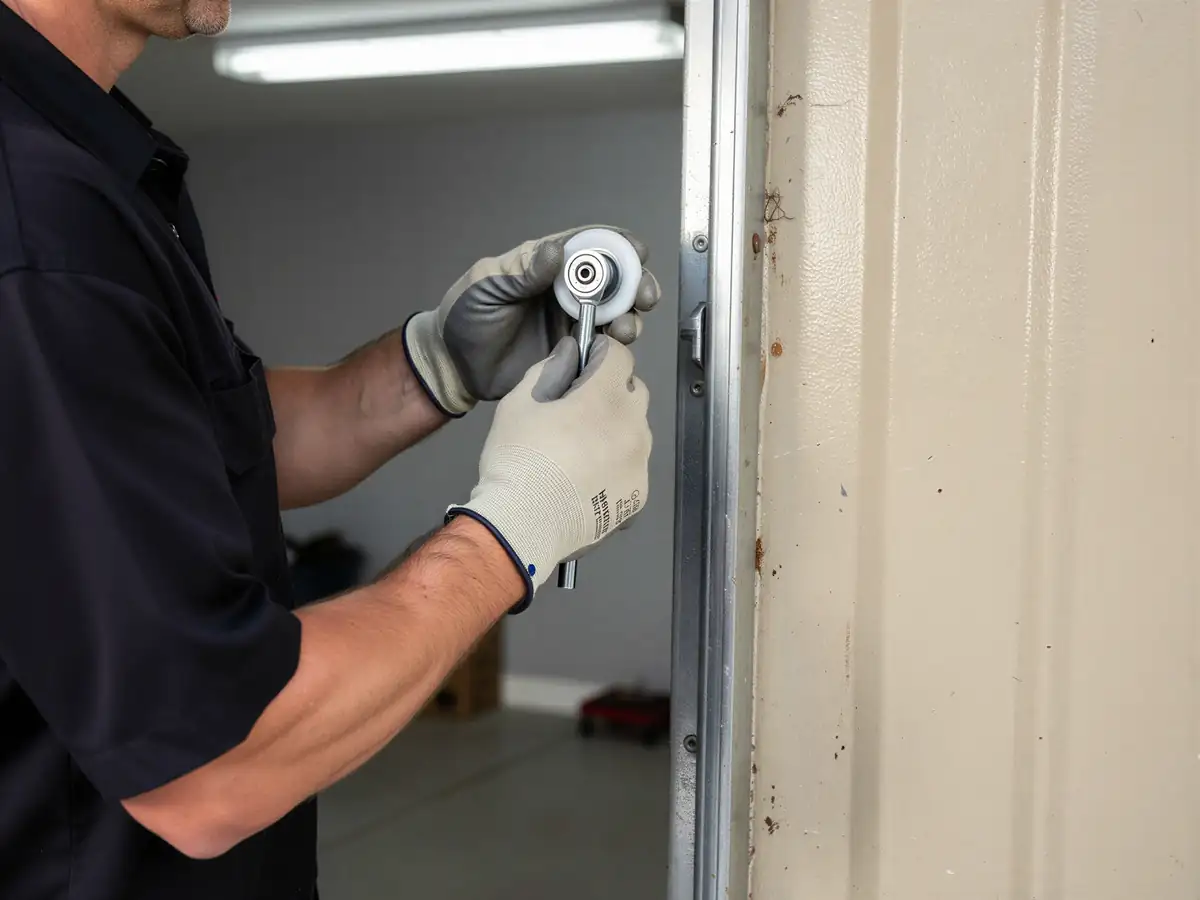
A technician wearing gloves holds a new roller next to a garage door track.

Roller Replacement

Rollers failing on original 1980s-90s steel track systems across Hendersonville-area homes. Here's why it happens, what DIY can and can't fix, and what the job involves.

Learn more
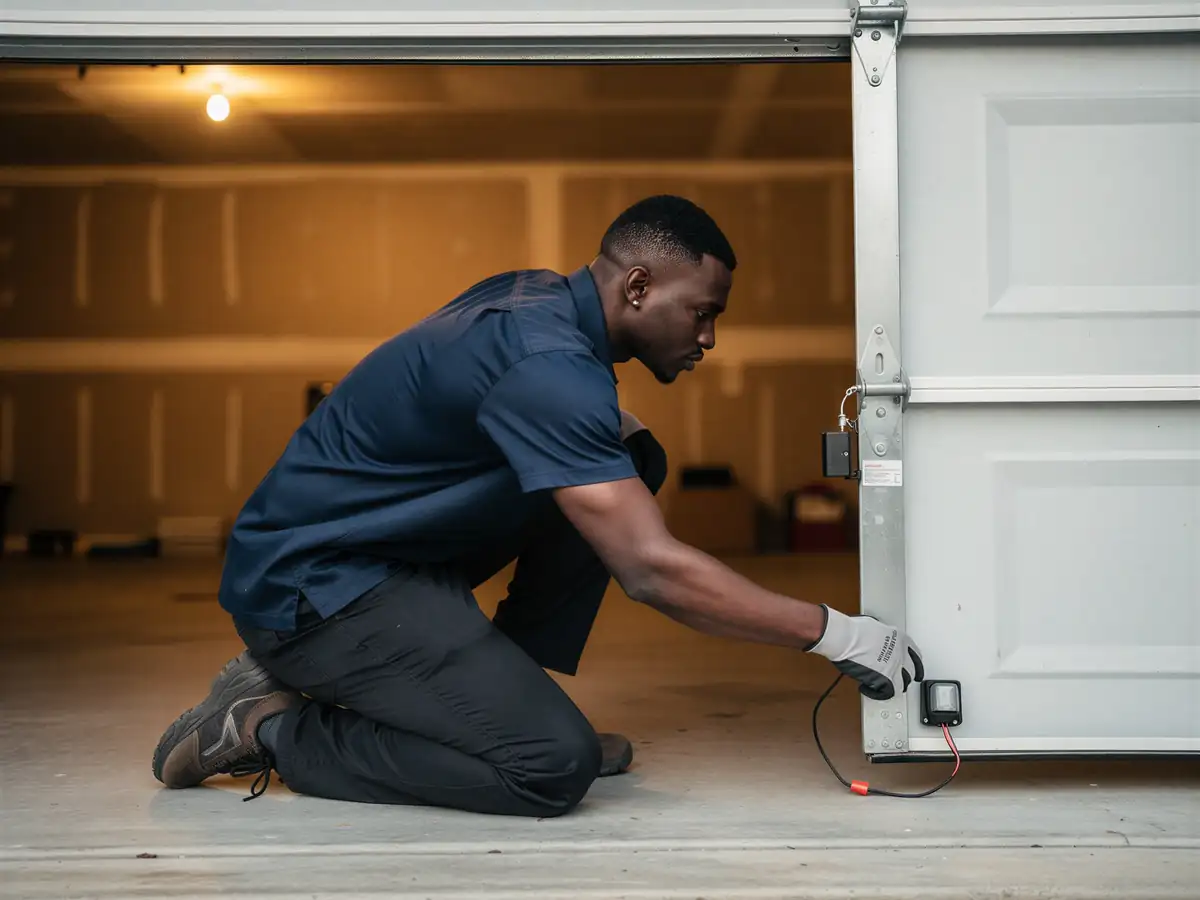
A technician kneels, adjusting a safety sensor on a white garage door.

Maintenance

Garage door maintenance for Hendersonville homes built mostly in the 1980s and 90s, tuned for cold-moderate winters and the wear patterns common across 13 nearby areas.

Learn more
Questions

Frequently asked

Straight answers about garage door repair in Hendersonville. Still unsure? Ask us directly.

Why does my garage door feel so much colder than the rest of the house?

If your house falls in the older part of the 1958-2005 range common across this area, there's a good chance the door panel is bare steel with no foam core. In a cold-moderate climate like Hendersonville's, that steel tracks closer to outdoor temperature than an insulated door would, which is why the garage feels noticeably colder even with the door shut.

Is it worth insulating an old garage door instead of replacing it?

Usually not if the door is original to a house from the earlier end of the local build range. Retrofitting foam into a panel that's already decades old doesn't address rust, warped track, or worn hardware underneath it. Once the steel itself is the issue, a new insulated door tends to cost less over time than patching the old one.

Why is it hard to get parts for my garage door?

Hardware sizing and spring types changed over the decades this area was built out, roughly 1958 through 2005. If your house is on the older end of that range, your door may use track or spring hardware that isn't a current stock item, which can mean a short wait on parts instead of a same-day fix.

Ready to get your garage door sorted?

Tell us what it’s doing and where you are in Hendersonville - we’ll take it from there.

Request a QuoteCall