The Cost of This Job
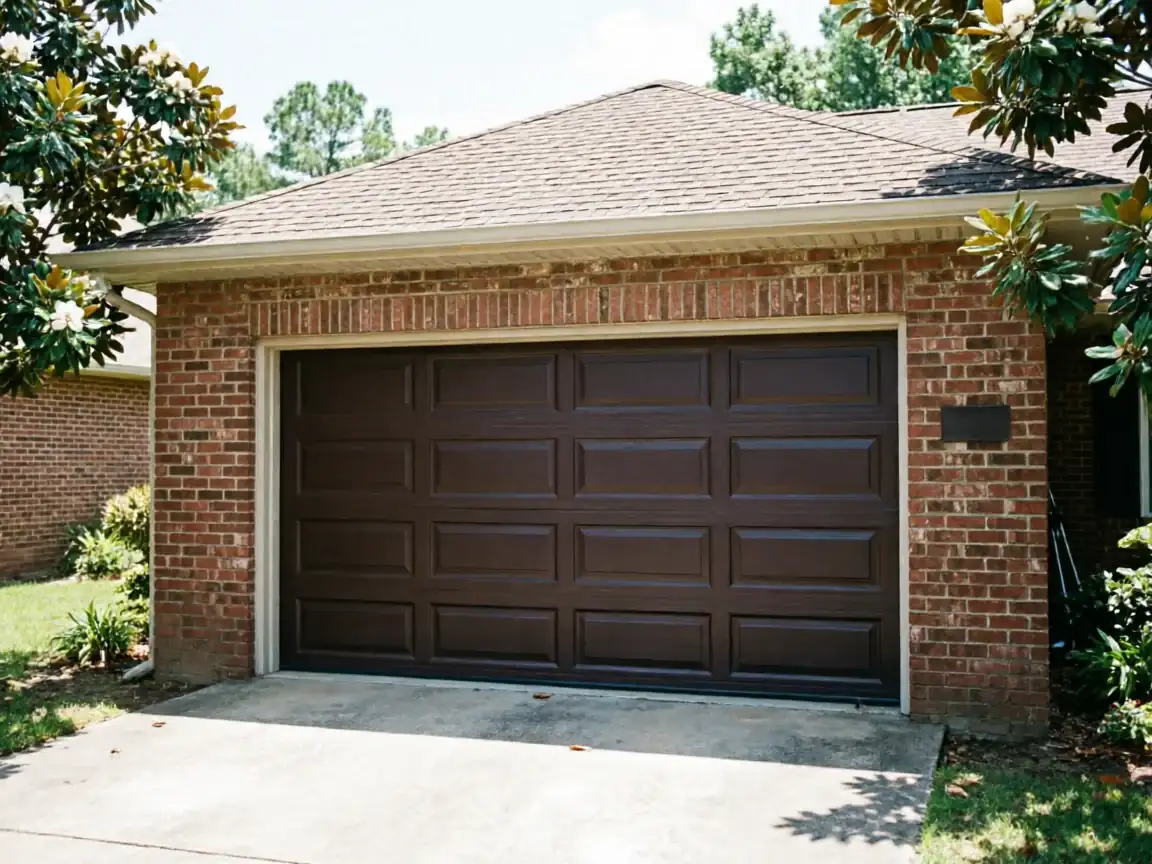
We can't quote you a number here without seeing the door, so we won't pretend to. What we can tell you is what drives the cost up or down in this service area. Houses here run from 1958 through 2005, with the typical build landing around 1990, and across the 13 named areas we cover, most of that stock is 1980s and 90s construction. That matters because a door from a 1990 build usually carries a single torsion spring rated for a lighter wood or steel panel, while a late-90s or early-2000s build often has heavier insulated panels on a two-spring setup. Replacing one spring on an older single-spring system is a smaller job than matching a pair on a newer door, and if only one of a matched pair has gone, we'll tell you when it makes sense to replace both rather than mismatch spring age under the same door. That's the honest limitation: we don't sell you a second spring you don't need, but we also won't tell you a 15-year-old mate will outlast the new one by much. Across the roughly 34,671 owner-occupied houses in this area, spring age tracks build year more than anything else.
Checking It Yourself
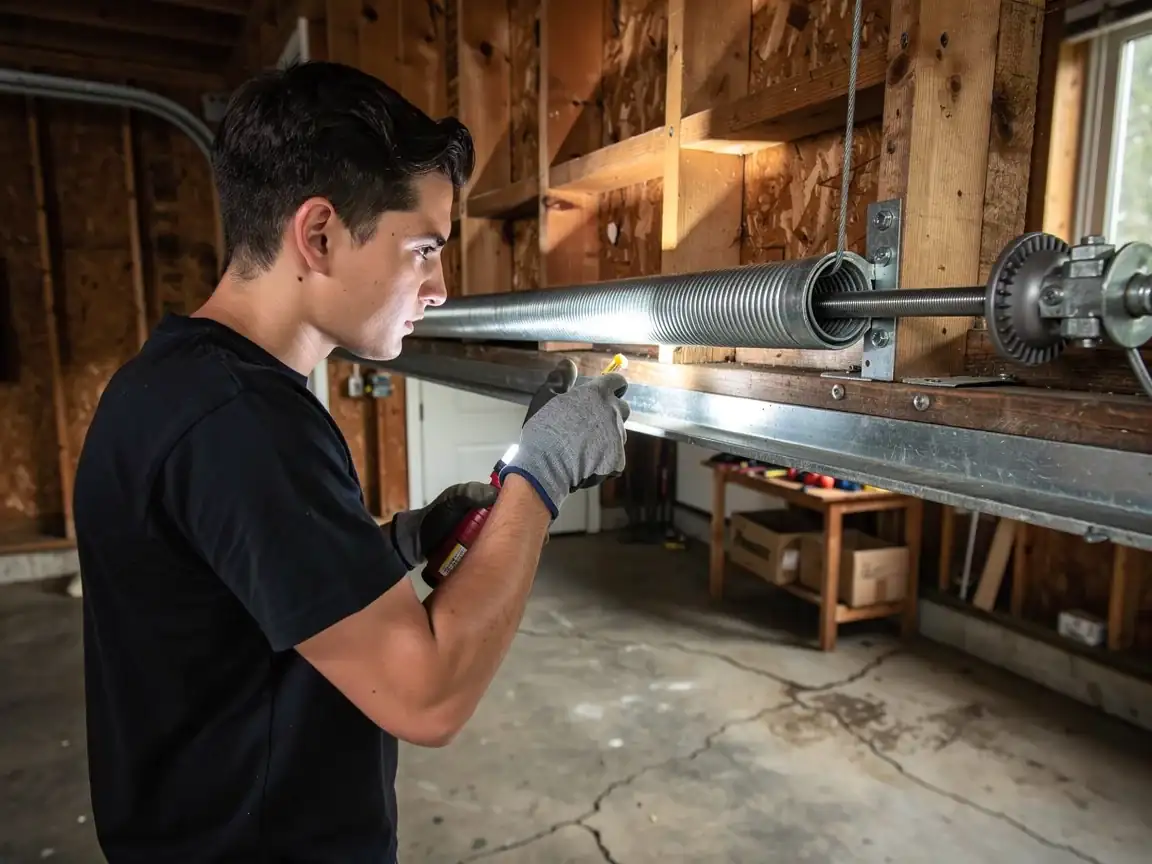
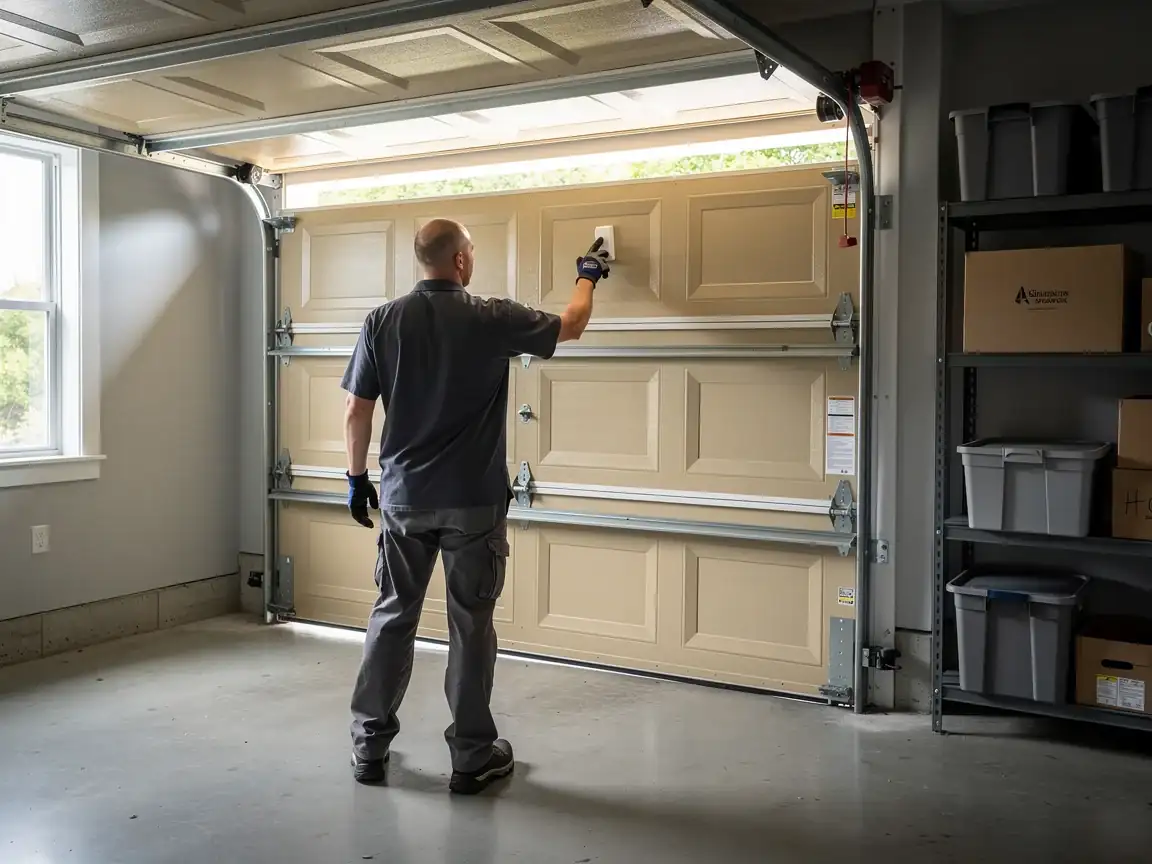
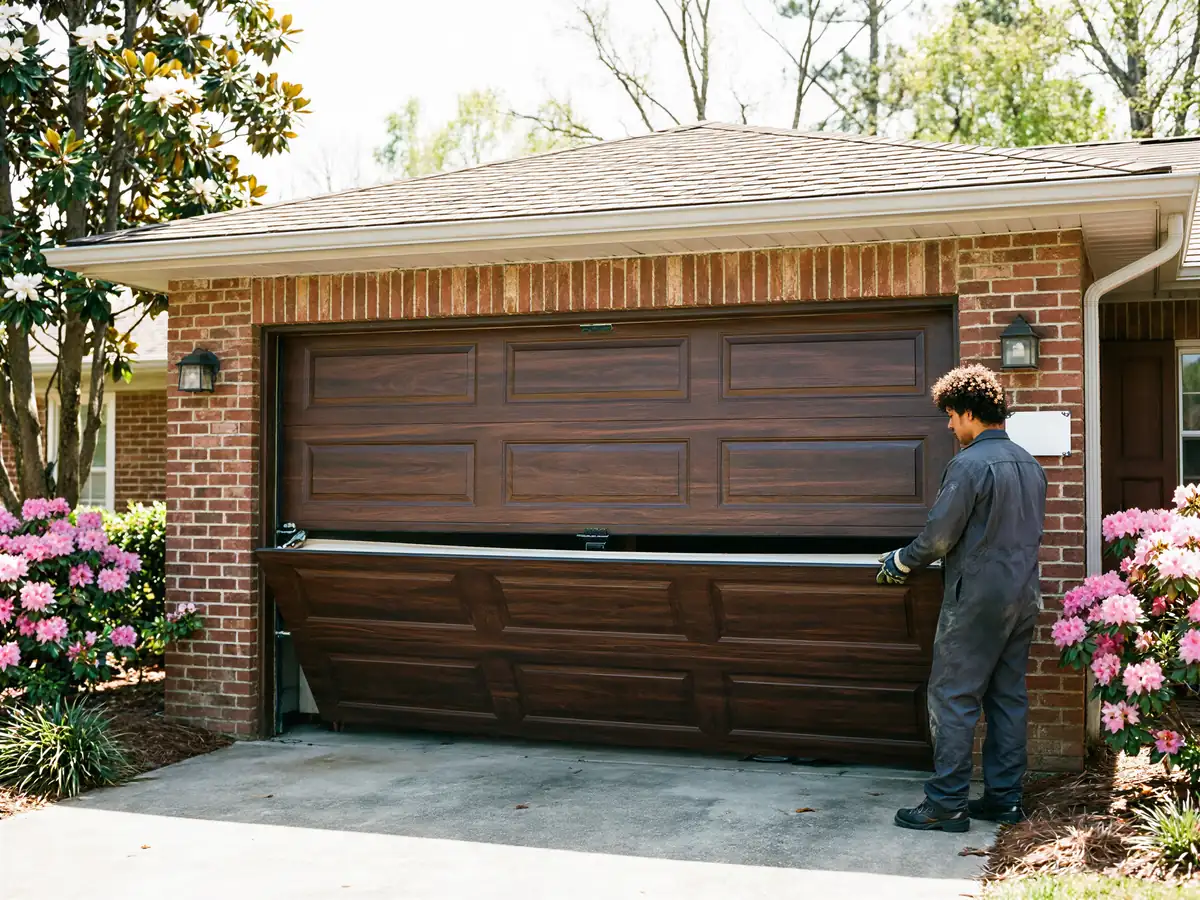
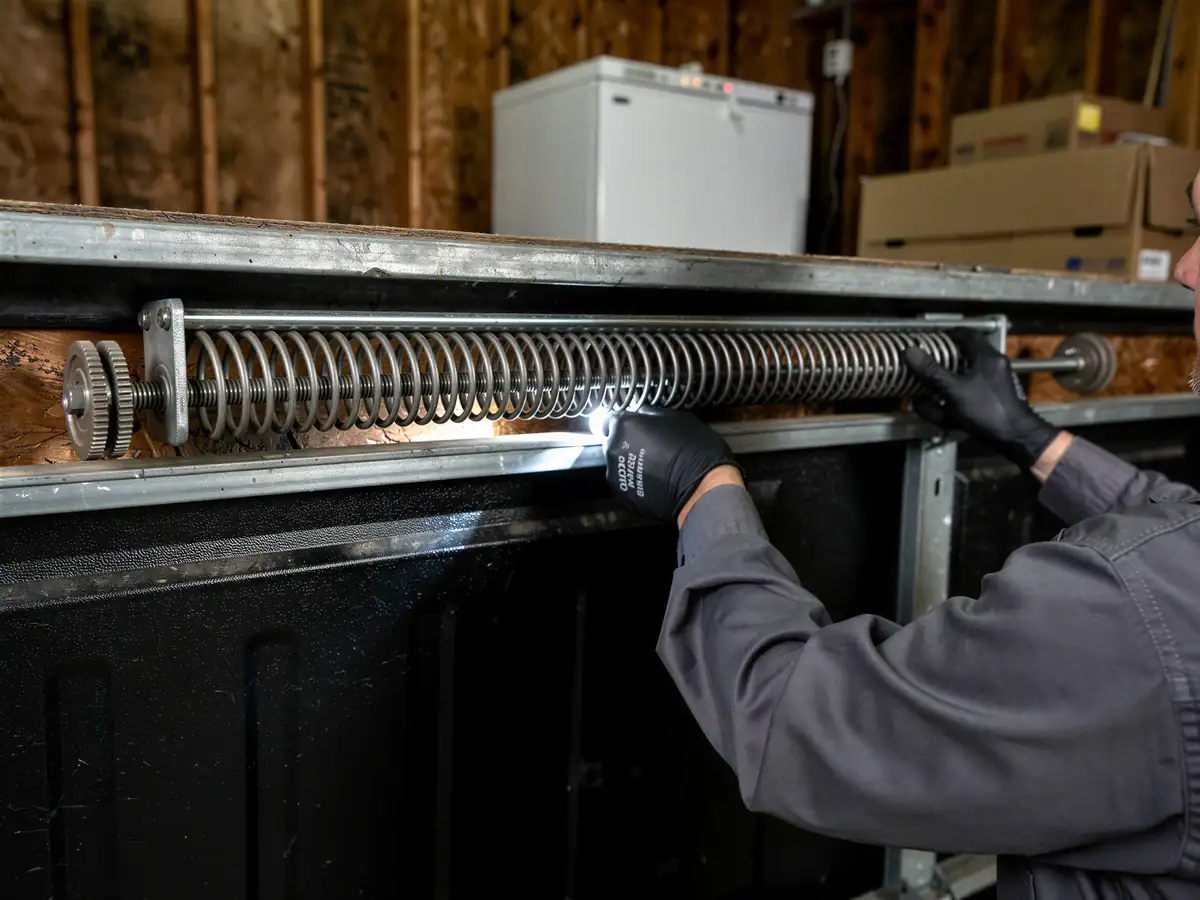
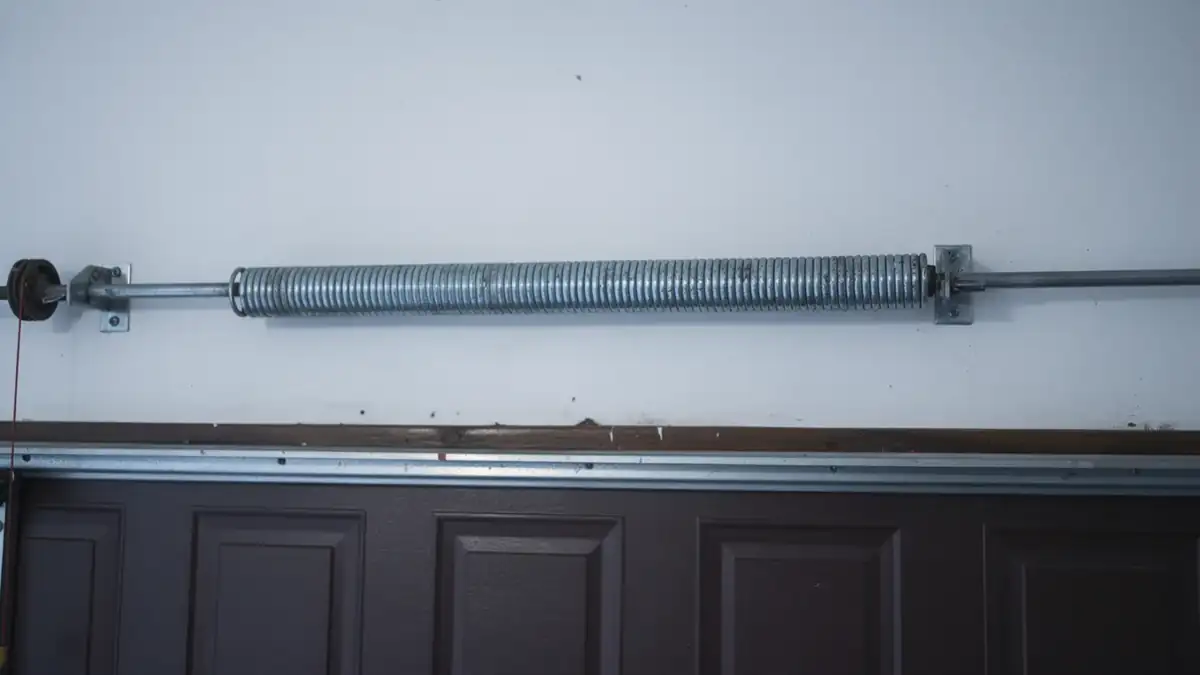
Before you call anyone, there's a check that takes two minutes and costs nothing. With the opener disconnected (pull the red release cord), lift the door by hand halfway and let go. A door with a healthy spring will hold roughly where you left it. A door that slams down or shoots up means the spring has lost tension or already broken, and you should stop there. Don't keep lifting, don't keep testing the opener against it. On the many 1980s and 90s builds in this area, you'll usually find a single torsion spring mounted above the door on a shaft with a stationary cone at one end. Look at that cone for a visible gap in the coil, that's a broken spring, not a mystery noise. What you shouldn't do is loosen the set screws or try to wind the spring yourself. A torsion spring under tension has put people in the hospital, and that's true regardless of how handy you are with the rest of the house.
The Problem
The core issue is simple: age plus cold. A spring rated for roughly 10,000 cycles doesn't care what year it is, but it does care what temperature it's twisting at, and a door original to a 1958-2005 build has had a lot of winters to use those cycles up. When a spring goes in cold weather, it's rarely a surprise failure out of nowhere, it's a spring near the end of its rated life meeting a morning where the steel has less give than it had in August. We see this pattern across the older end of the housing stock in this service area more than the newer end, simply because those springs have logged more cold seasons. The fix isn't complicated, it's a spring swap, but a door stuck shut on a work morning doesn't feel simple to the person standing in the driveway. That's really the whole problem in one sentence: steel ages, cold exposes it, and the two together pick the worst possible morning to meet.