How It Shows Up
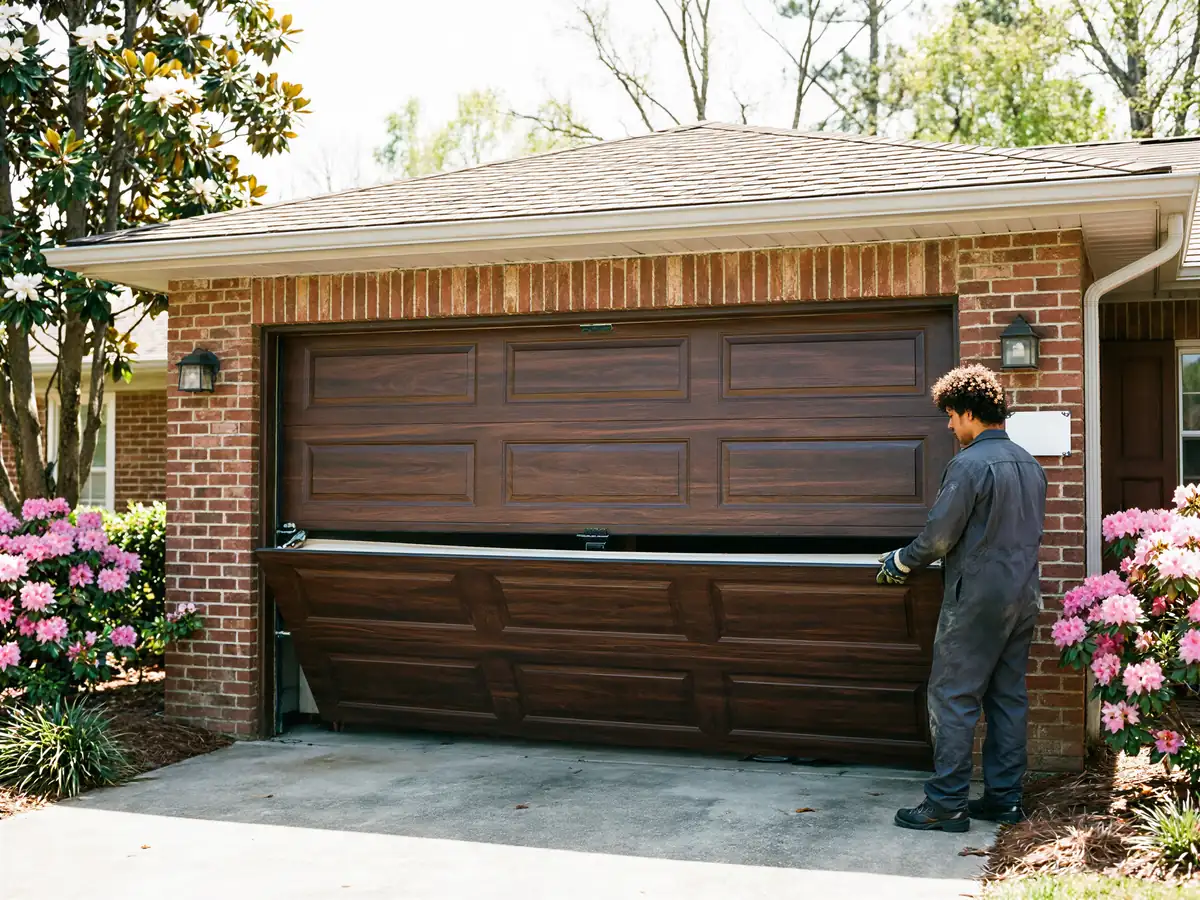
The call usually starts the same way: one section of the door looks wrong. A dent from a bumped car, a bottom panel gone soft and rusty at the seam, a crack running along a ridge where the steel folds. Sometimes it's cosmetic and the door still runs fine. Sometimes the dent has pushed the panel out of its track channel and the door binds or won't seal at the bottom.
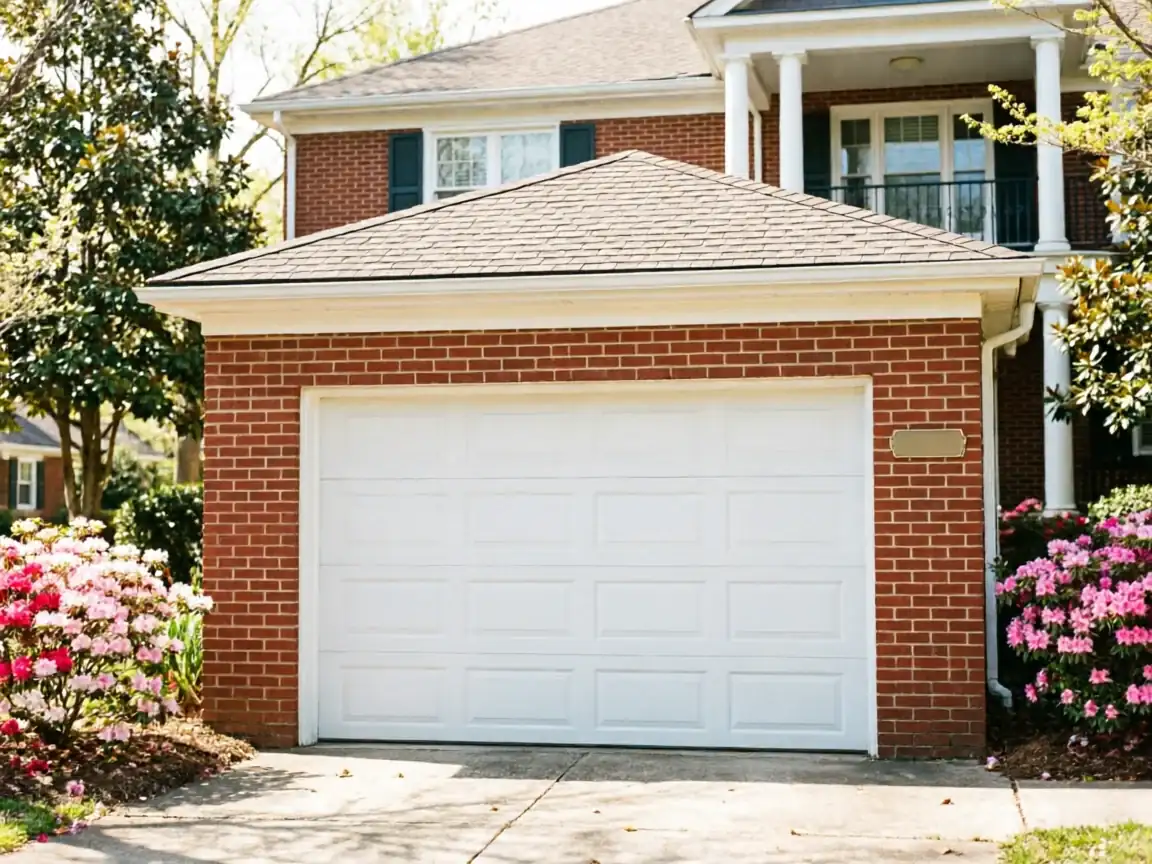
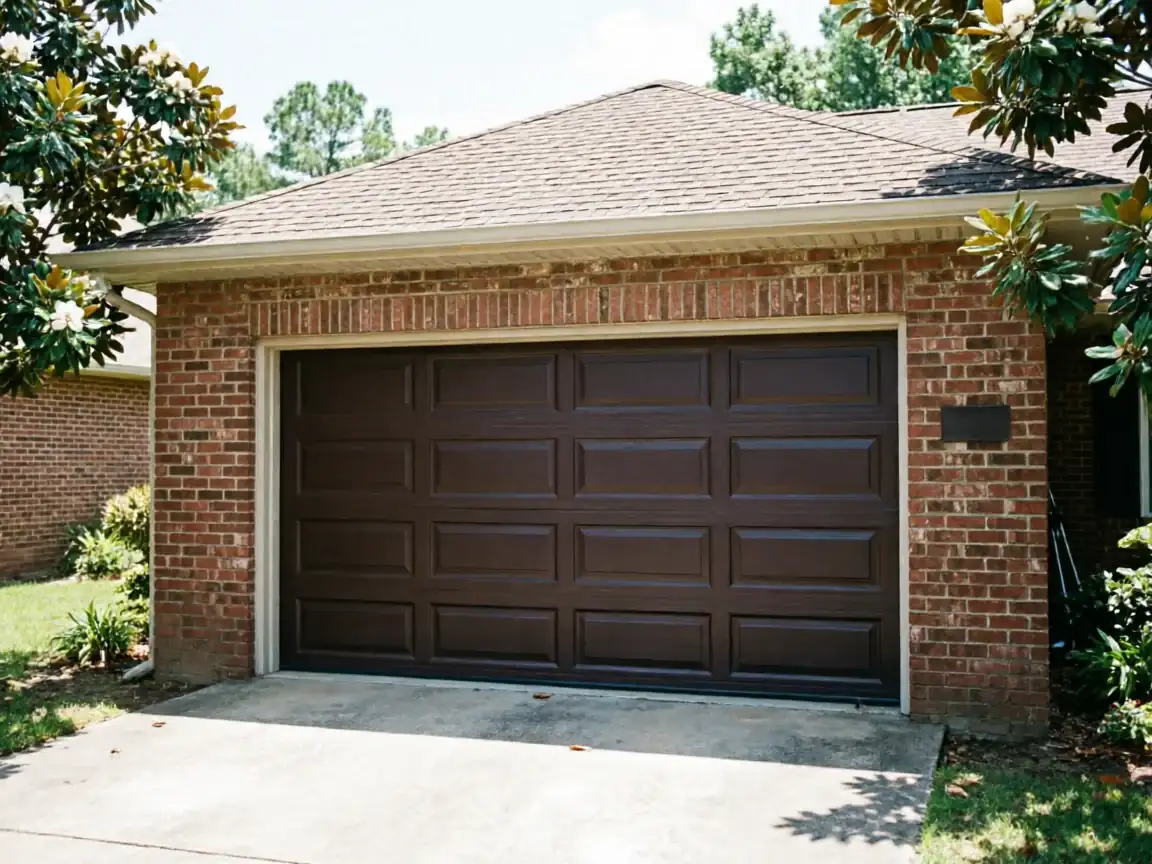
Across this service area, most houses were built between 1958 and 2005, with the heaviest concentration going up through the 1980s and 90s. That means a lot of the garage doors still in service are original or close to it - steel sectional doors with painted panel faces that have been through three or four decades of weather. Paint fades and chalks, steel thins at the flex points, and panels that looked fine for twenty years start showing their age all at once. It's rarely one bad day that does it. It's the slow accumulation of small impacts and temperature cycles finally reaching a panel that was already thin.
Why This Fails Locally
This region sits in a cold-moderate climate band
Which means panels go through real freeze-thaw swings every winter and real heat and humidity every summer. Steel expands and contracts with that, and on an older panel the seams and hinge points are where the stress shows up first - a hairline crack that widens a little more each season until it's visible from the driveway.
Because so much of the housing stock here dates to the 1980s and 90s
A huge share of doors in this area share the same panel profiles, the same gauge steel, and the same age-related wear pattern. That's not a coincidence of bad luck on any one house - it's what you'd expect when a whole generation of homes got the same door at roughly the same time. The honest limitation here: once a panel has been cracked or dented for a while, rust often gets underneath the paint before anyone notices, and by the time it's visible the metal underneath may already be compromised enough that a patch won't hold.
The DIY Question
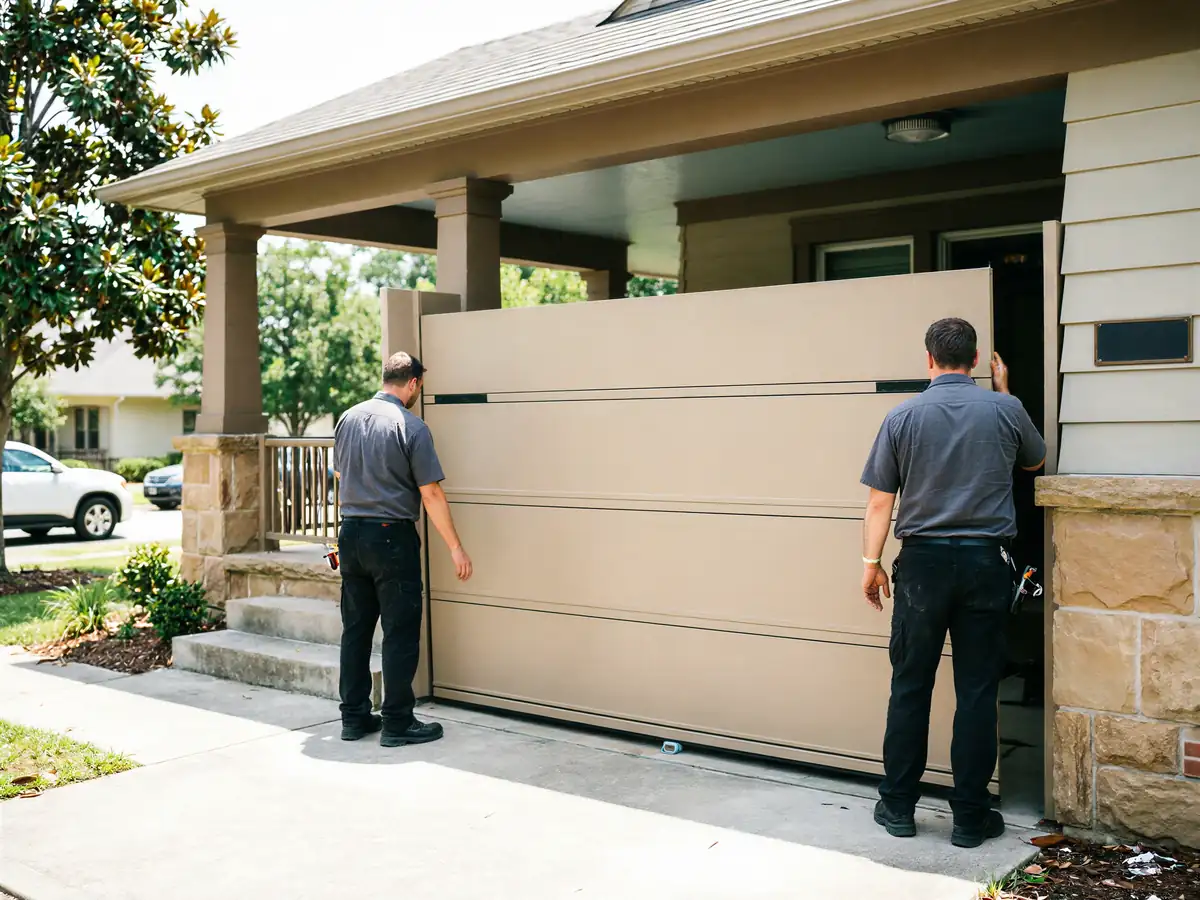
A single panel is, in theory, replaceable without pulling the whole door. In practice it depends on two things: whether the exact panel profile is still made, and whether the door is old enough that the rest of the sections won't match a new one in color or finish.
Doors from the 1980s and 90s often used panel widths and embossing patterns that have since changed, even within the same manufacturer's line. That's the part a homeowner can't tell from measuring the opening - you need the section height, the panel width, and often the manufacturer and series to know if a matching panel exists at all. If it doesn't, the options are a mismatched panel, a repaint of the whole door, or replacing more sections than just the damaged one. We'll tell you straight if a patch isn't worth it compared to doing the full door, rather than selling a panel that'll look wrong for years.
What the Repair Takes
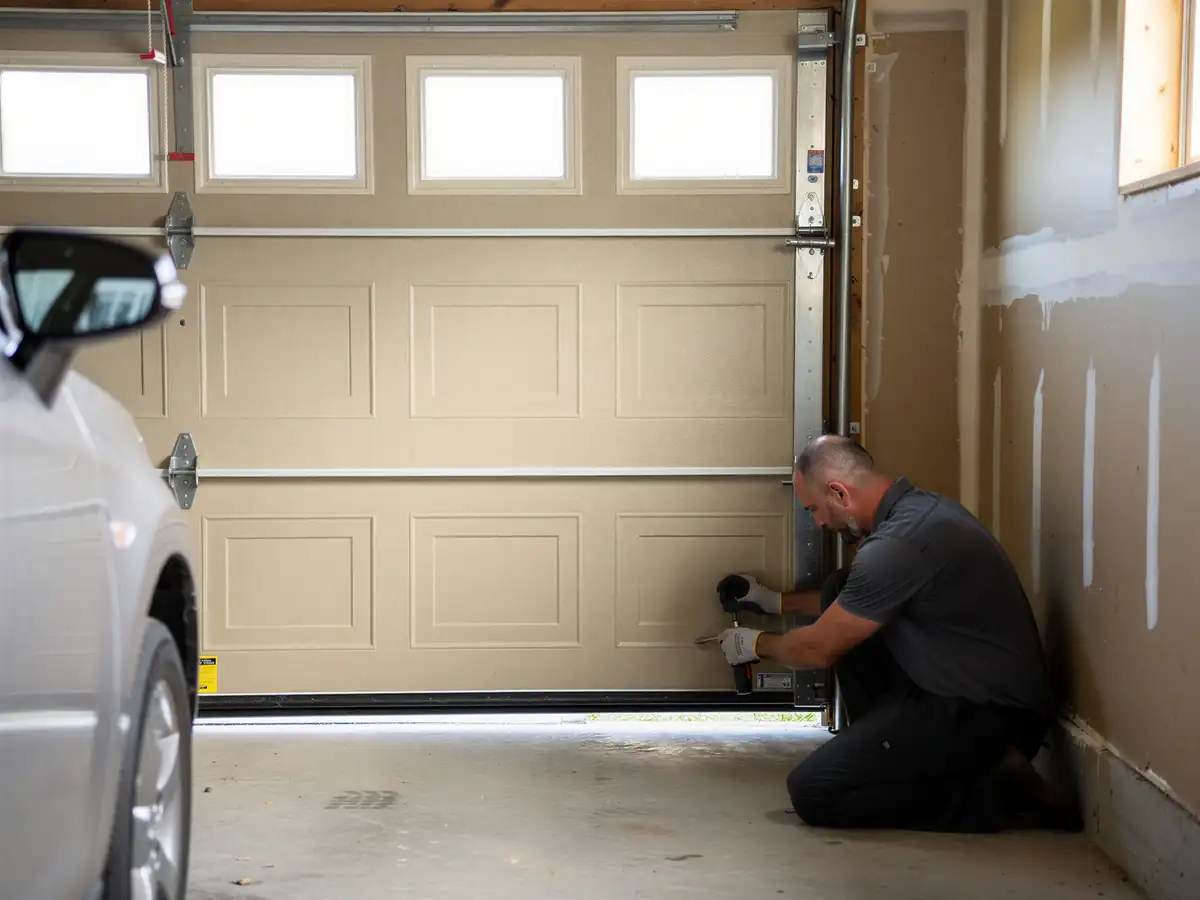
A panel swap starts with identifying the door - manufacturer, series, and section size - before anything gets ordered. On a door old enough to be original to a 1980s or 90s build, that step alone can take longer than the swap itself, since some panel runs are long discontinued and sourcing means finding old stock rather than a current catalog item.
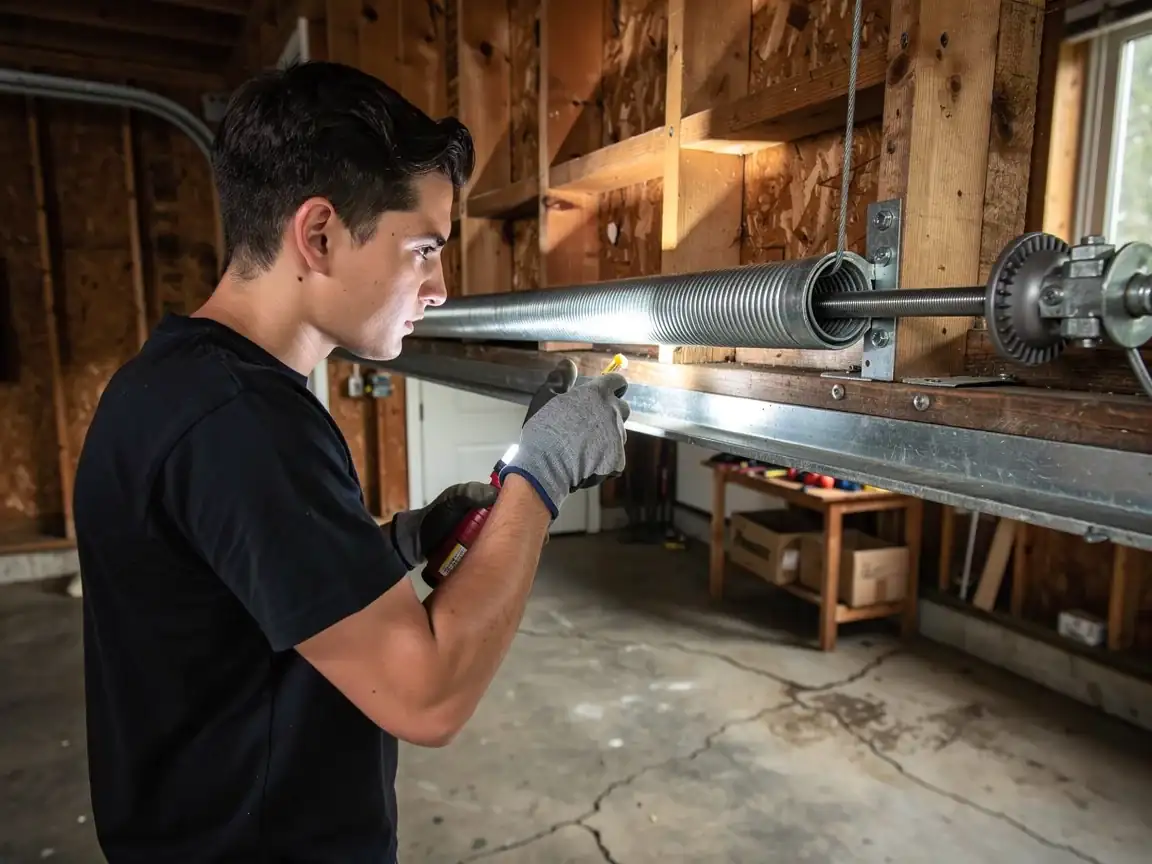
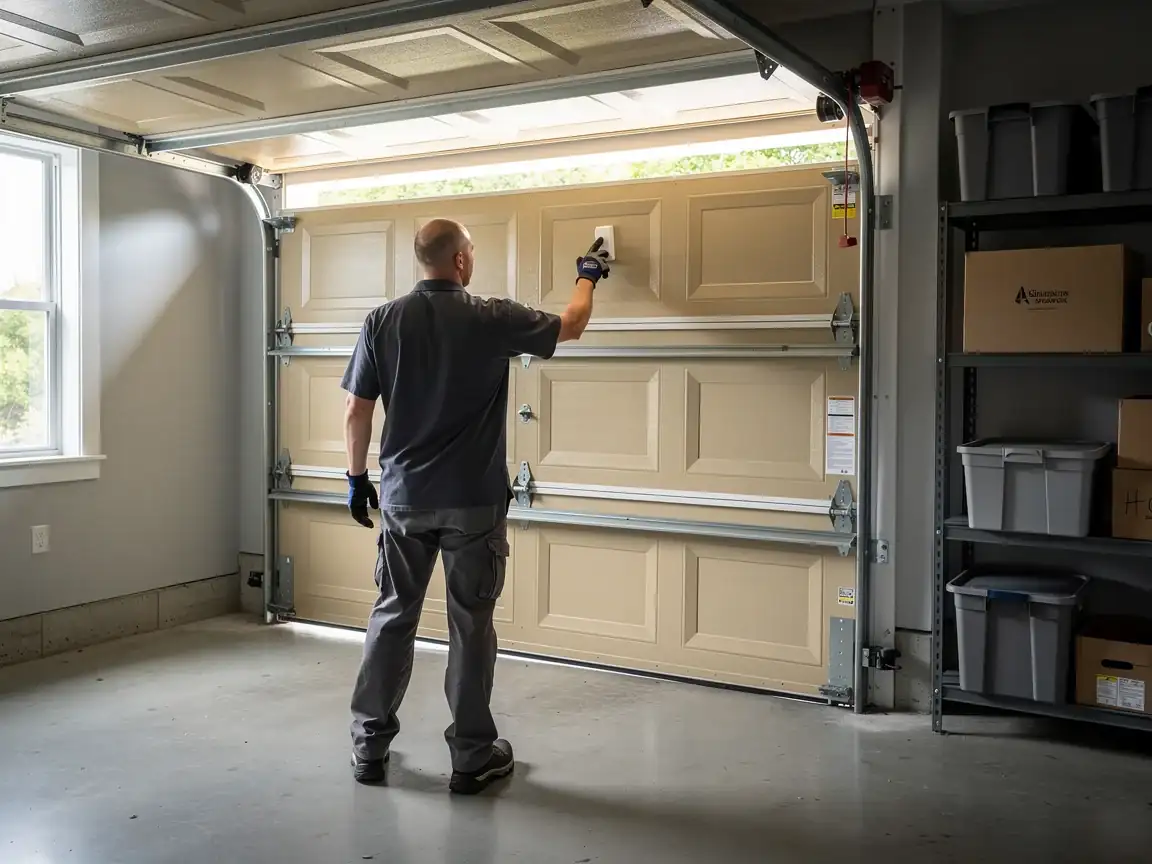
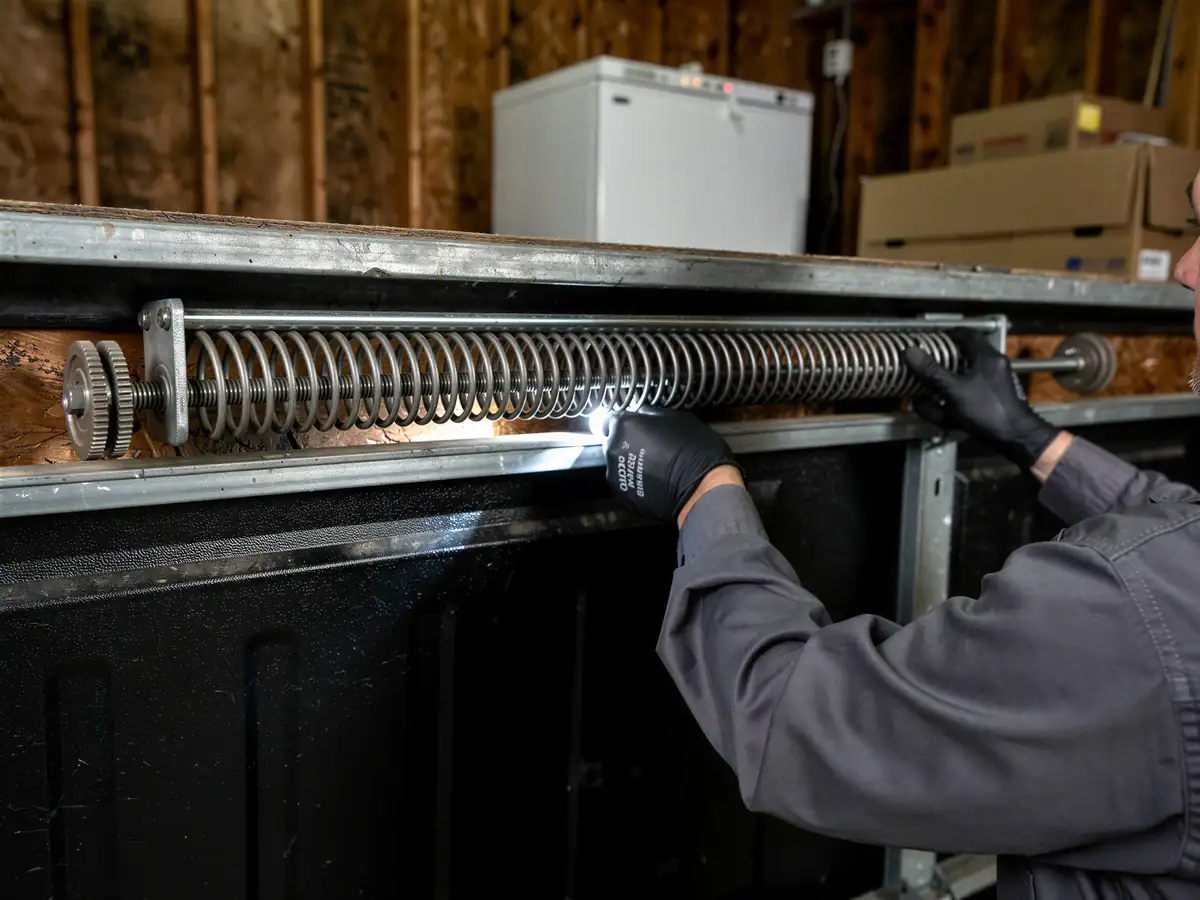
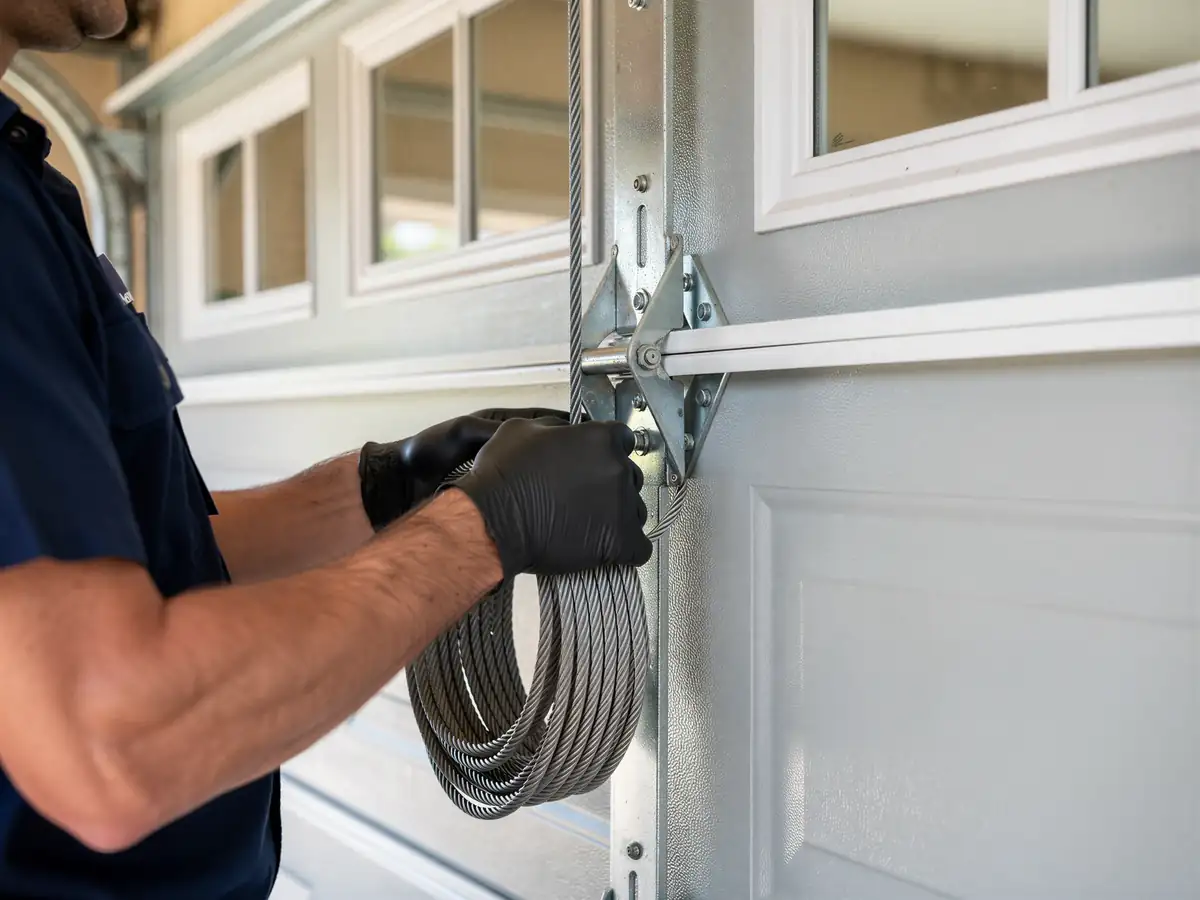
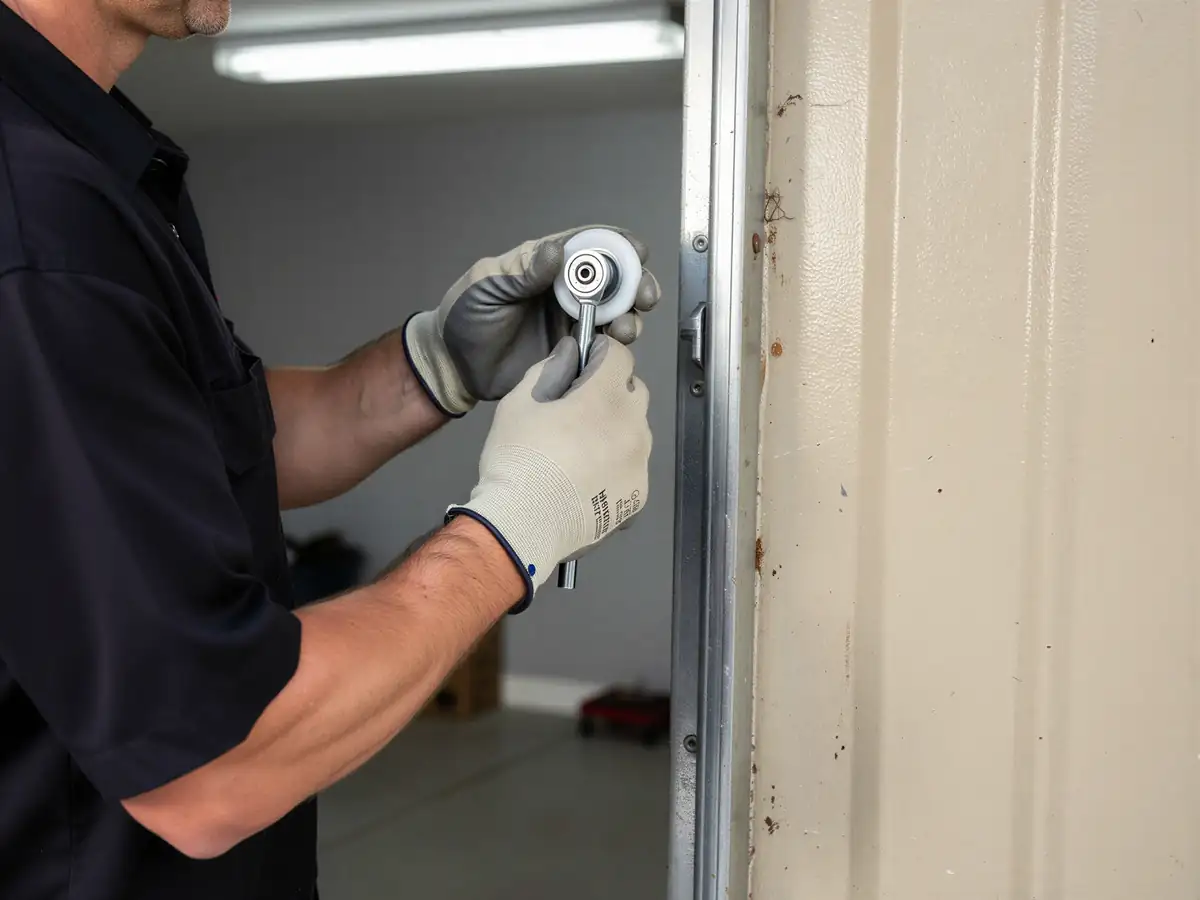
Once the right panel is in hand, the job itself is mechanical: disconnect the spring tension, unbolt the hinges on either side of the damaged section, slide it out, slide the replacement in, rehang the hinges, reset the rollers in the track, and bring tension back. On a double door that's out of square from the old damage, we also check that the new panel sits flush before buttoning it back up - a panel that's slightly proud or recessed will bind against its neighbors within a few months.