How It Shows Up
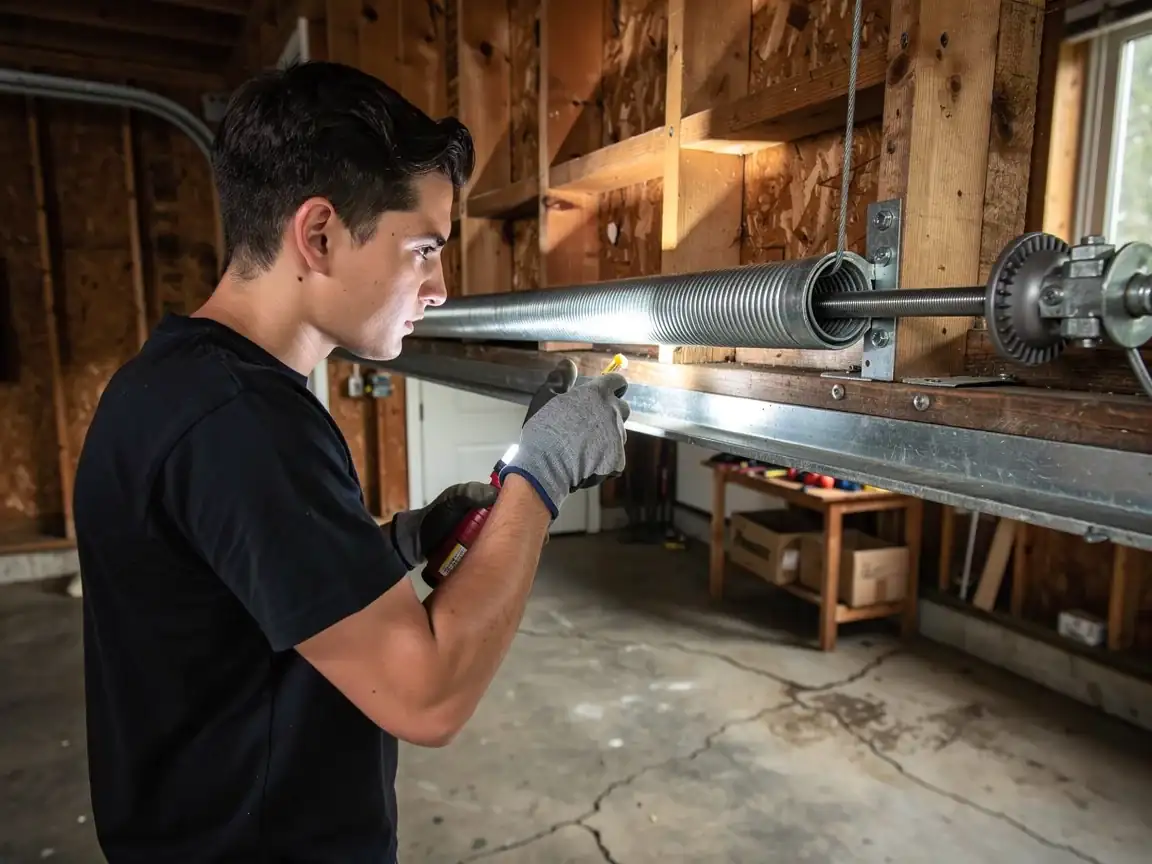
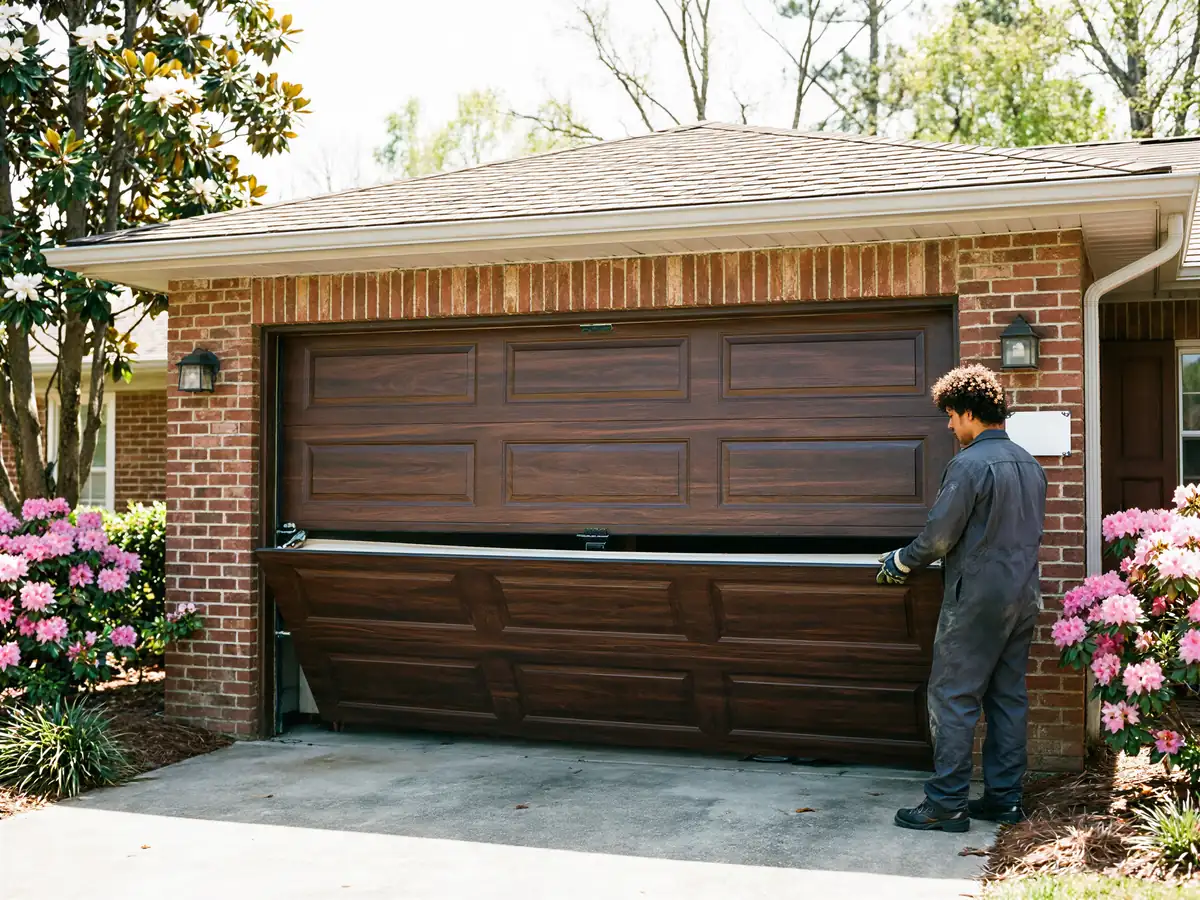
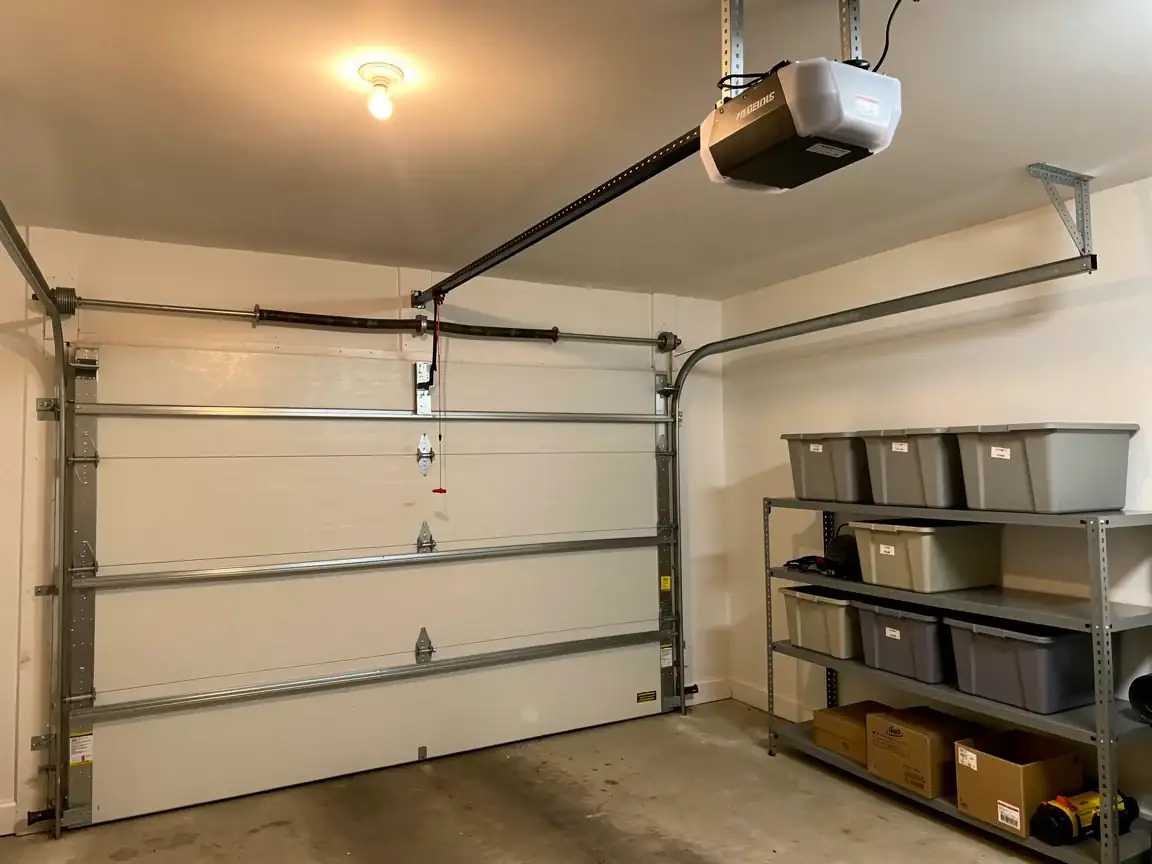
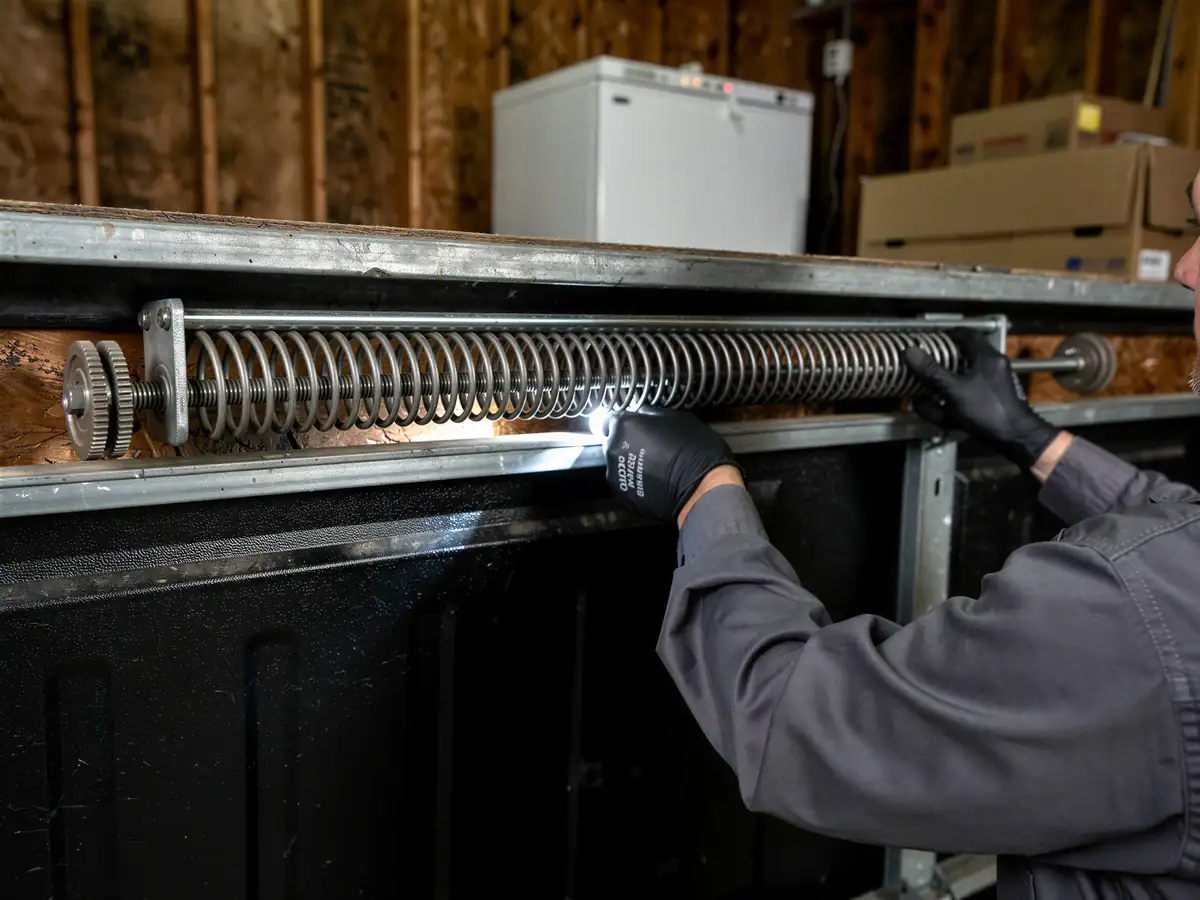
The pattern is almost always the same. The door gets heavy fast - what used to lift with one hand now needs both arms and your back, or the opener strains and stalls a foot off the floor. Some owners hear it happen: a loud bang from the garage, usually mid-morning or after a cold night, which is the torsion spring above the door letting go under tension. Once that spring is gone, the opener is doing a job it was never built to do, and it will burn out trying.
A few doors give a warning first - a visible gap opening up in the coils, or a door that drifts down on its own when you stop it halfway. More often there's no warning at all, because torsion springs are rated for a set number of open-close cycles and they fail at the end of that count, not gradually. In our climate band, cold snaps add extra load right when a spring is already near the end of its life, which is why failures cluster in the colder stretches of the year rather than spreading evenly across twelve months.
Why This Fails Locally
Most of the housing stock across this service area went up between 1958 and 2005
With the bulk of it dating to the 1980s and 90s, and that matters for springs specifically. A standard torsion spring is rated for roughly 10,000 cycles - about seven to ten years of normal use for a household that opens the garage twice a day. Houses built in that 1980s-90s wave are now well past one, sometimes two, full spring lifecycles, and a lot of owners have never had the spring replaced since the house was built, because nothing about a slowly-aging spring tells you it's due.
The climate band here is cold and moderate rather than extreme, but the swings still matter
Steel contracts in cold weather and the coil tension that was fine in August gets tighter in January, which is enough to push a spring that's already near its cycle limit into outright failure. Across the roughly 34,671 owner-occupied houses in this service area, this is the single most common reason a garage door stops working, well ahead of opener or track problems.
- 34,671 owner-occupied
The DIY Question
We'll say this plainly: a torsion spring is not a weekend project, and we'd rather lose the job than see someone get hurt on it. The spring is wound under several hundred pounds of tension, and the winding bars and clamps needed to release that tension safely aren't tools most garages have lying around. Extension springs on older two-spring setups are a little more forgiving to look at but still carry enough stored force to do real damage if a cable slips.
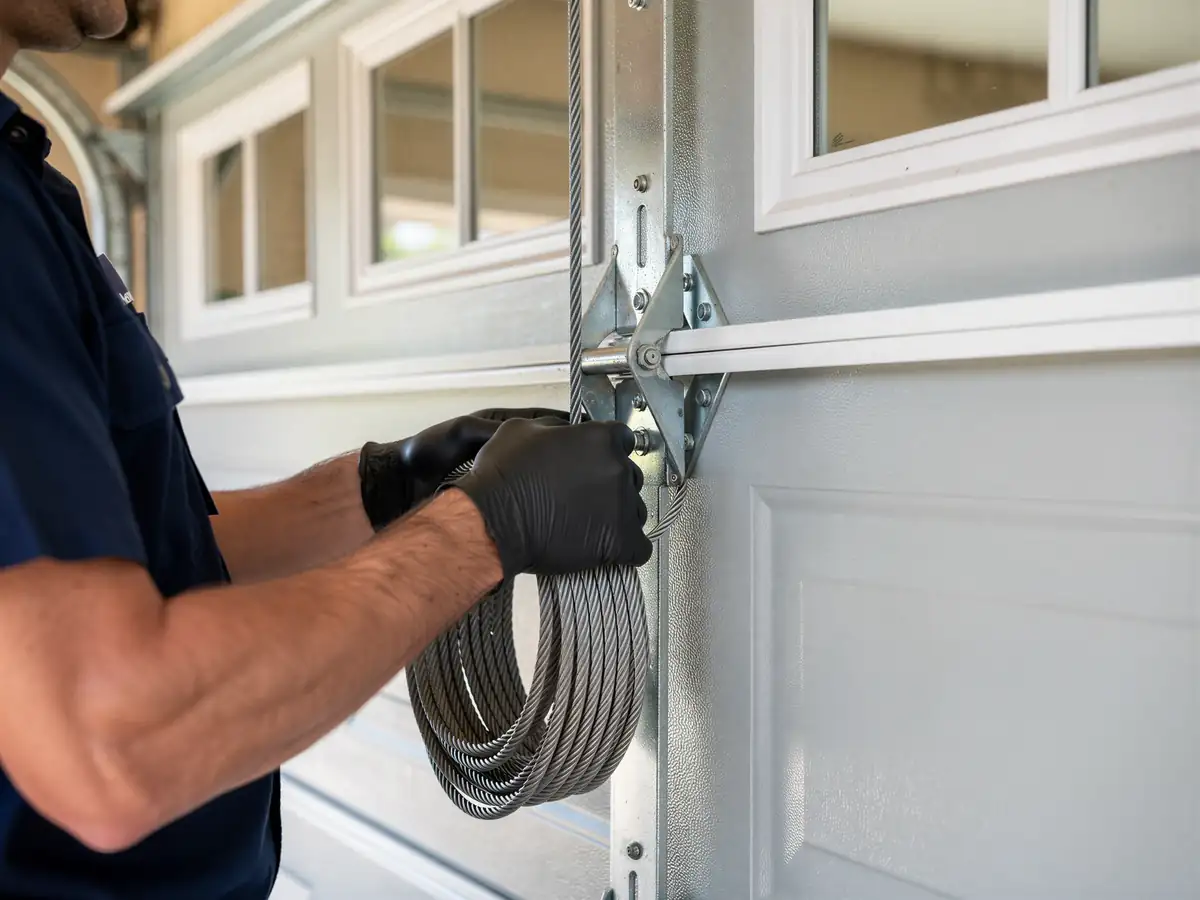
What you can safely check yourself: whether the spring is visibly separated (a gap in the coil means it's broken, full stop), and whether the cables on either side of the door look frayed or loose at the drum. If either of those is true, stop using the opener and call it in rather than forcing the door - a broken spring under opener strain is how you burn out a motor on top of the spring repair. We won't talk you through releasing wound tension over the phone, because that's exactly the kind of advice that gets someone hurt.
What the Repair Takes
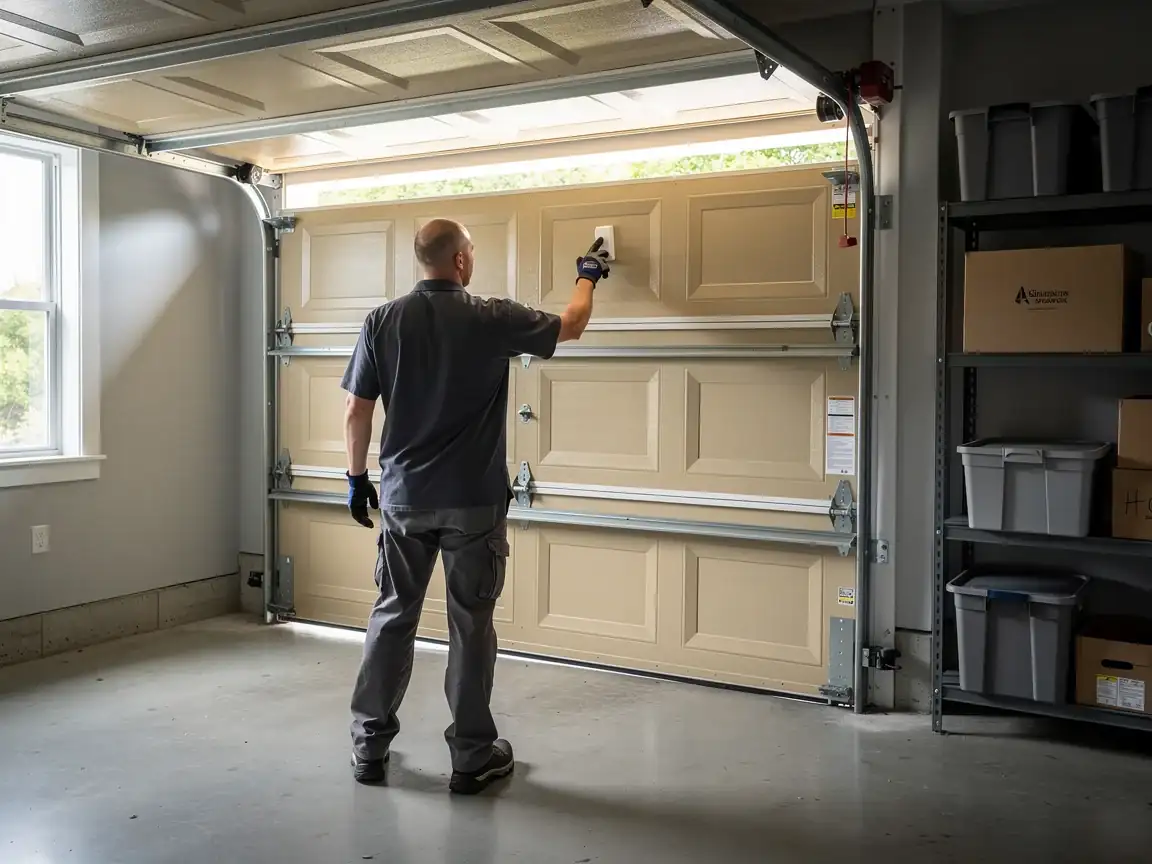
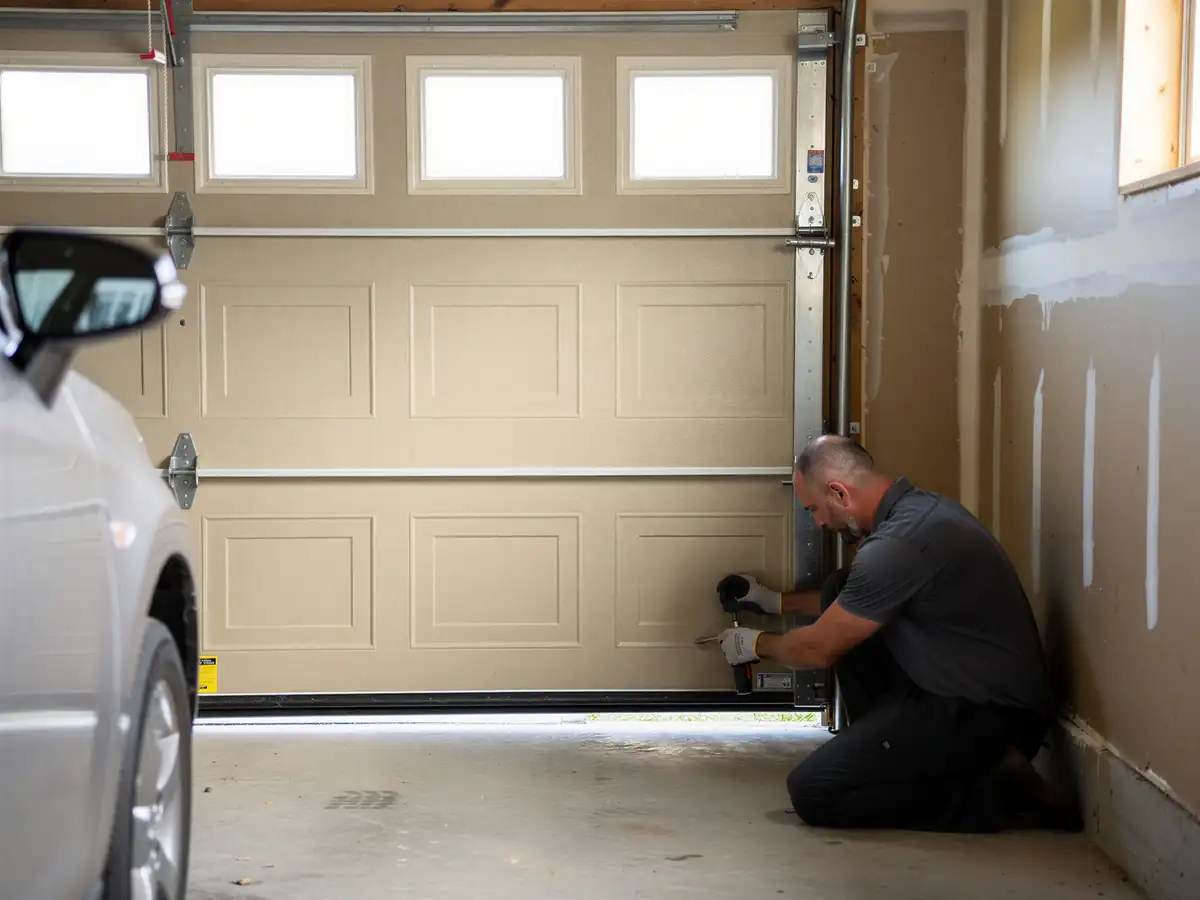
A straight spring swap on a standard double door is usually a same-visit job once we're on-site with the right spring size and winding bars - we measure the wire diameter, coil length, and inside diameter against the original rather than guessing from a wall chart, because a spring that's close but not matched wears the opener and the other hardware faster than one sized correctly. On houses from the 1980s and 90s stock common across this area, we're also checking the drums and the center bearing plate while the spring's off, since those parts age on the same timeline and a worn bearing plate will shorten a new spring's life if it's left in place.
We always replace both springs on a double-spring setup even if only one broke, because the second one is on the same age and cycle count and will usually go within months of the first. That's not an upsell - it's a shop policy because we've seen the callback. What we don't do is patch a spring with a tension adjustment or a partial fix; once the coil separates or the steel fatigues, replacement is the only sound repair.