How It Shows Up
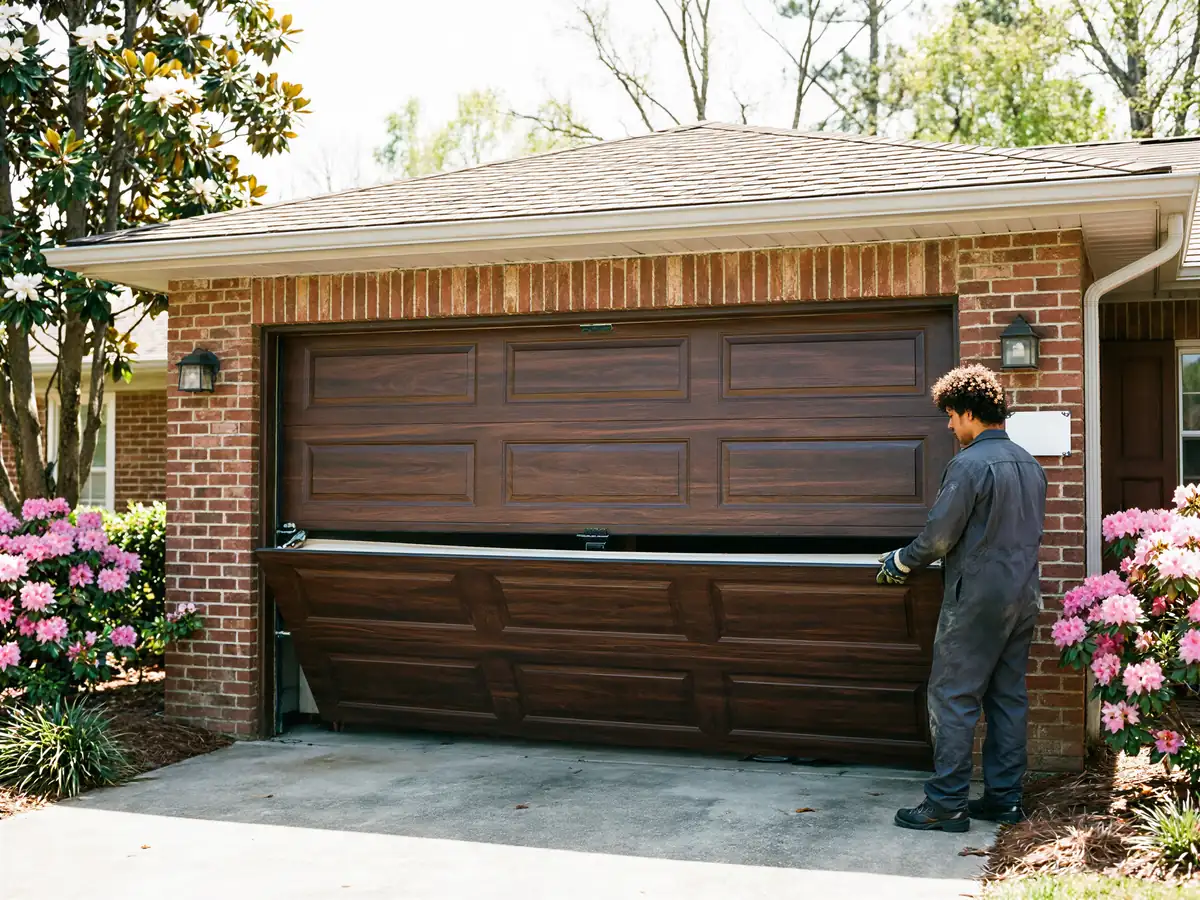
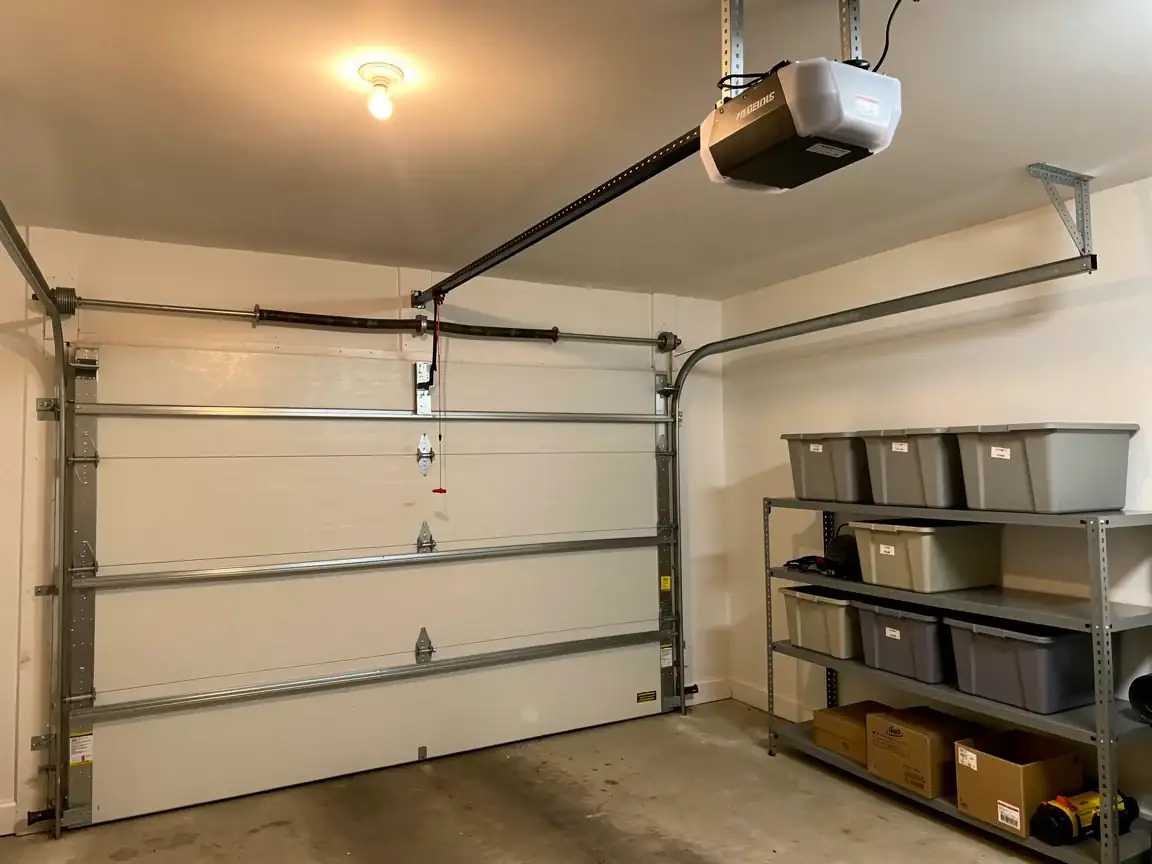
A cable problem rarely starts with the door refusing to move. It starts smaller: one corner of the door sits a half inch lower than the other, or the door racks sideways in the track as it closes. You might hear a sharp snap followed by a bang as a frayed strand lets go and the drum spins free. Sometimes the door looks fine sitting shut but won't lift at all, because the cable has jumped the drum groove and wound itself wrong. On double doors, a cable failure on one side puts the whole weight on the other, which is how you end up bending a track in the same call that started as a loose cable. None of this is an opener problem, even though the opener usually gets blamed first - if the door were disconnected from the opener by hand, it still wouldn't lift evenly, because the cable and the spring are what actually carry the weight. Catching it at the "door sits crooked" stage, before a cable snaps under load, is the difference between a repair and a repair plus a bent track or dented panel.
The DIY Question
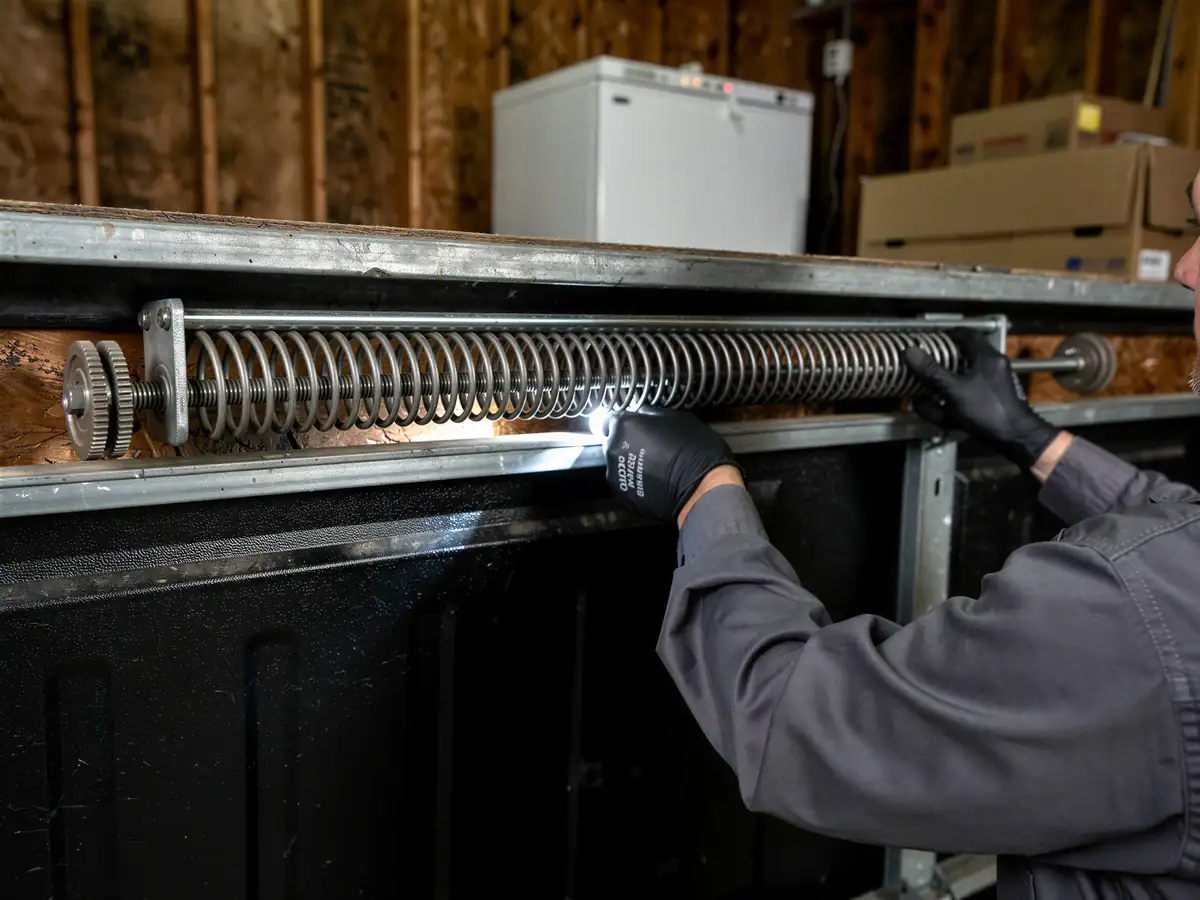
A garage door cable is under load from a wound torsion spring, and that's the part that makes this a bad weekend project. The cable isn't just holding the door's weight - it's holding back the spring's stored energy too, and if it lets go while someone's hands are near the drum or the bottom bracket, it can take a finger or worse. This is one of the honest limits on what a homeowner should take on: swapping a broken cable looks simple on a video, but setting the right winding tension on the replacement, matching cable gauge to the spring, and getting both sides balanced again isn't a one-cable job done safely without the right bars and clamps. If only one cable has failed, we still replace both, because the other one has the same age and the same rust exposure and it's not worth a second service call six months later. That's the honest trade-off: it costs a little more up front than fixing just the broken side, but it's the only version of this repair that doesn't leave a known weak point in the system.
What the Repair Takes
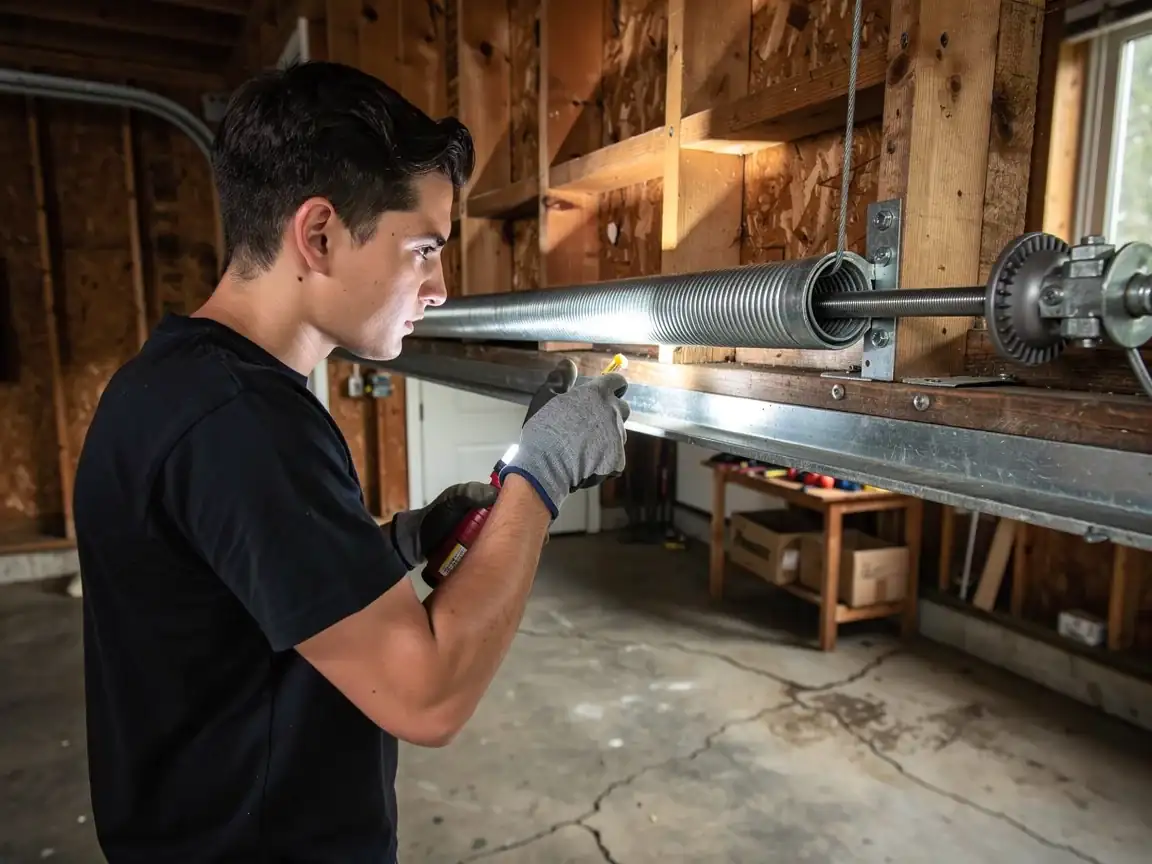
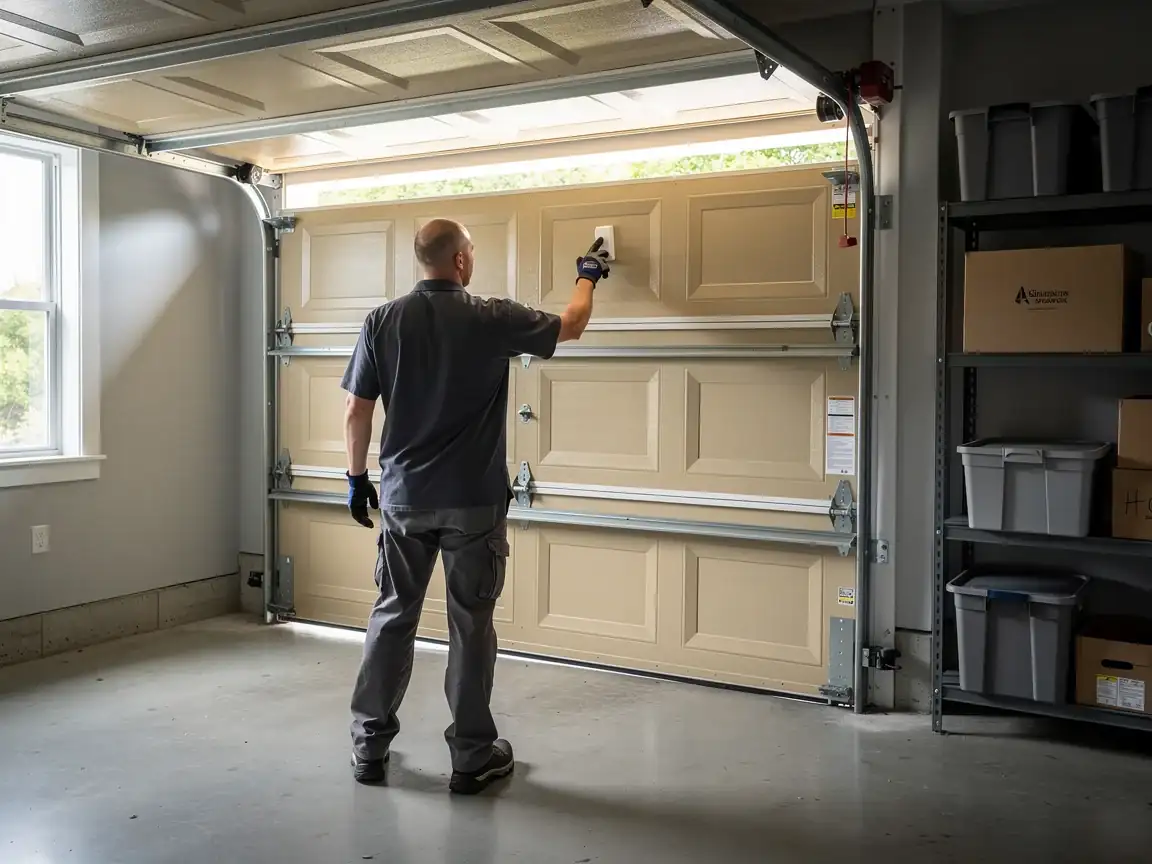
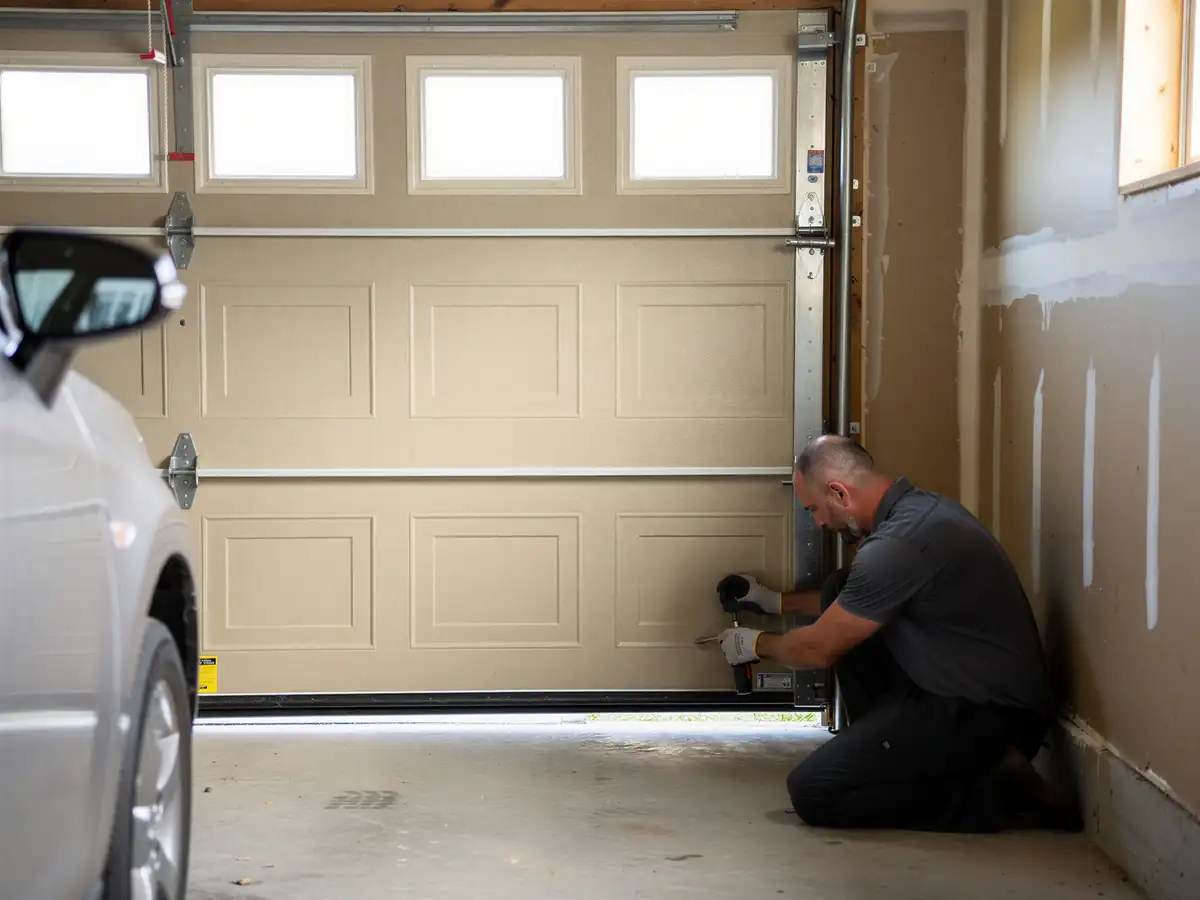
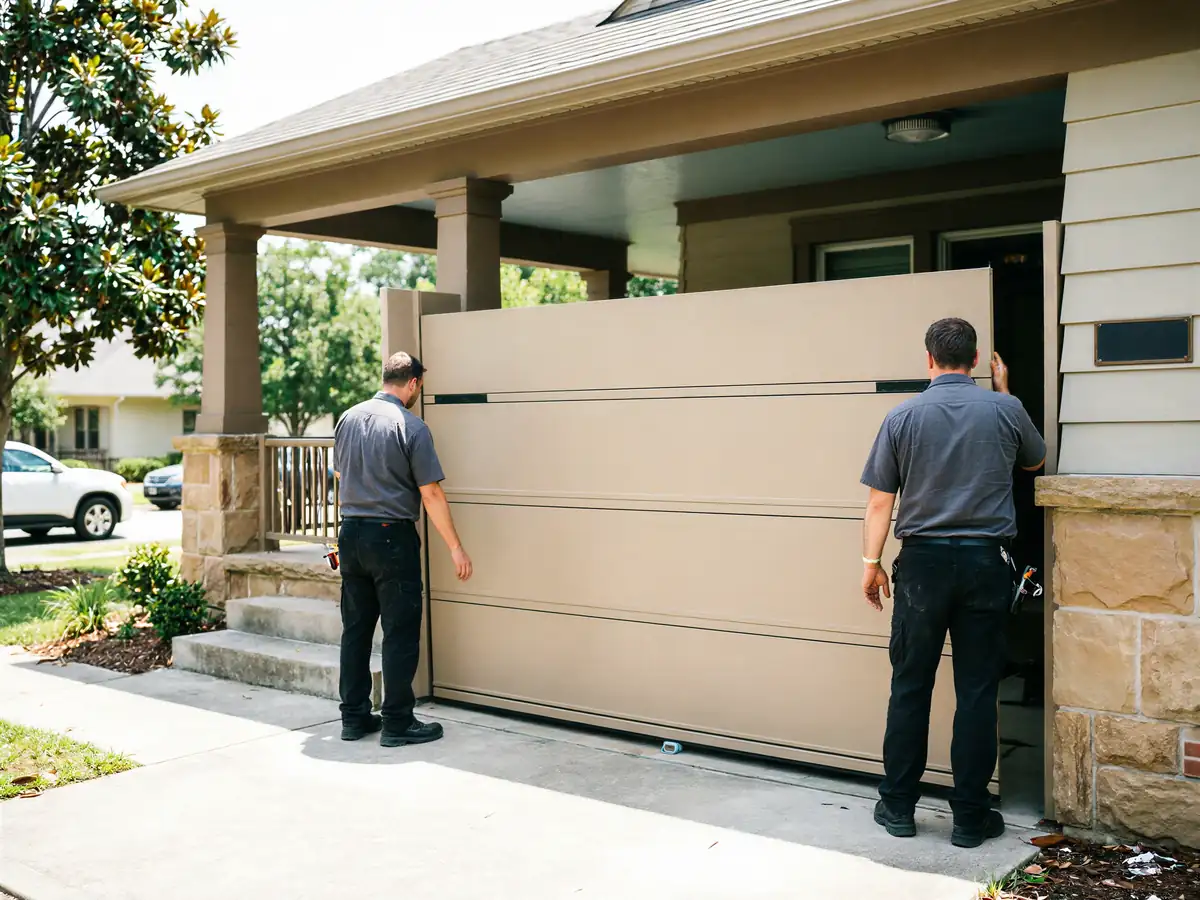
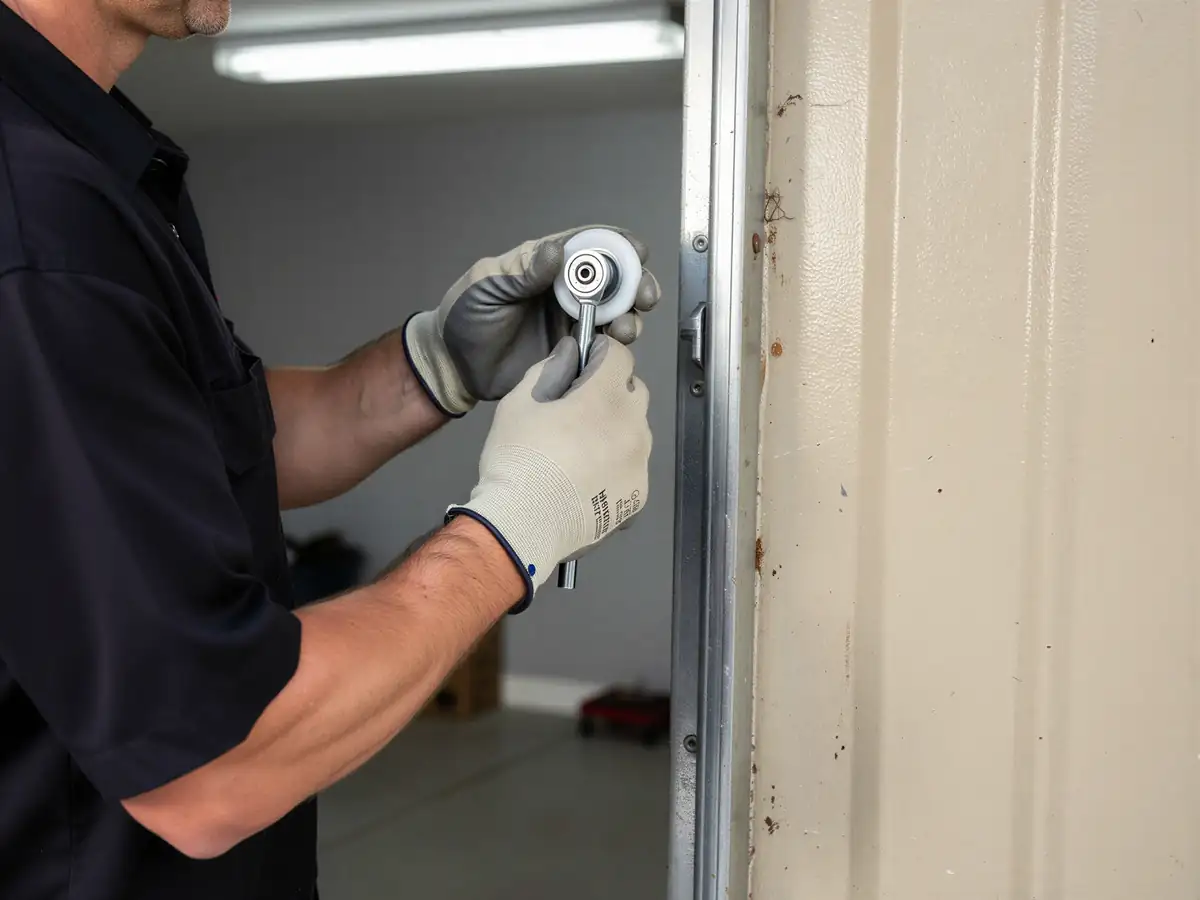
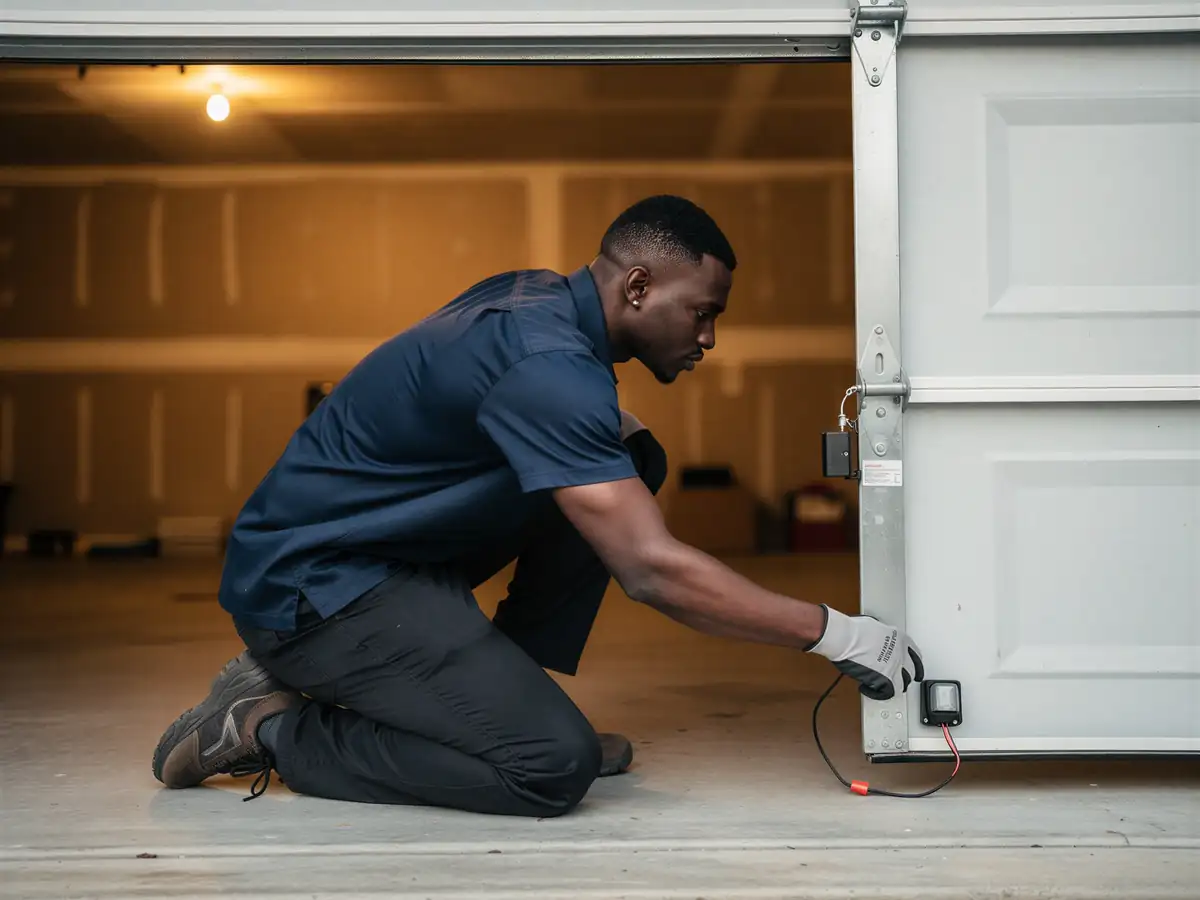
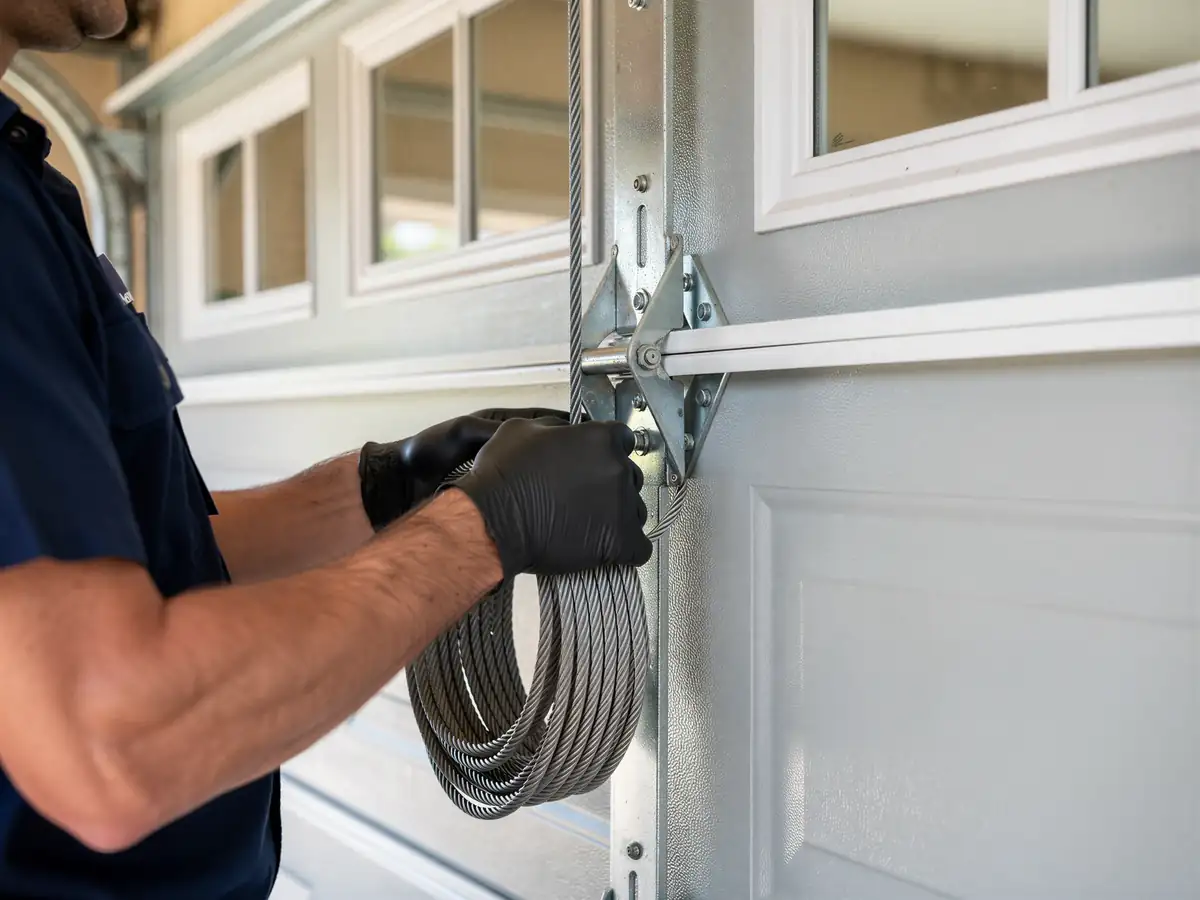
A cable repair starts with releasing spring tension safely, then pulling both cables and checking the drums, bottom brackets, and the track they ride in for wear or bending - a snapped cable under load sometimes nicks a drum groove on the way out, and a nicked drum will fray the next cable too if it isn't replaced along with the wire. We match new cable to the door's weight and spring size rather than installing whatever gauge was on the shelf, then re-wind the spring and check that the door balances - meaning it holds still at waist height when disconnected from the opener, instead of sliding down or shooting up. On the 1980s and 90s builds common across this area, we're also checking whether the original drums and bottom brackets are still the right fit, since cable and hardware pairings have changed over three decades of production. Most of this is done in a single visit; where a bent track or a cracked panel came along with the cable failure, that part of the job may need a return trip if a replacement part has to be ordered.