How It Shows Up
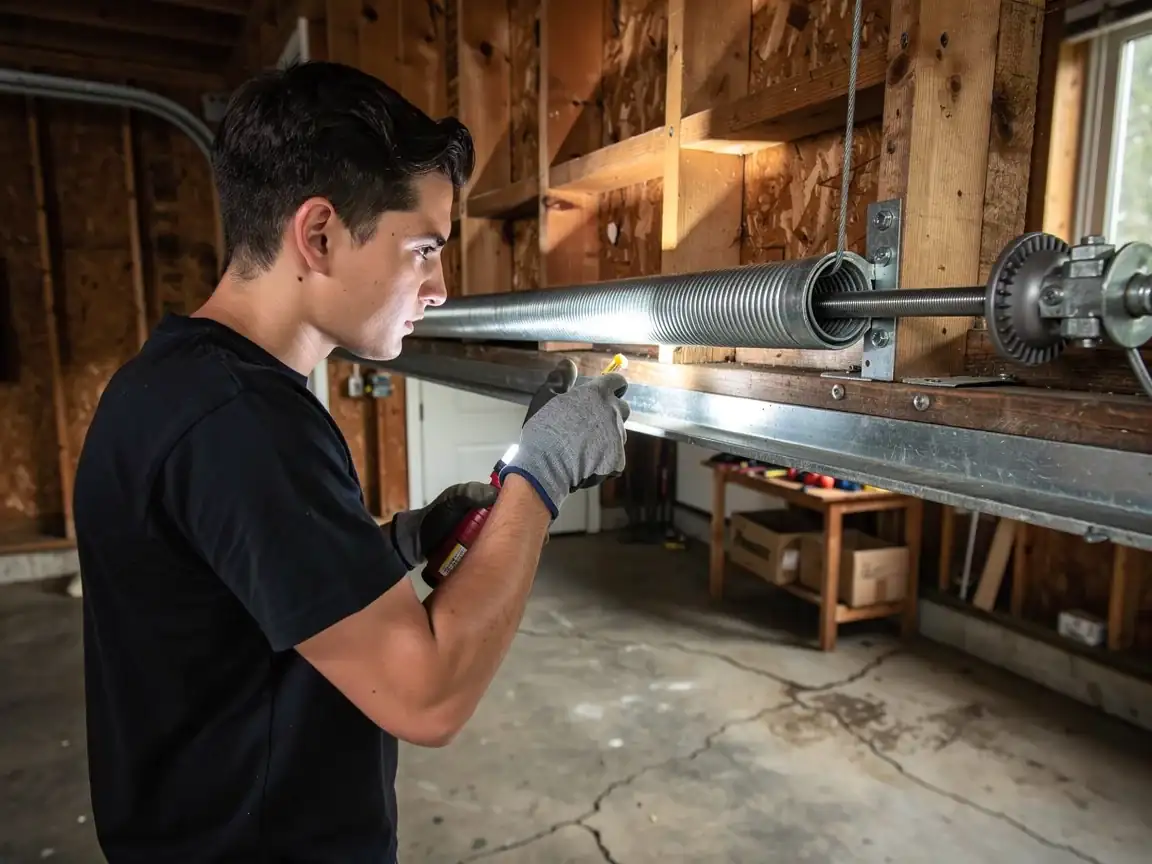
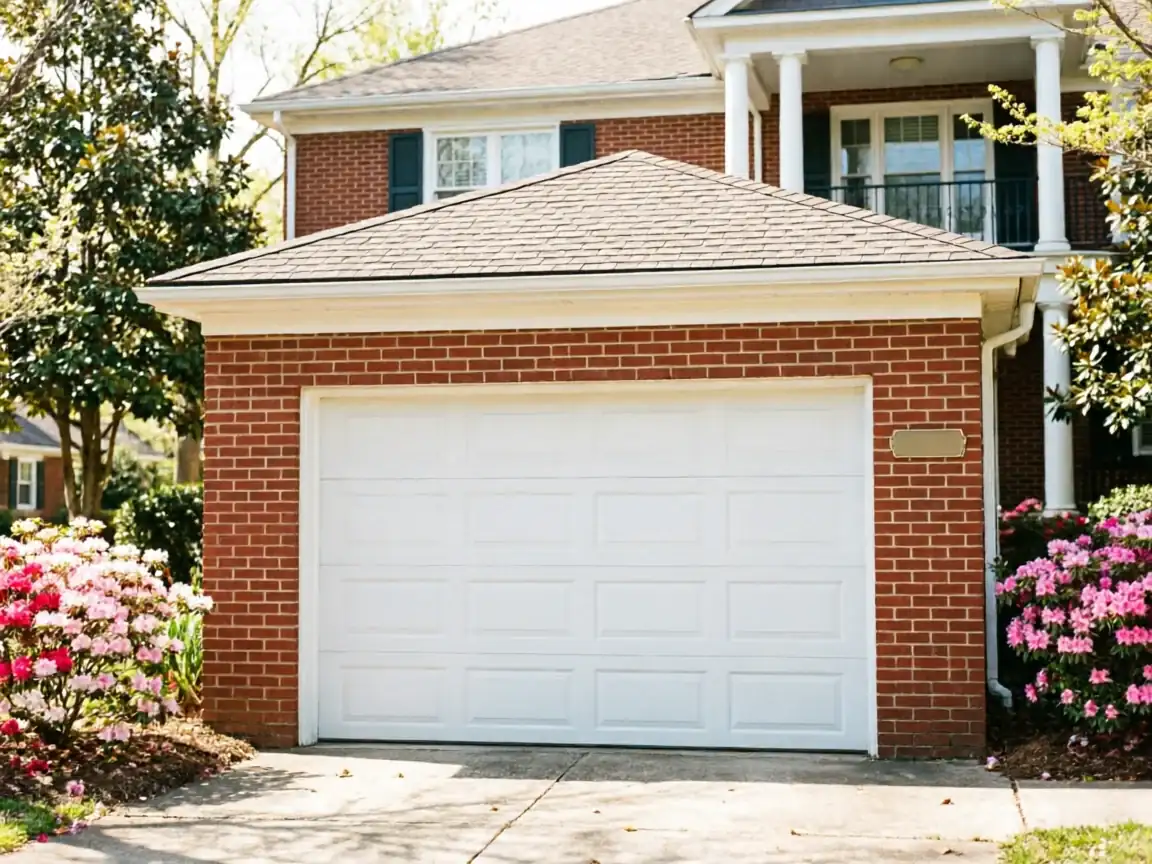
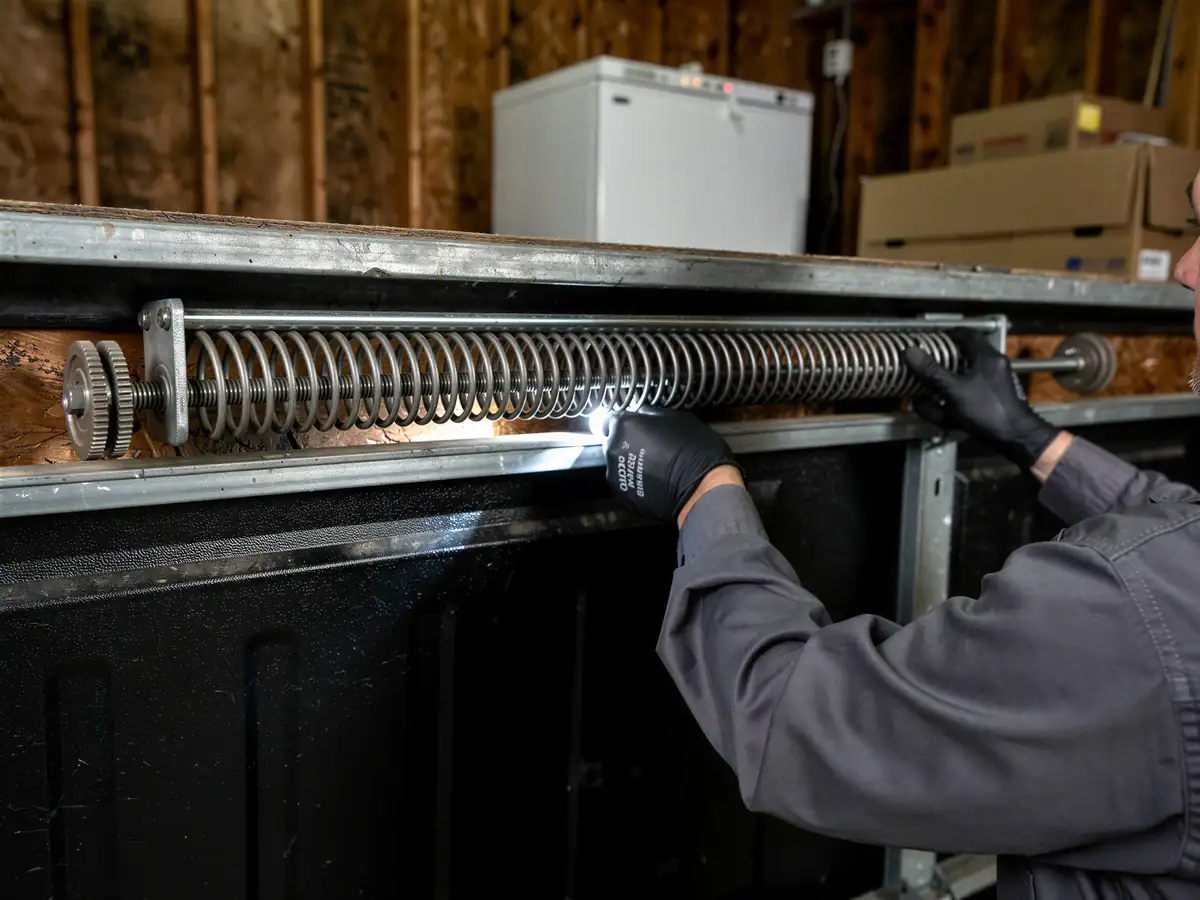
Most houses in White House went up after 2000, well past the 1958-2005 build window that covers this part of the county, which means the doors here skew newer and wider than what you'd find on an older street. A lot of these homes carry two-car openings - 16 feet across - instead of the narrower single bays common in older stock. Wider doors need heavier torsion springs to lift the same weight, and heavier springs put more load on the shaft, the center bearing, and the cable drums when something finally gives.
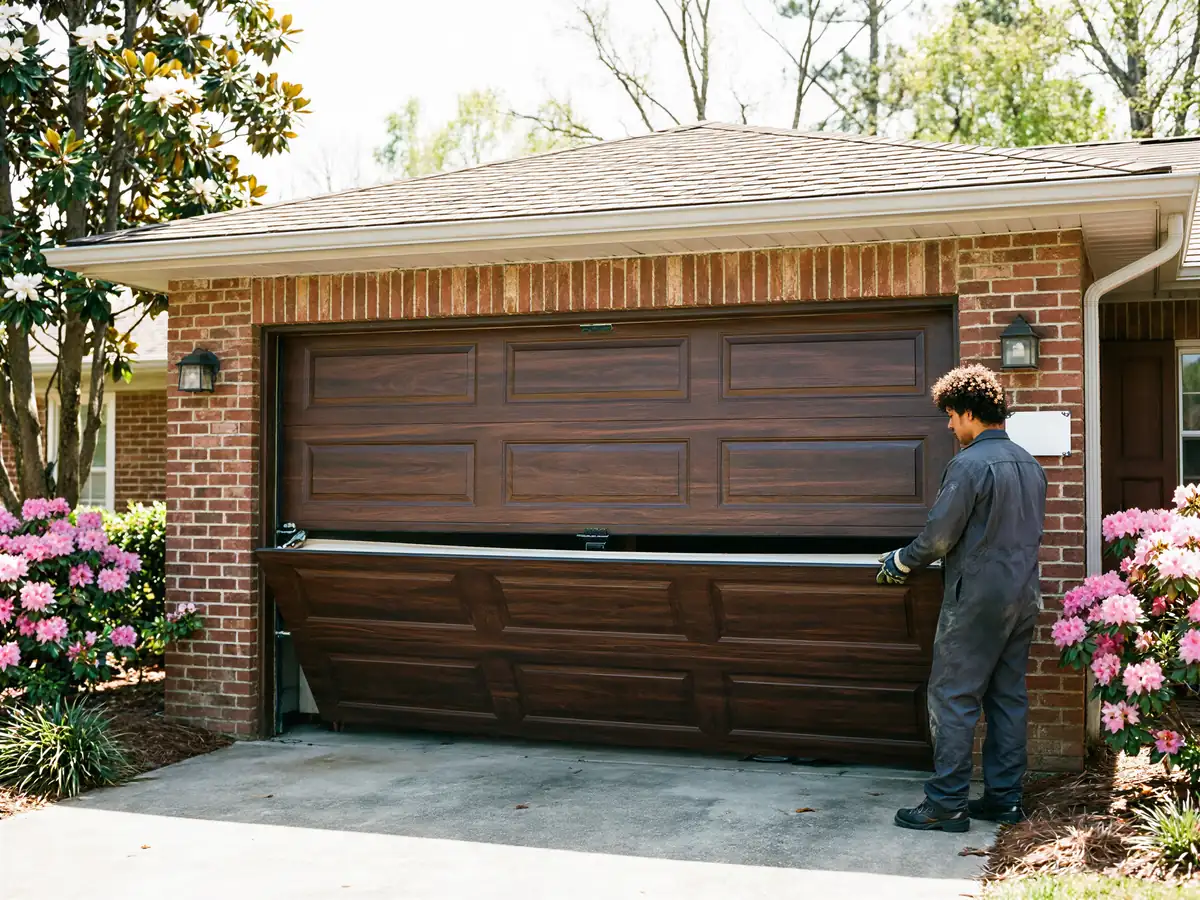
The fault looks the same everywhere: the door won't lift, or it lifts a few inches and stalls, or you hear a bang from the garage and now the opener strains and reverses. On a door this size, that bang is almost always one torsion spring letting go - not both, usually, but enough that the opener is now trying to lift the full weight alone, which is hard on the motor and the drive gear too.
What's different here isn't the failure, it's the parts. A spring sized for a 16-foot door isn't interchangeable with one sized for an 8-foot door, and on newer construction the springs are usually factory-matched to the door weight rather than a generic stock size. Get the wrong wire gauge or wind count and the door either won't balance or it over-torques the opener within a season.
The DIY Question
A torsion spring under tension can put someone in the hospital
And that's true whether the door is from 1962 or 2002. We're not going to walk you through winding one over the phone.
What you can safely check yourself
Pull the release cord, lift the door by hand, and see if it's heavy or lopsided. If it drops on its own or feels like dead weight, that's a spring problem, not an opener problem, and it's not a bracket-tightening job. If it lifts evenly and stays up a few inches on its own, the springs are probably still doing some of the work and you've got a smaller issue - a sensor, a limit switch, something electrical.
The one thing worth knowing about newer builds specifically
Because these doors and springs are usually a matched factory set, swapping in a spring that's "close enough" from a hardware store bin is more likely to throw off the balance than it would on an older door with simpler universal hardware. That's a repair, not a project.
Parts We Carry
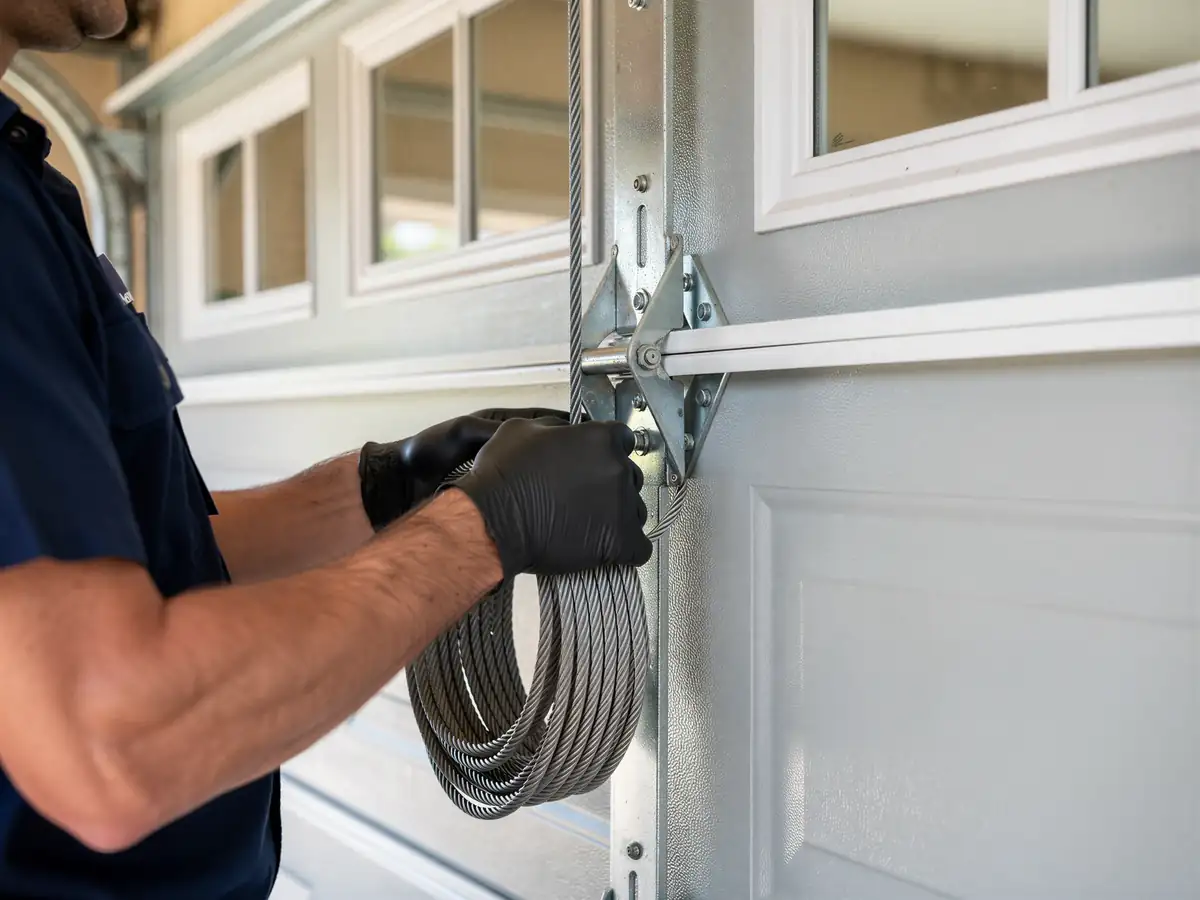
We carry torsion springs sized for the wider, heavier two-car doors common on post-2000 construction, along with the standard single-door sizes. Cables, drums, and center bearings come with us too, since a spring failure on a loaded door usually stresses whichever cable took the extra pull.
What we don't stock on the truck: springs for commercial or oversized residential doors, and specialty torsion sizes for odd factory setups outside the usual residential range. If your door needs one of those, we'll tell you straight away rather than guess at a fit, and order the correct part before we come back.
How to Book
We cover White House out of Hendersonville, about 12 miles up the road. Check the White House coverage page for what we handle in this area, or call to set up the spring repair directly. We'll ask for the door width and whether it's one spring or two visibly broken before we load the truck, since that tells us which spring size to bring.
What the Repair Takes
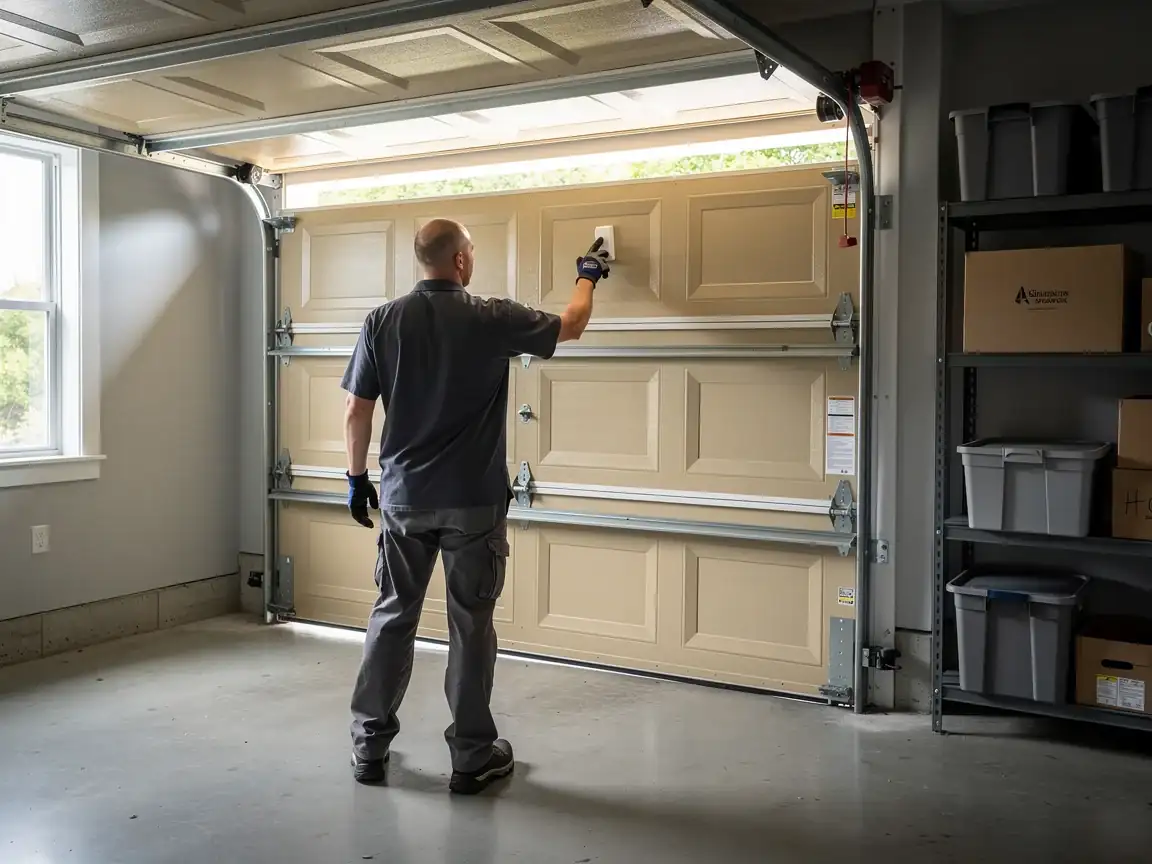
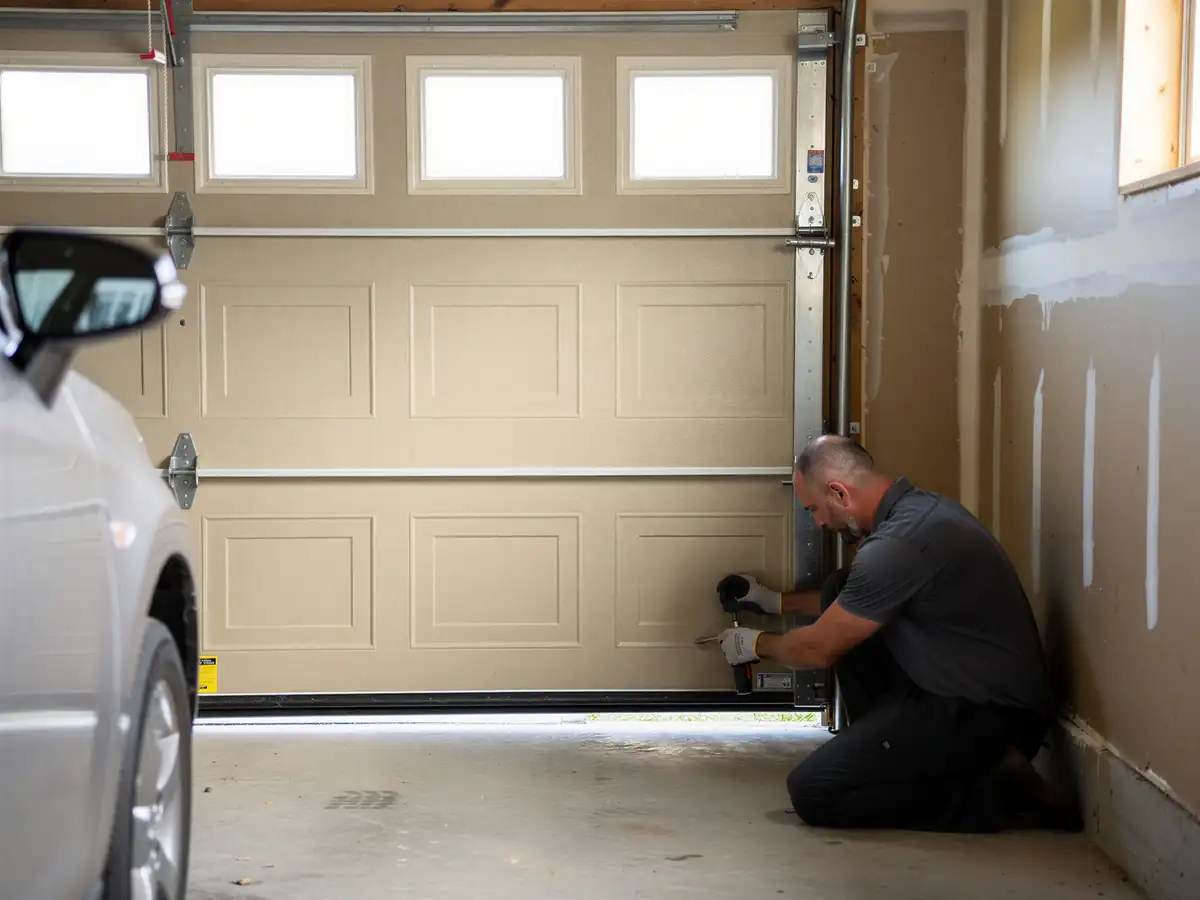
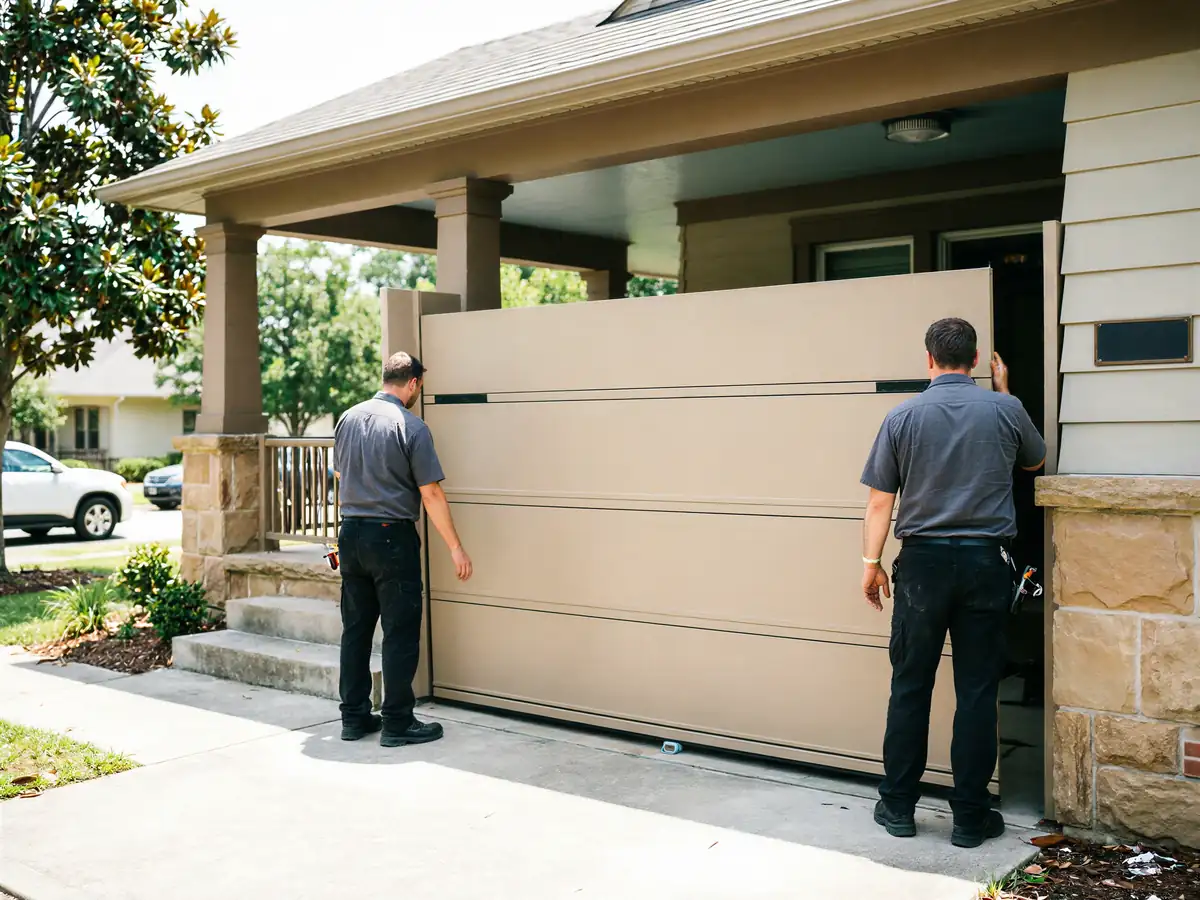
On a standard two-car door we replace both torsion springs even if only one broke
The other one is close behind, and opening the door back up twice in a month costs you more than doing both now. We check the cable condition and the center bearing at the same time, since those take the extra strain when a spring goes.
Most spring jobs on a door this size run under two hours once we're on site
Longer if the drums or bearing need replacing too. Afterward we balance the door by hand - lift it to waist height and it should hold, not drop and not climb. That balance test matters more on a heavier two-car door than a narrow one, because an unbalanced door wears out an opener fast.