What Can Go Wrong
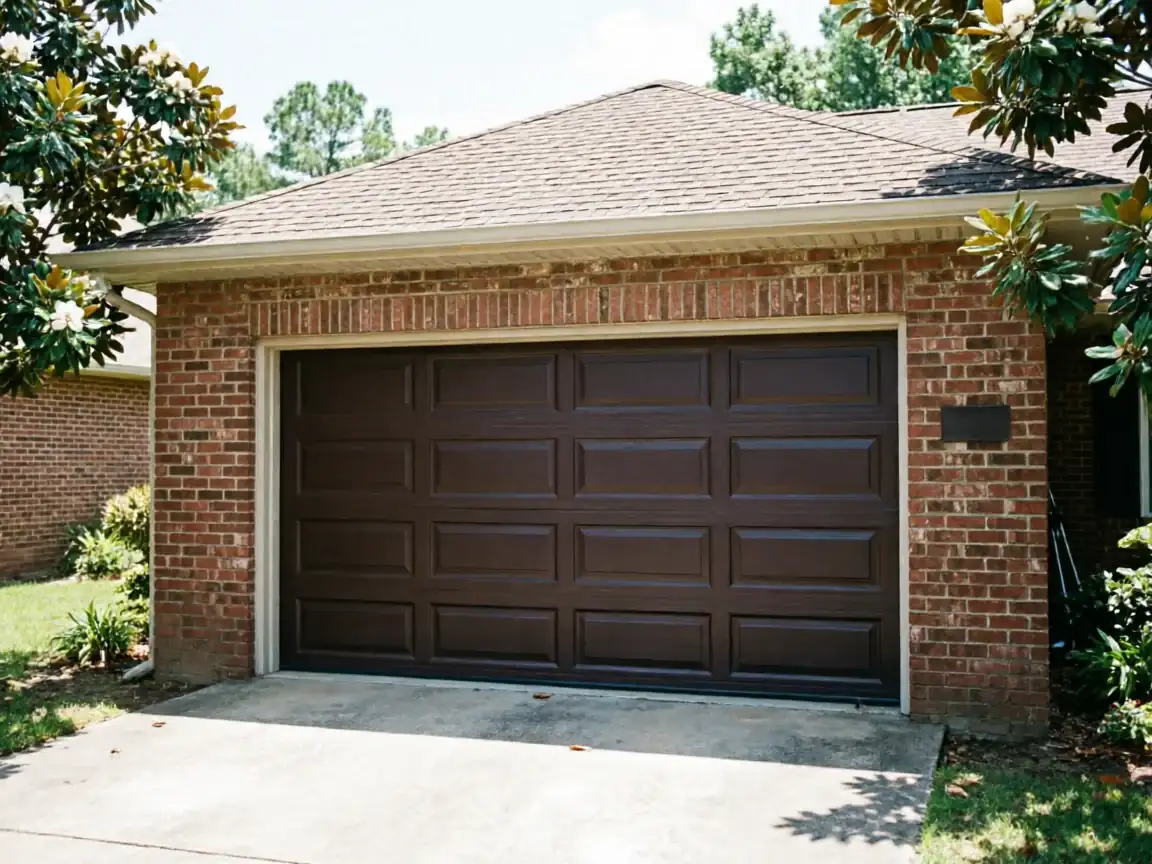
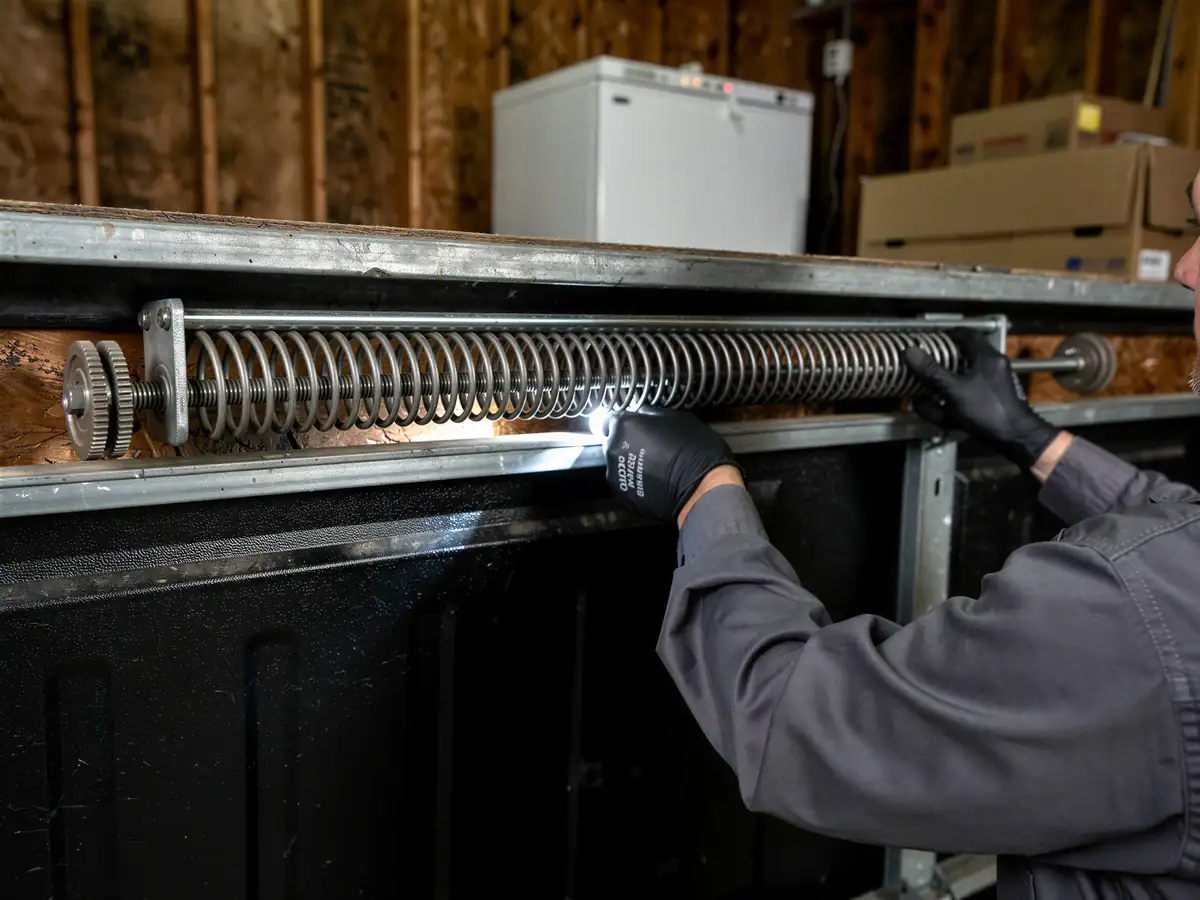
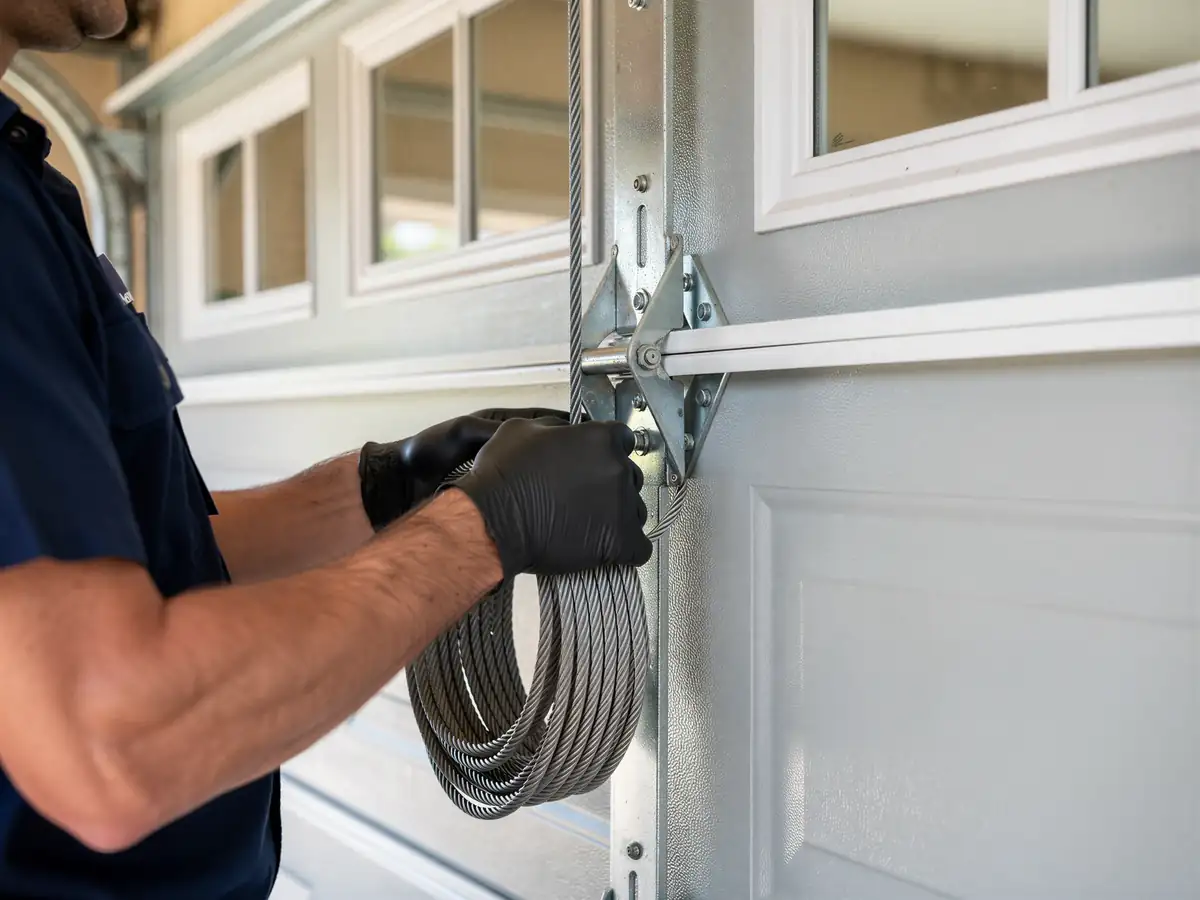
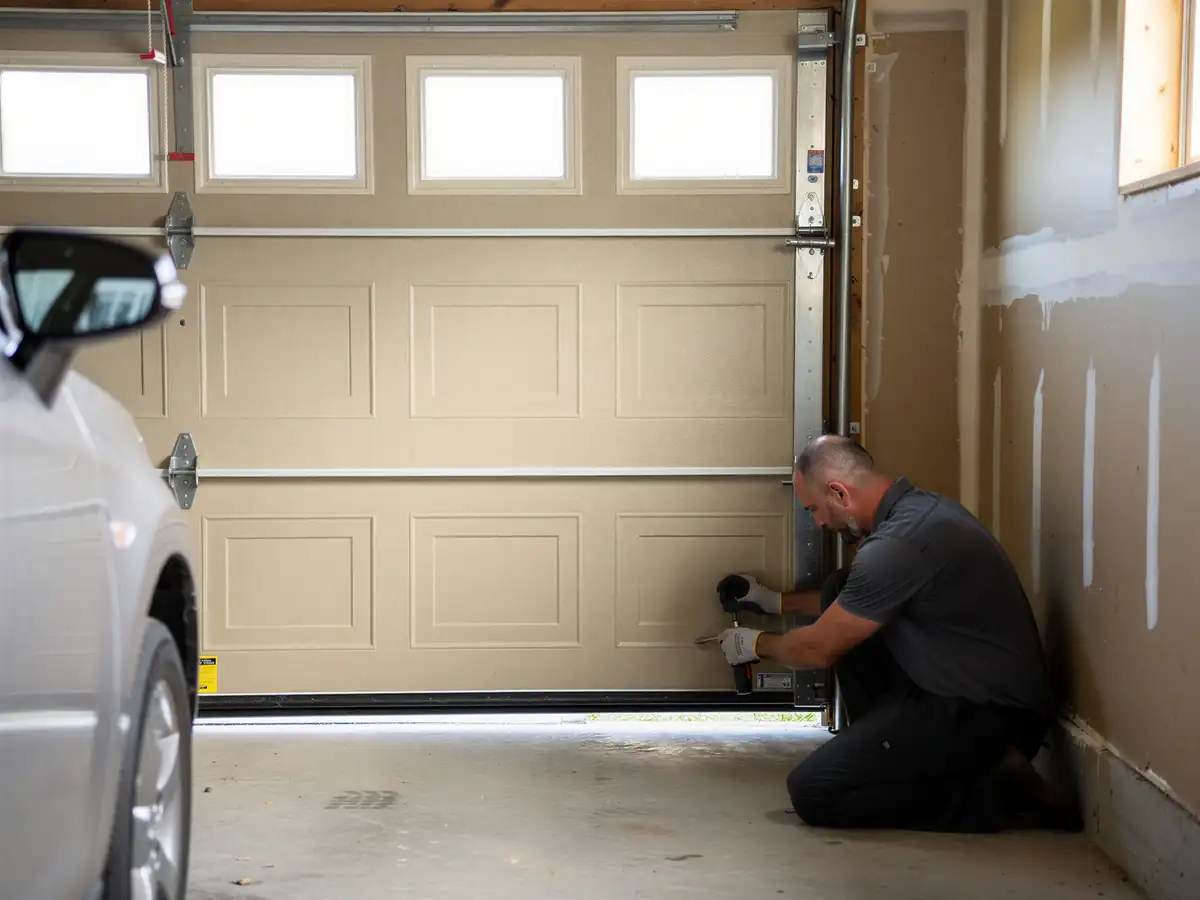
Green Hill's houses cluster around a median build year of 1978, which puts a lot of original torsion springs, worn galvanized cable, and first-generation chain-drive openers still bolted into these garages almost fifty years later. Nobody swaps a spring on schedule - it runs until it snaps. On a door that age, the usual failure points are the spring itself (fatigued past its rated cycle count decades ago), the cable fraying where it wraps the drum, and the bottom bracket that's been carrying the same tension since Carter was in office. Rollers are usually the original steel ones, loud and pitted, not the nylon kind. Openers from that build era, if they haven't already been replaced once, are on borrowed time - the logic boards and motor capacitors don't last as long as the heavier steel they're bolted to. We also see a fair number of homes here where a previous owner did a partial upgrade - new opener, same forty-year-old spring and track - which hides the real problem until the day it doesn't.
How It Shows Up
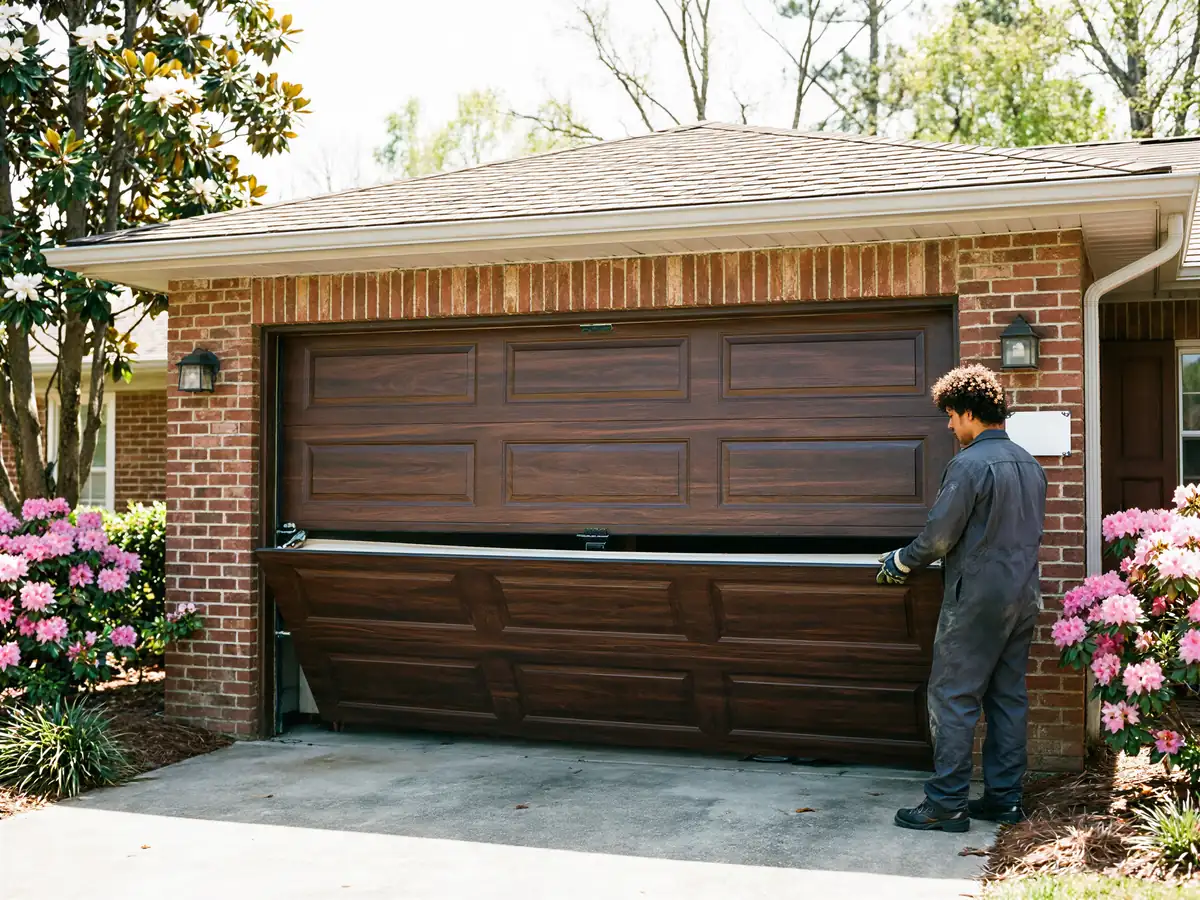
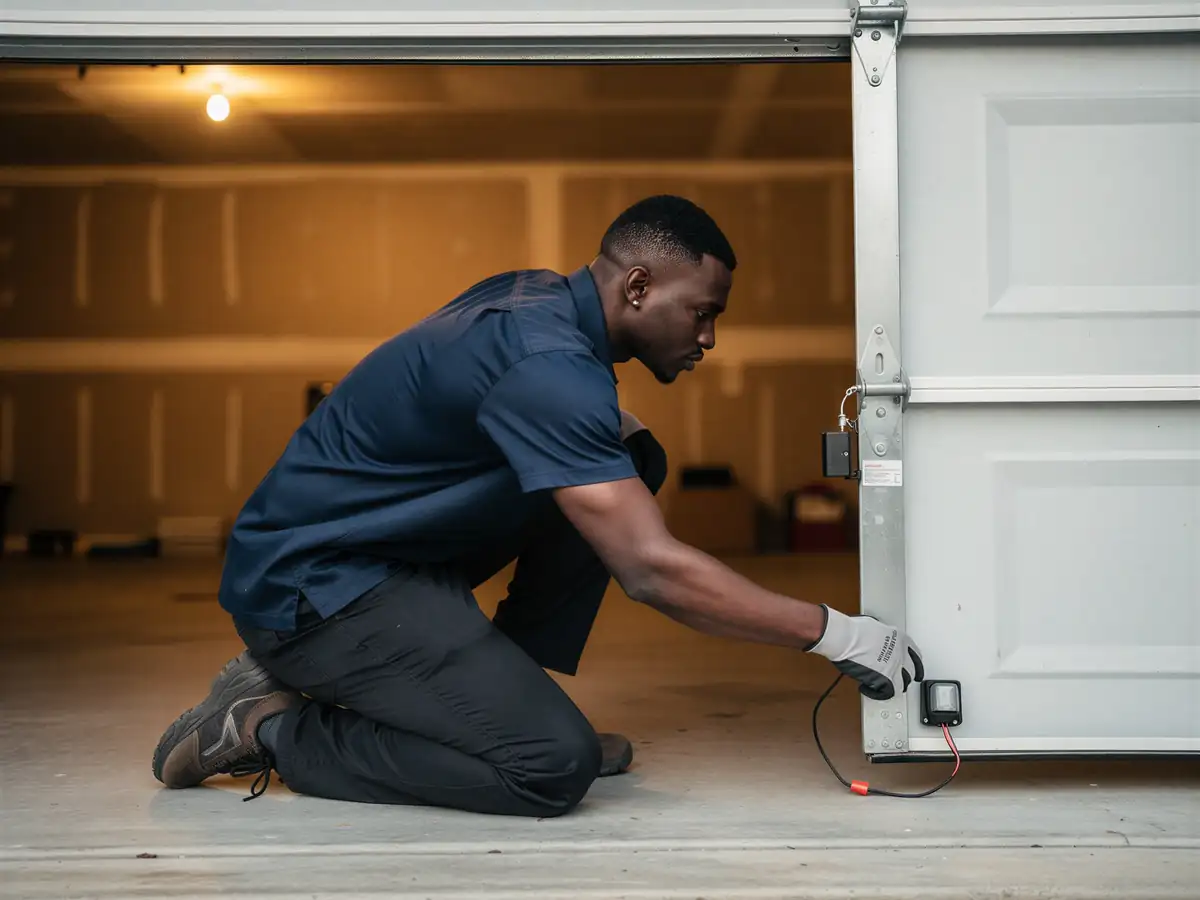
On a door this old, trouble rarely announces itself as a dead stop. It shows up as a grinding noise on the way up, a door that hangs an inch off-level, or an opener that strains and reverses before it reaches the floor. Some homeowners notice the door closing slower than it used to, or catching partway before a hard drop - that's the spring losing tension unevenly, not the opener failing. With roughly 2,508 households in this area, we hear the same handful of complaints repeated: a track that's pulled slightly away from the frame, a bottom seal that's cracked and let cold air in, or a remote that stopped working because the receiver board finally gave out. None of these are emergencies on day one. By week three, most of them are.
The DIY Question
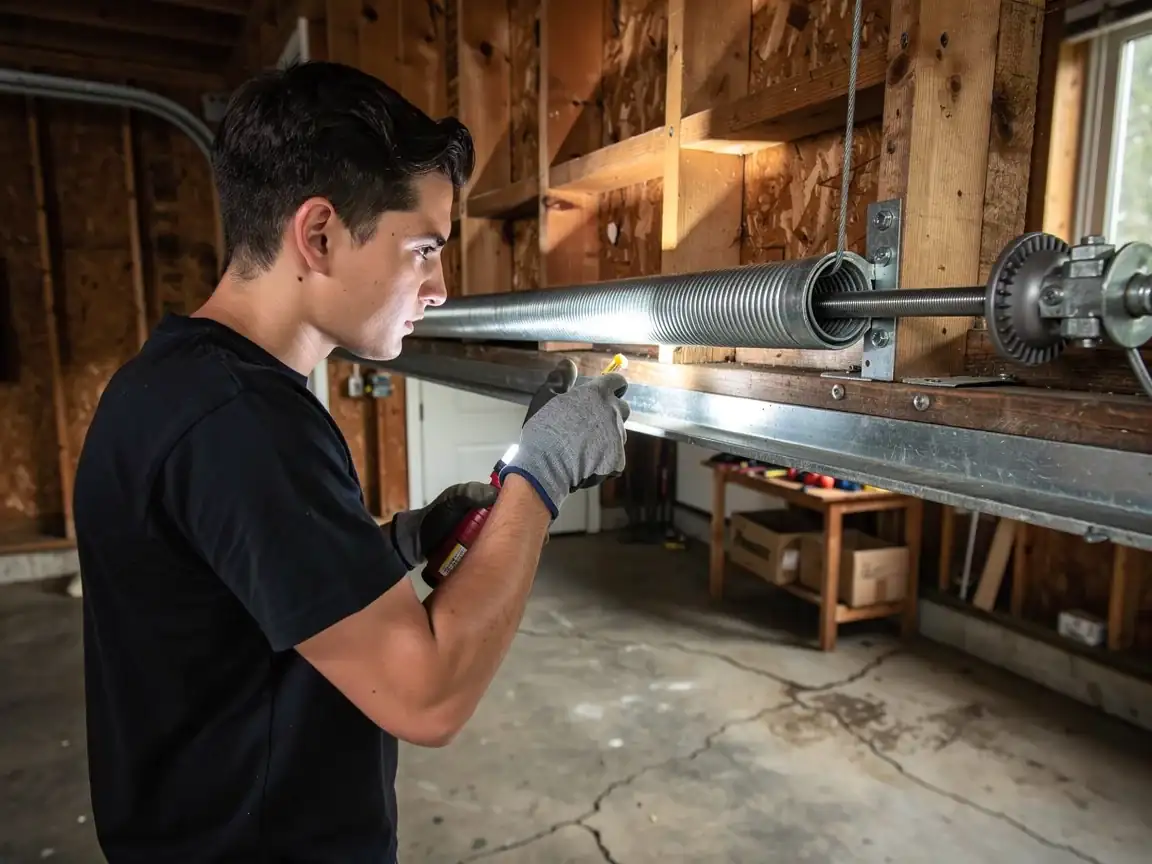
Tightening a loose bracket bolt or lubricating hinges and rollers is fine to do yourself, and it's cheap insurance on a door this old. Spring work is not a DIY job - a wound torsion spring on a double door carries enough stored force to break bones, and that's true whether the door is five years old or forty-seven. If your opener is the original 1978-era unit, we'd also steer you away from troubleshooting the circuit board yourself; parts for that generation aren't stocked anywhere, and opening the housing usually voids whatever life is left in it. Median household income here runs around $91,397, higher than the wider service area, and we mention that only because it changes the math on repair versus replace - a full opener swap is often the better long-term spend than nursing original hardware along.
Parts We Carry
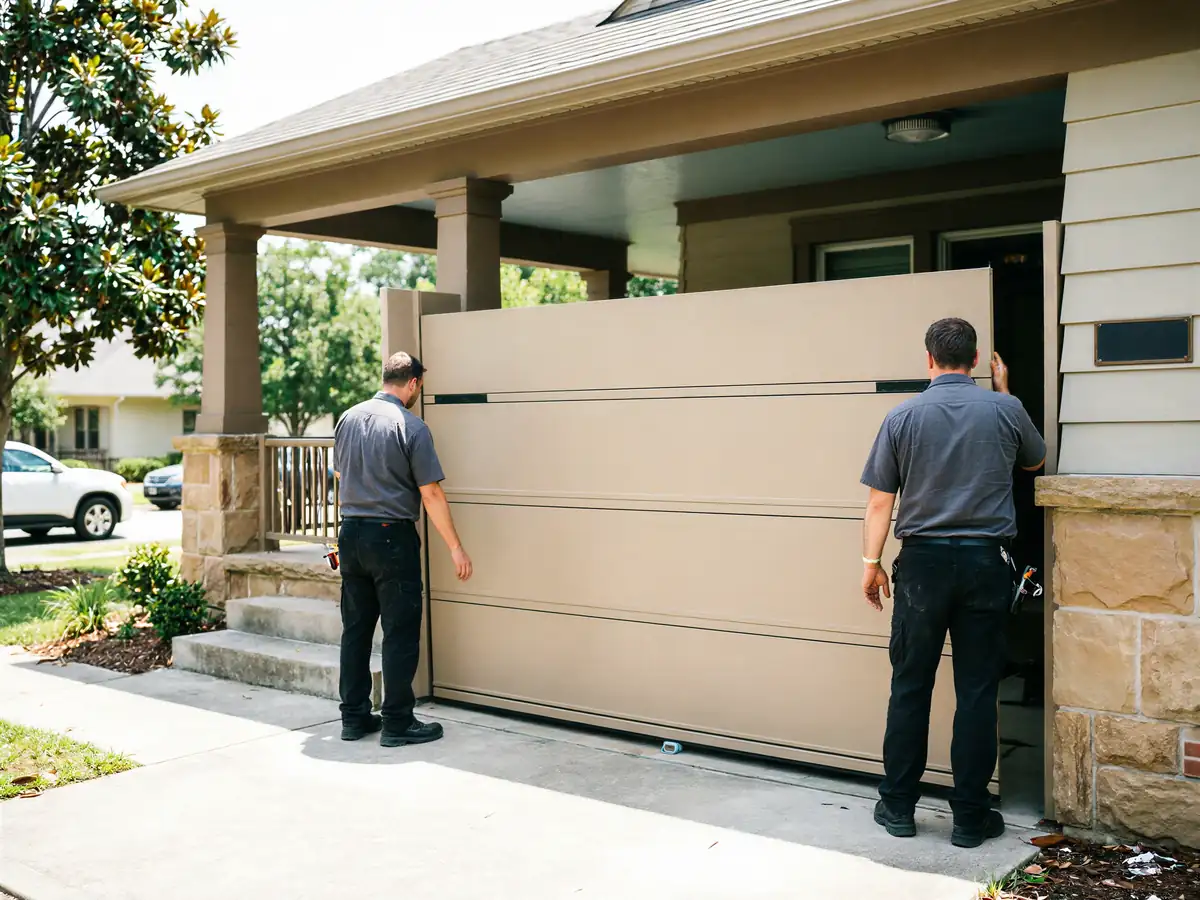
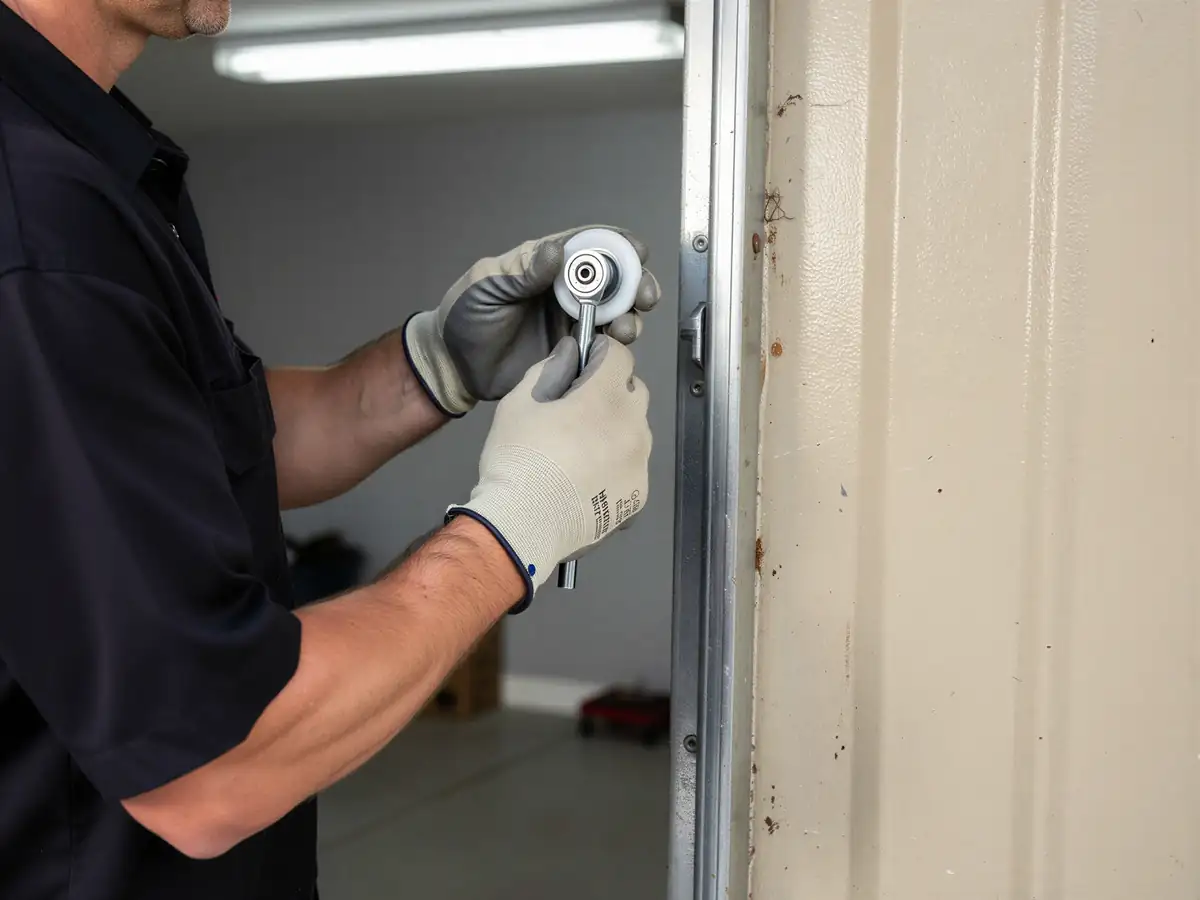
We carry standard torsion springs, galvanized lift cable, steel and nylon rollers, and universal opener logic boards on the truck, which covers most of what fails on a door from this era. What we don't carry is obsolete OEM housing parts for openers discontinued decades ago - if your unit needs that specific part, we'll tell you straight that full replacement makes more sense than a repair we can't guarantee. We don't stock custom-width panels either; those get special ordered. For everything else - springs, cables, standard track sections, weatherstripping - we're equipped to finish the job on the same visit we diagnose it.