What Can Go Wrong
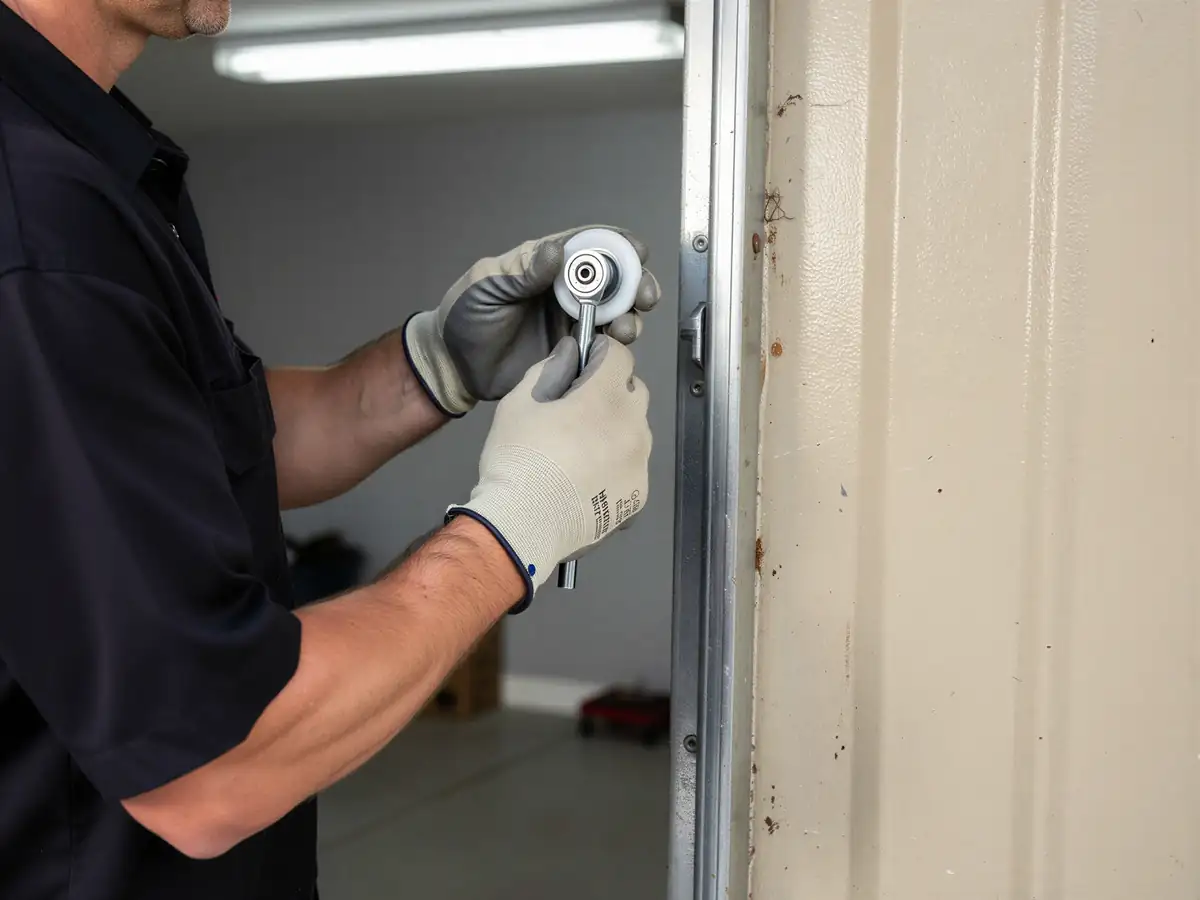
Green Hill's housing stock centers on 1978, which puts it ahead of Hendersonville's broader median build year of 1990. That decade-plus gap matters for rollers. Doors from the late 1970s were commonly hung with galvanized steel rollers running in steel track, often without the nylon-and-stem upgrade that became standard in construction after 1990 across the wider service area. Steel rollers wear differently - they don't crack like nylon does, but the roller stem and bearing wear down, and the steel wheel itself can develop flat spots or rust pits that chew up the track over years. On a 1978 door that's never been touched, you're often looking at the original hardware, which means the roller, the stem, and sometimes the hinge it rides in are all original and all tired at once. We also see stretched track gauge on these older setups, which no new roller fixes by itself - the track has to be checked and sometimes reset before new rollers will run quiet.
How It Shows Up
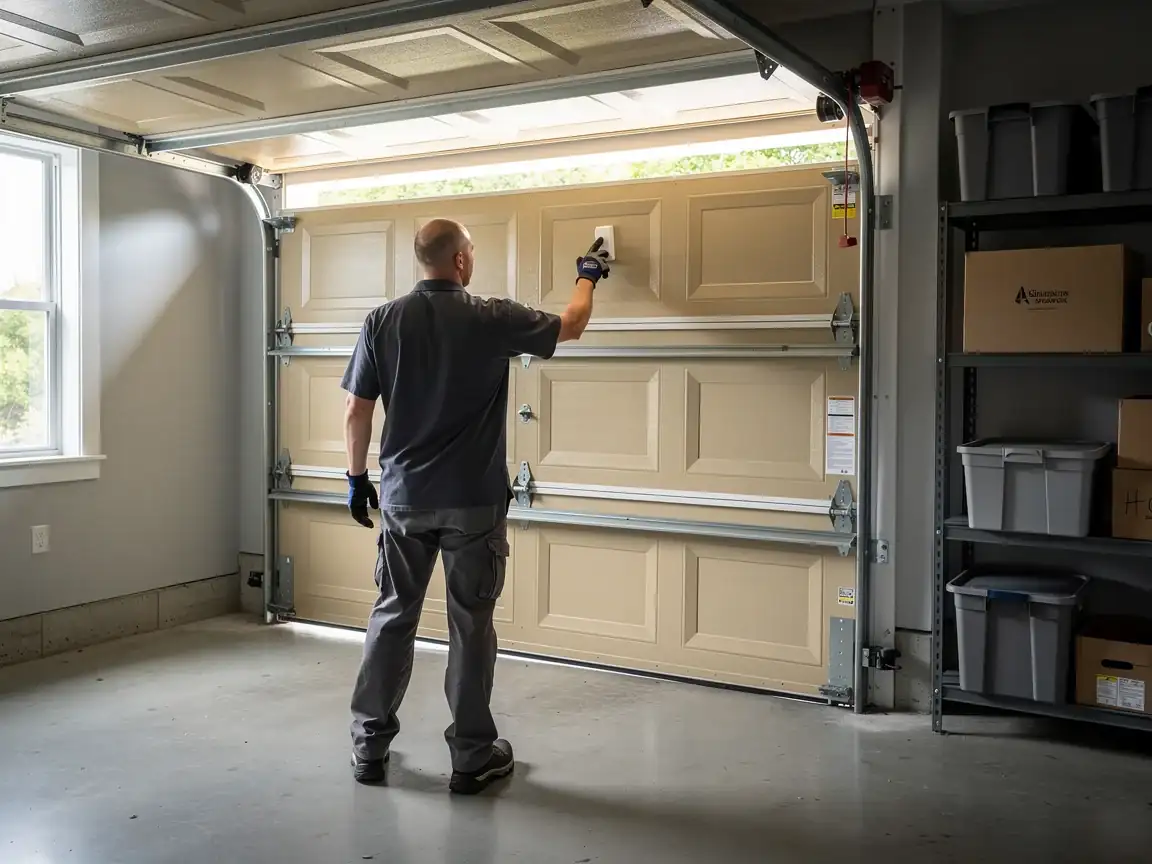
Worn rollers in Green Hill tend to announce themselves the same way they do anywhere: a grinding or popping sound as the door travels, especially right where the roller crosses from the vertical track into the curved section. On original 1978-stock doors, that sound is often louder and rougher than on a newer nylon-roller door, because steel-on-steel wear sounds different from a worn nylon wheel. You might also notice the door hesitating or jerking at one spot in the track every single cycle - that's usually a flat-spotted roller hitting the same point each time. If the door shudders across its whole travel rather than at one spot, the problem is more likely the track alignment than the rollers themselves, which is why we check both before replacing anything.
The DIY Question
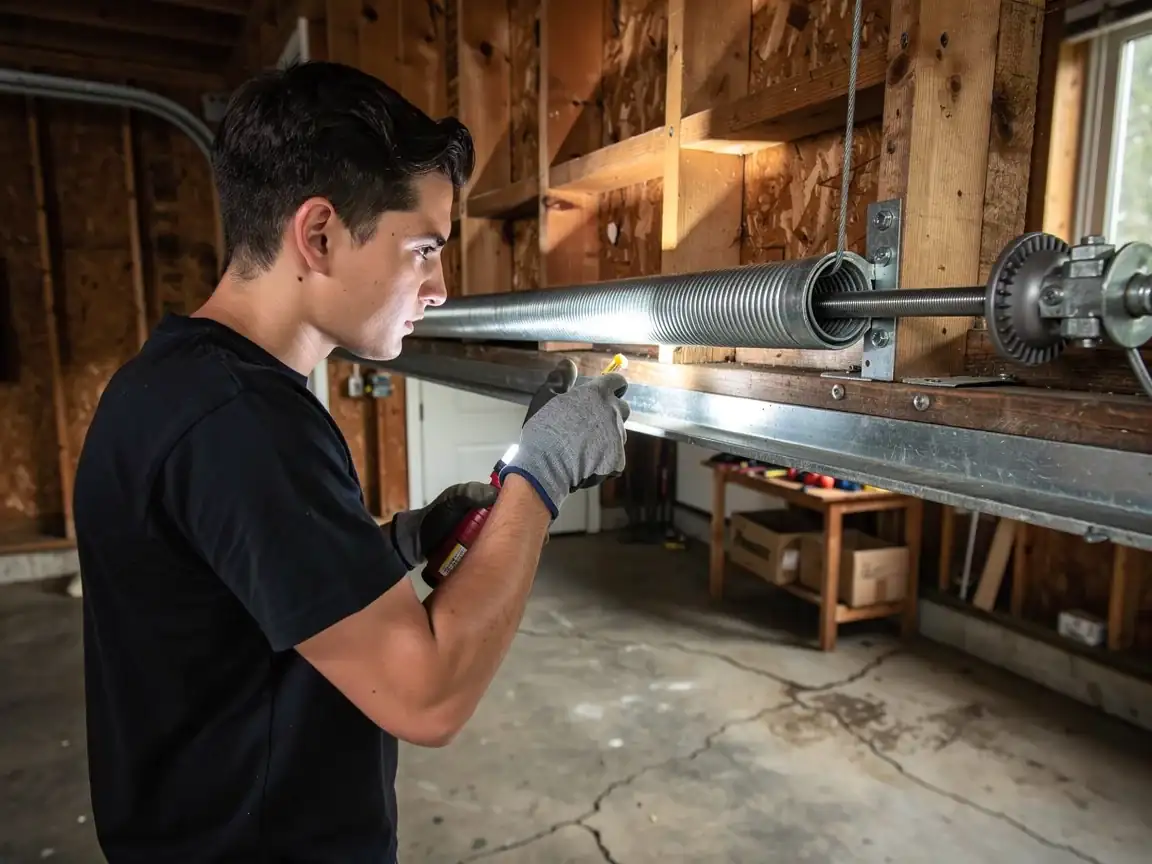
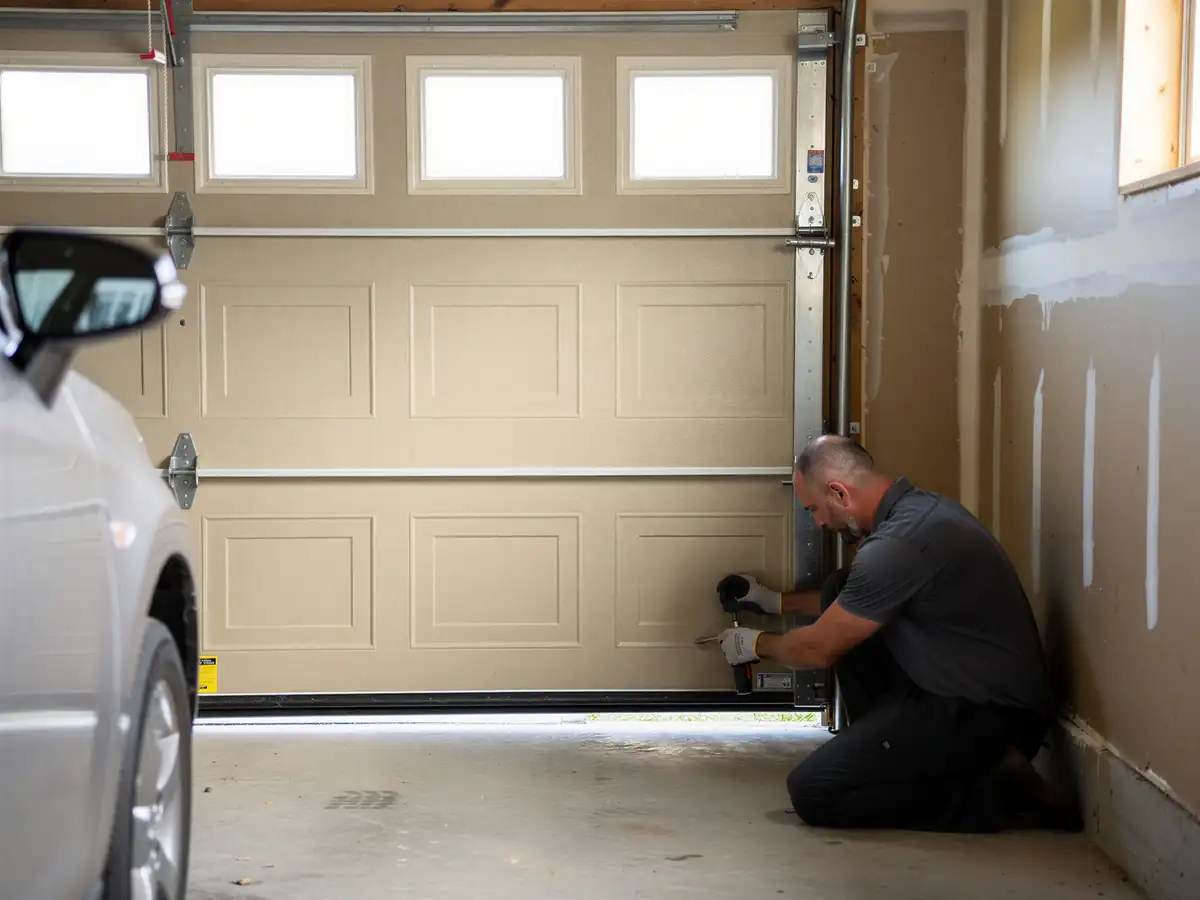
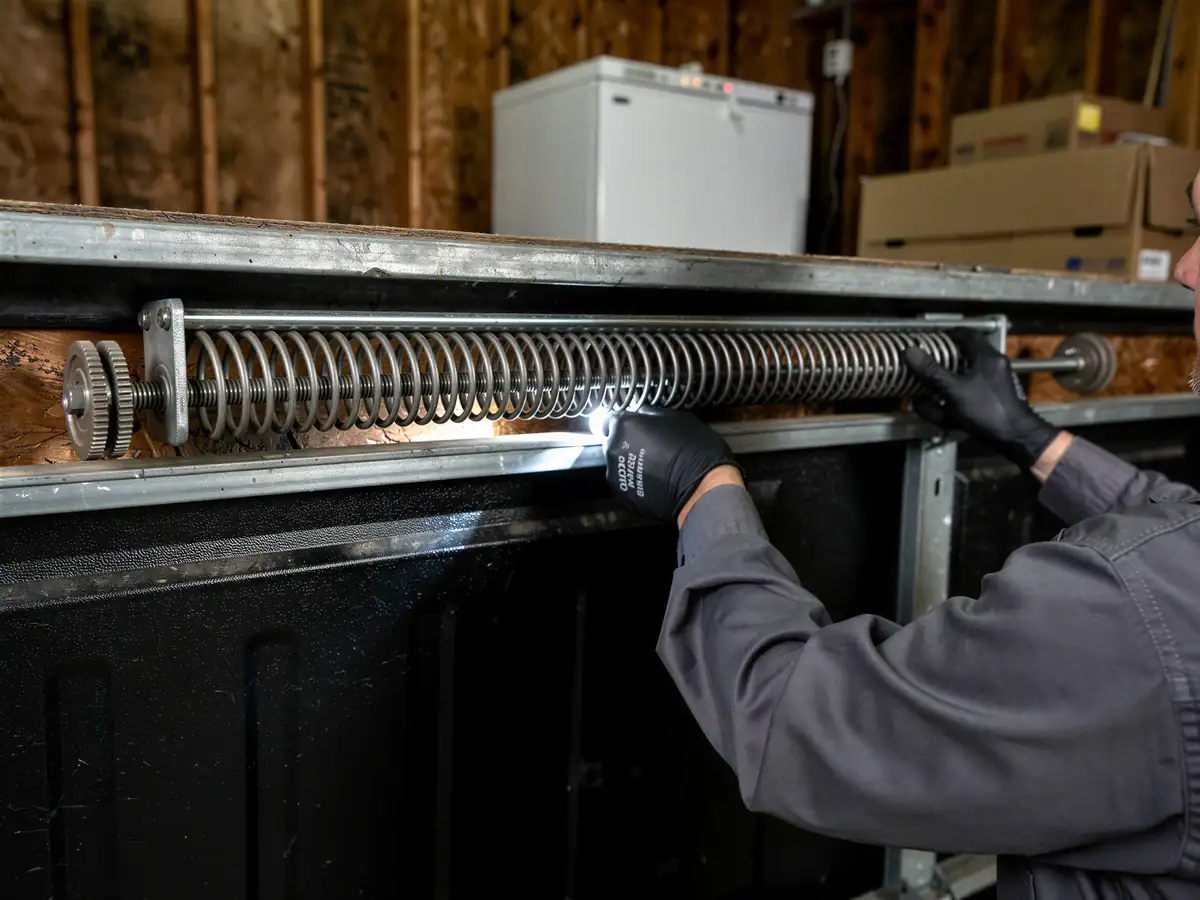
Swapping a single roller on a garage door is within reach for a careful homeowner if the door is down, the opener is unplugged, and the spring tension isn't touched. The trouble on a 1978-era door is that the roller often isn't the only worn part - the hinge or the track mounting bracket can be worn too, and replacing a roller without checking those just moves the noise, not fixes it. We don't recommend working near the bottom rollers on a door with the spring still under tension, and on an older door you often can't tell how much tension is stored without taking the door apart. If the roller nearest the spring side is the one failing, that's where we'd tell most people to stop and call rather than finish the job themselves.
Parts We Carry
We stock standard nylon rollers and common steel rollers on the truck, along with the matching stems and clips for most residential door weights. Green Hill is about five miles out from our Hendersonville base, so for a standard roller job we're not usually waiting on parts beyond what's already on board. Where we do order ahead is for heavier-duty rollers on oversized or commercial-style doors, or for a hinge-and-roller combination that's been discontinued on an original 1978 setup - those aren't common, but they come up on houses that have never had the hardware updated. If your door needs one of those, we'll tell you before the truck rolls, not after.