What Can Go Wrong
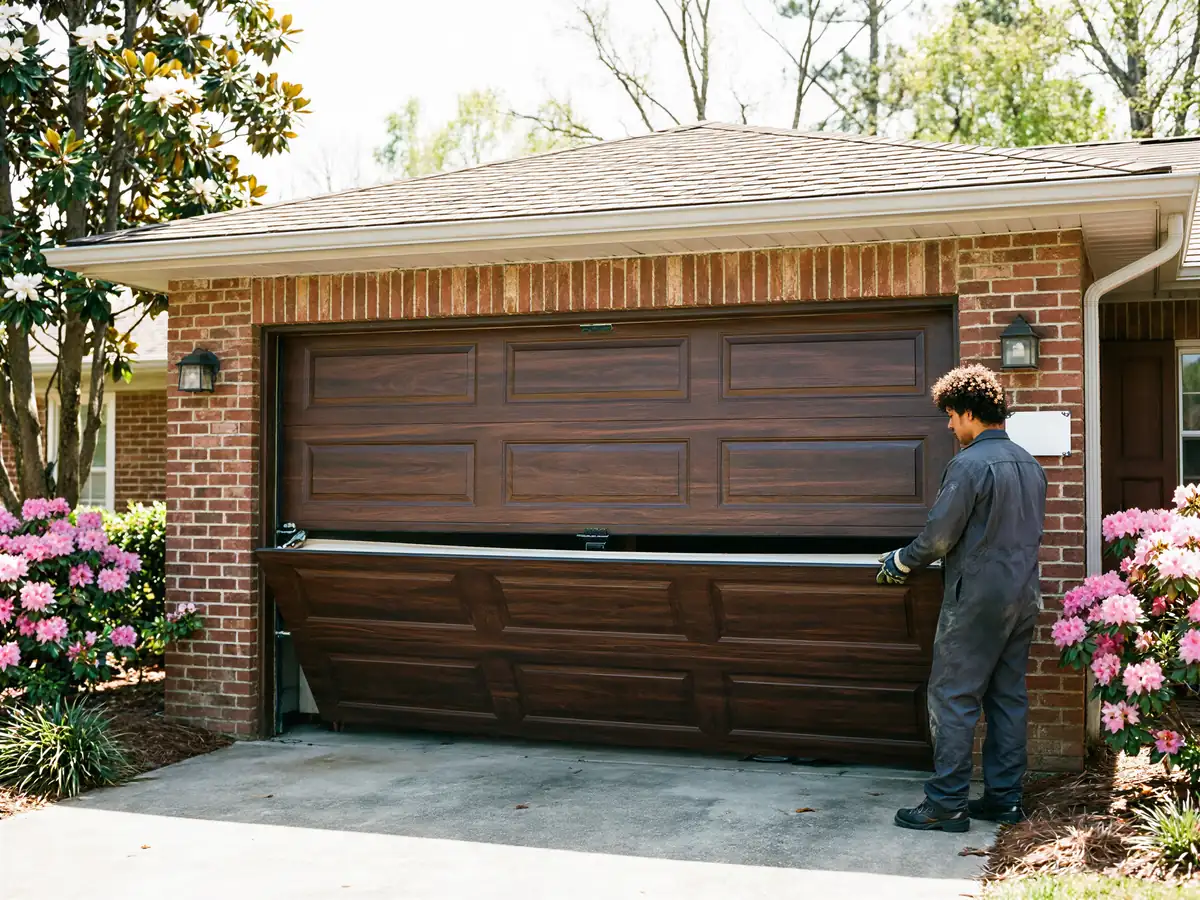
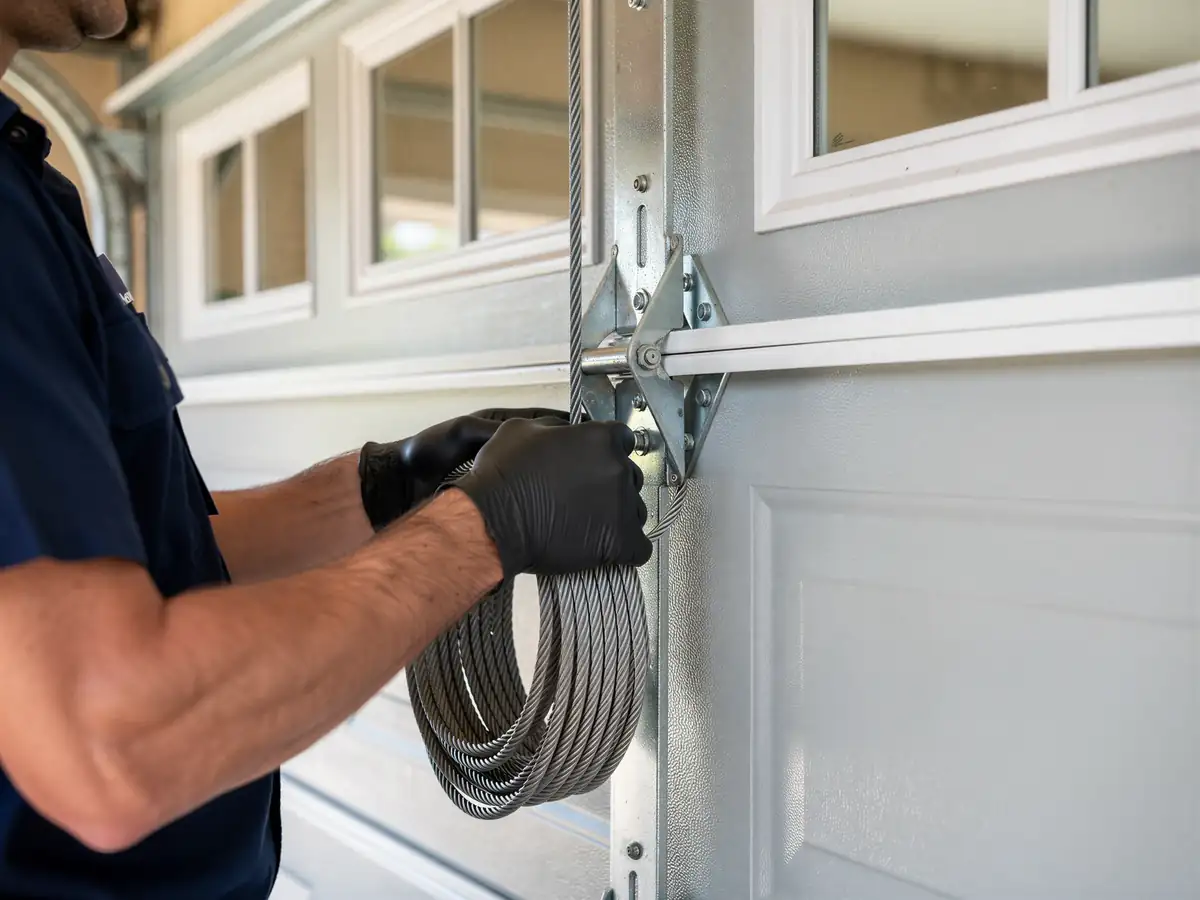
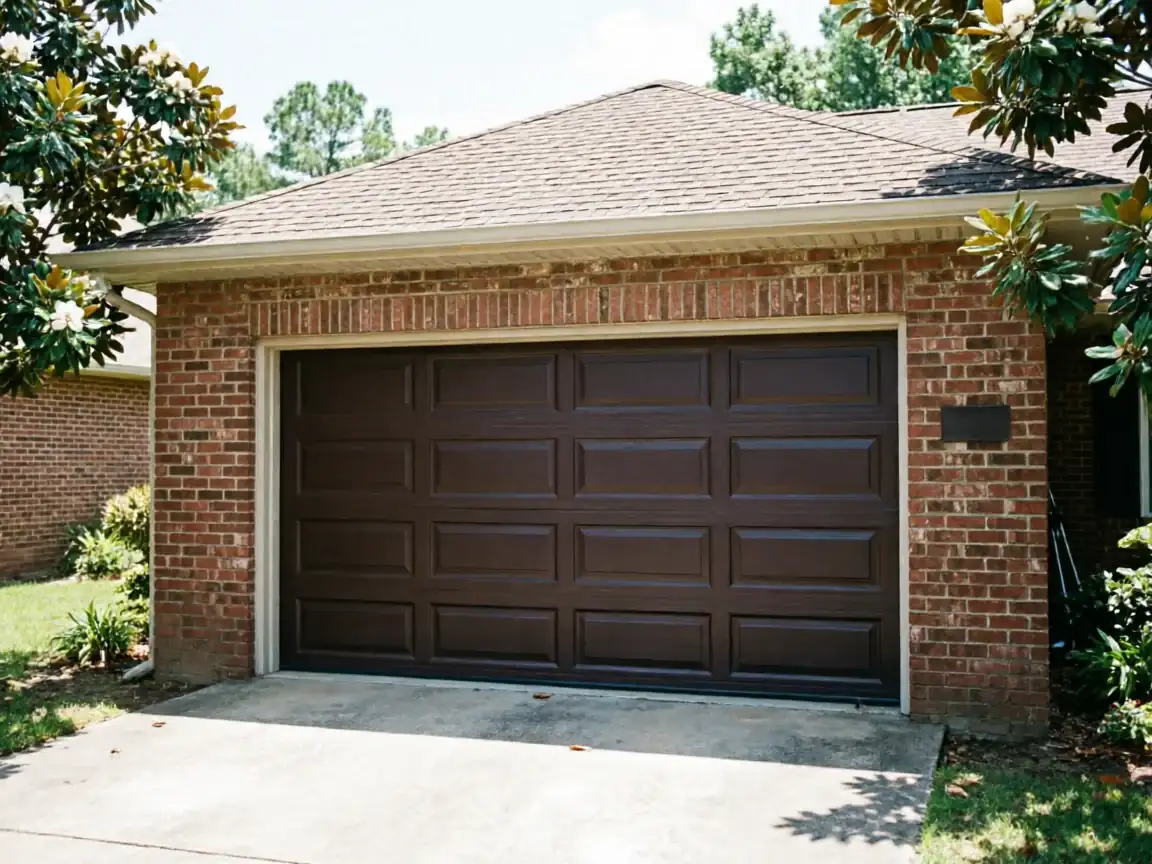
Most houses in Green Hill went up around 1978, which puts the garage doors here a decade or more ahead of the newer stock you see closer to Hendersonville. That matters because a door from that era is almost always a single-layer steel panel, no insulation foam sandwiched inside, hung on a torsion spring sized for a lighter door than what builders use now. Over forty-plus years that spring has cycled tens of thousands of times, and the galvanized coating on the original cable has had decades to work-harden and fray at the drum. The usual failure is a snapped torsion spring or a cable that's shed strands near the bottom bracket. Rollers on these older doors are frequently the nylon-sheathed steel type from the original install, not the sealed ball-bearing rollers sold today, and they wear a groove into the track that makes the whole door ride rough long before anything snaps. Openers in homes this age have usually been swapped once already, but the original header bracket and track hardware often haven't been touched since the house was framed.
How It Shows Up
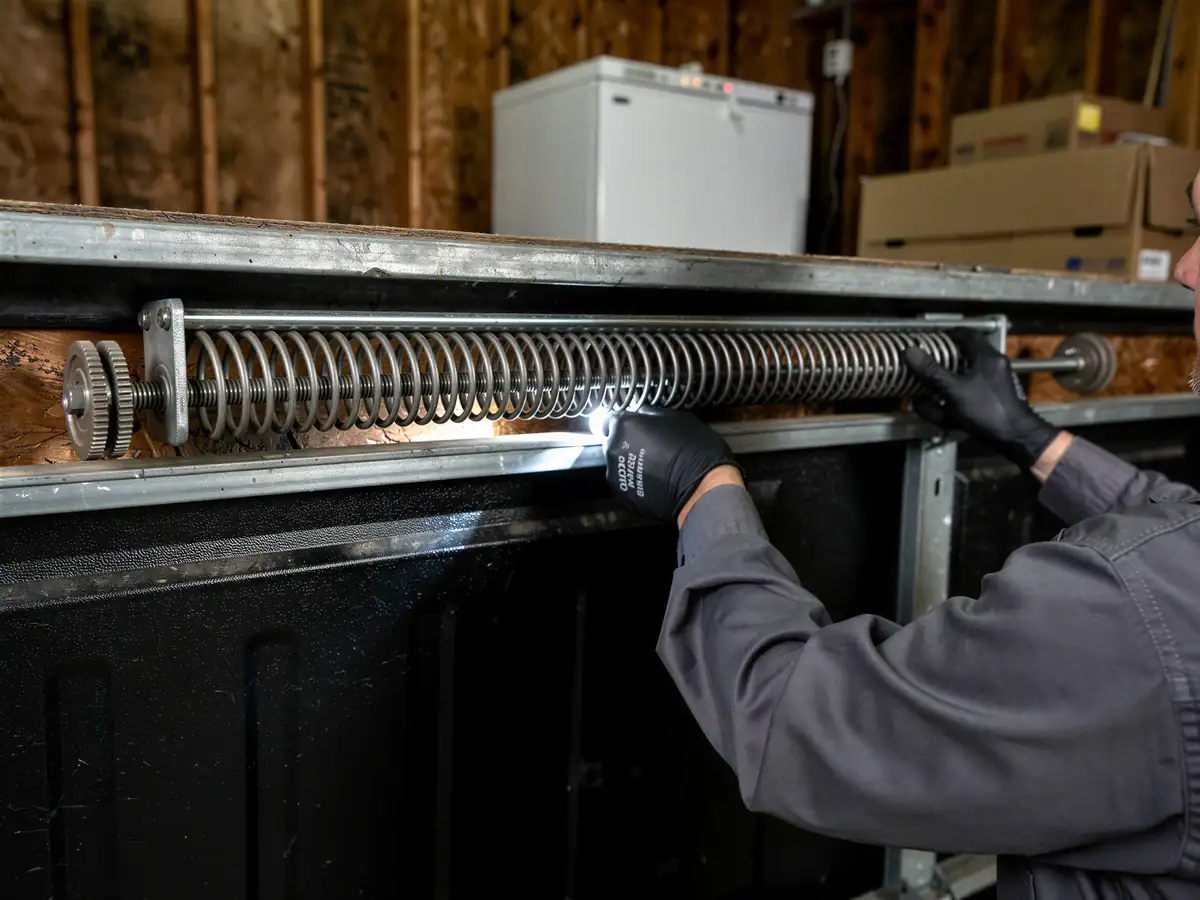
On a torsion spring that's going, you'll usually hear it before you see it: a loud bang from the garage, often when nobody's touched the door, as the spring lets go under tension. After that the door won't lift on the opener, or it lifts a few inches and stalls because the opener motor alone can't carry the dead weight a spring used to handle. Fraying cable shows up differently, as a door that runs crooked, drops unevenly on one side, or binds partway through the cycle. Track wear from original rollers tends to announce itself as grinding or a scraping sound along one rail rather than a sudden stop. Given the age of the housing stock here, we see more of the spring-and-cable failures than opener electronics, which tend to fail first in homes with newer doors.
The DIY Question
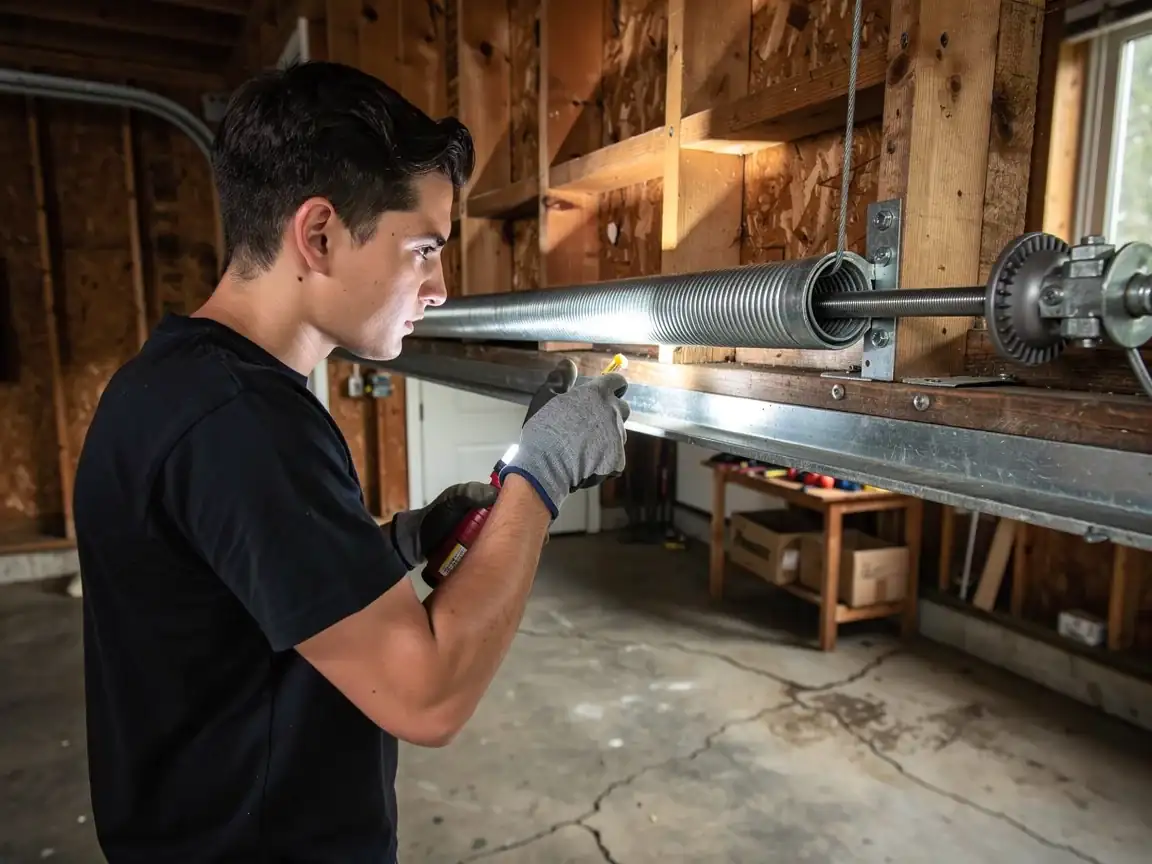
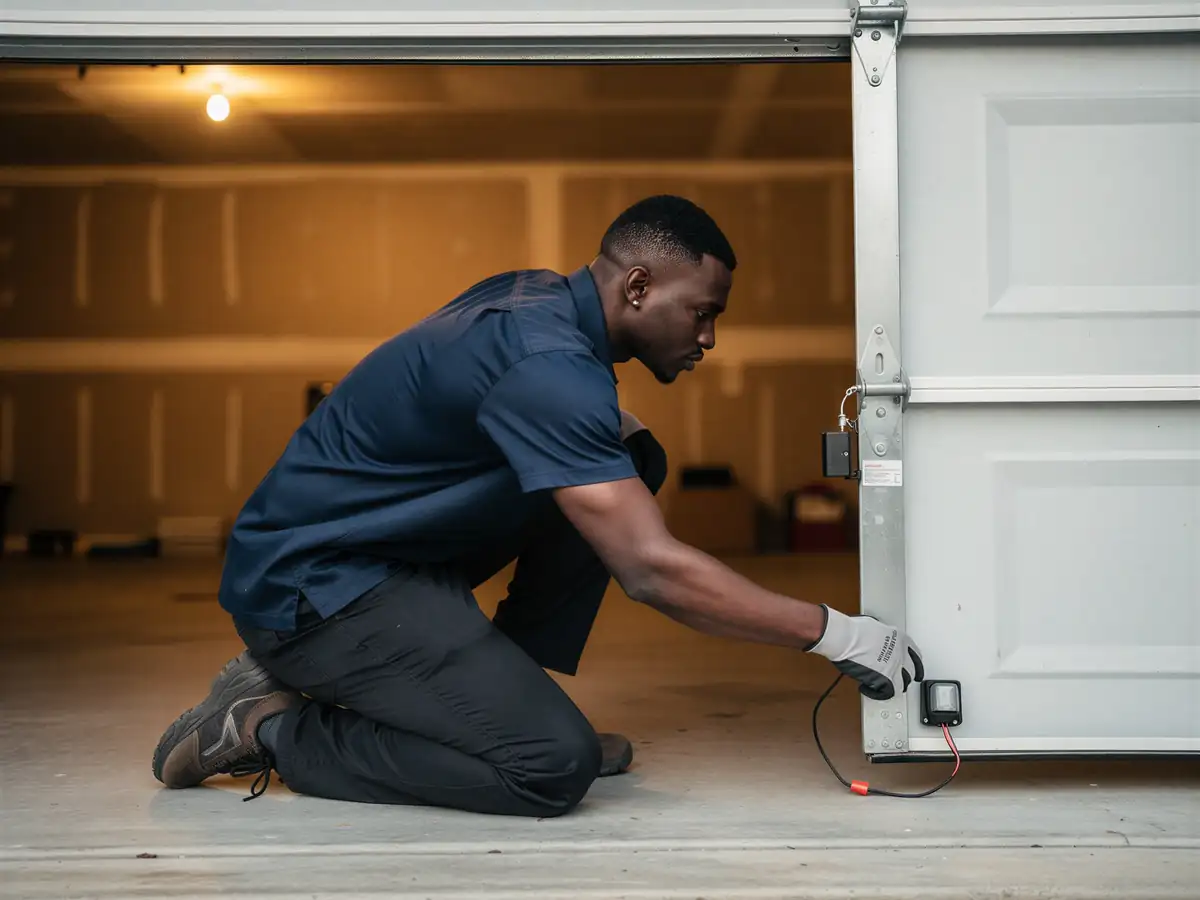
Replacing a torsion spring yourself is the one repair on this list we'll tell you flatly not to attempt. The spring on a door this size holds enough stored energy to break bones, and the winding bars and clamps needed to do it safely aren't something most homeowners keep in a drawer. Tightening a loose track bolt or clearing a dirty roller track, on the other hand, is reasonable for most people with basic tools, and you won't hurt anything trying. Where we draw the line is anything involving the spring, the cable under tension, or the bottom bracket, since a slipped winding bar on a 1970s-size spring does the same damage regardless of who's holding it.
Parts We Carry
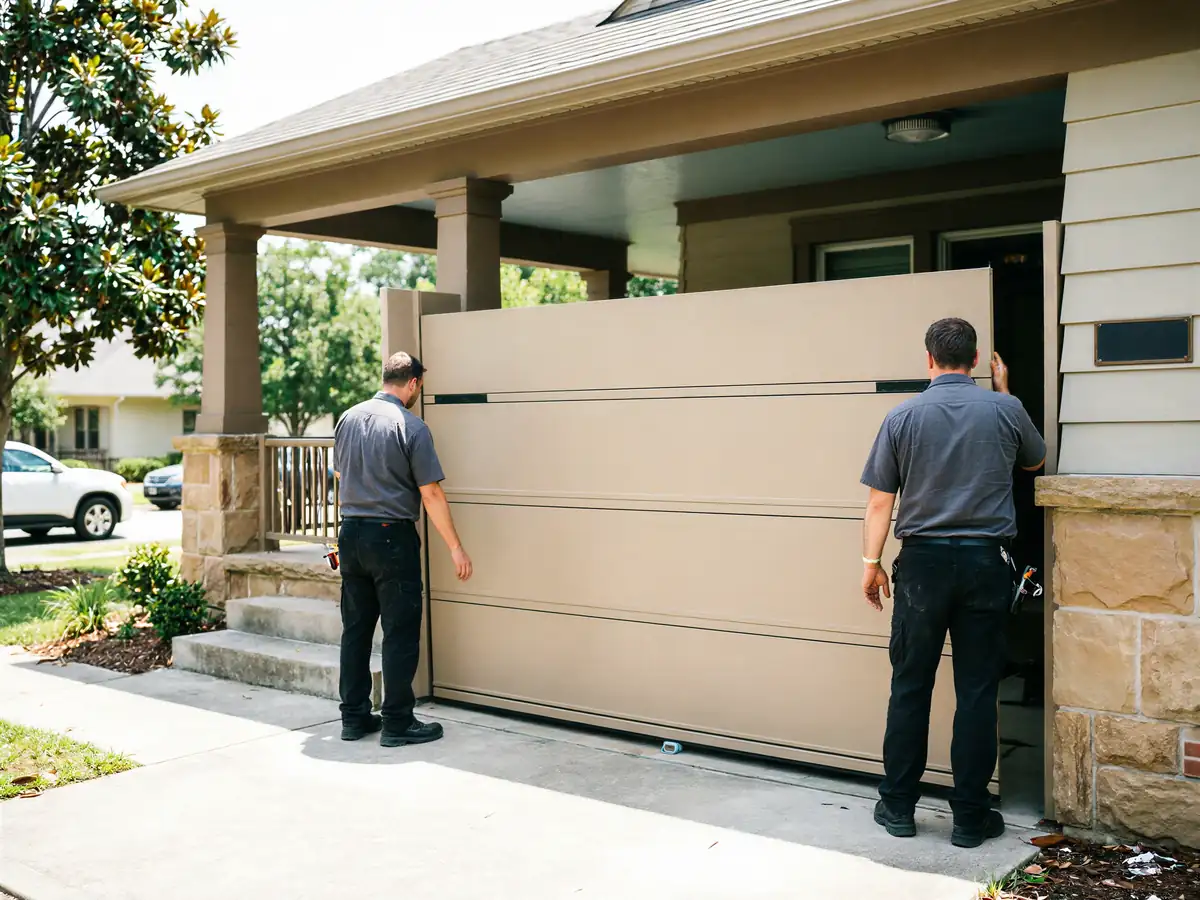
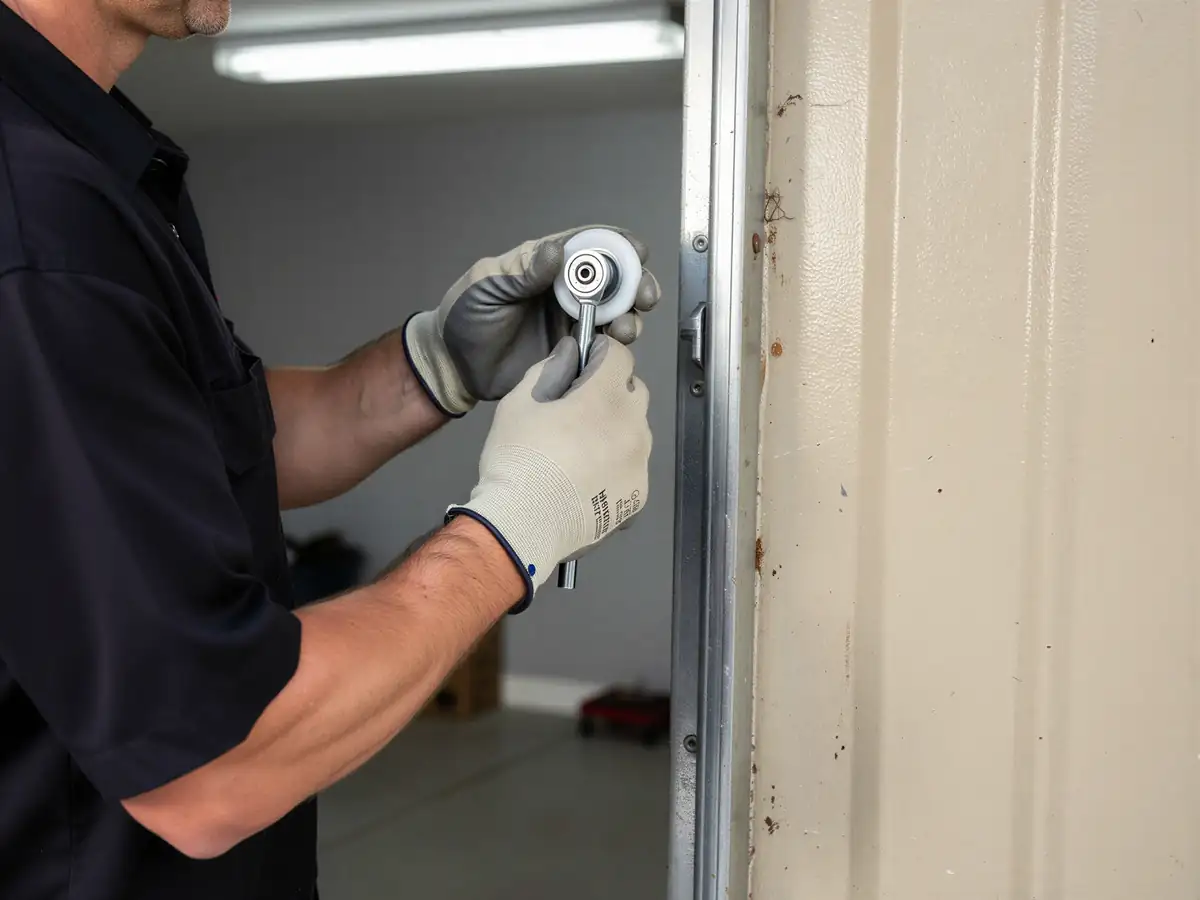
For a door built around the Green Hill median year, we stock torsion springs in the sizing common to late-1970s single-layer steel doors, galvanized lift cable, and steel drums to match. We also carry standard nylon rollers as a direct swap for the original roller type on doors this age, plus the track hardware and header brackets that tend to need replacing alongside a spring on a door that's never had the track reset. What we don't stock on the truck are custom-width panel sections for doors with discontinued sizing, since those are special-order through the manufacturer and take longer regardless of who's doing the install. We travel to Green Hill from Hendersonville, about five miles away, for all of the above.