What Can Go Wrong
Green Hill runs a median household income of $91,397, noticeably higher than the $82,308 median across the wider service area we cover out of Hendersonville. That number matters for one reason: at this income level, a lot of homeowners here default to replacing a whole door when a single dented or rusted panel would do. The math usually doesn't support that. A section of steel or aluminum, matched to the existing door, costs a fraction of a full replacement and gets the job done in one visit.
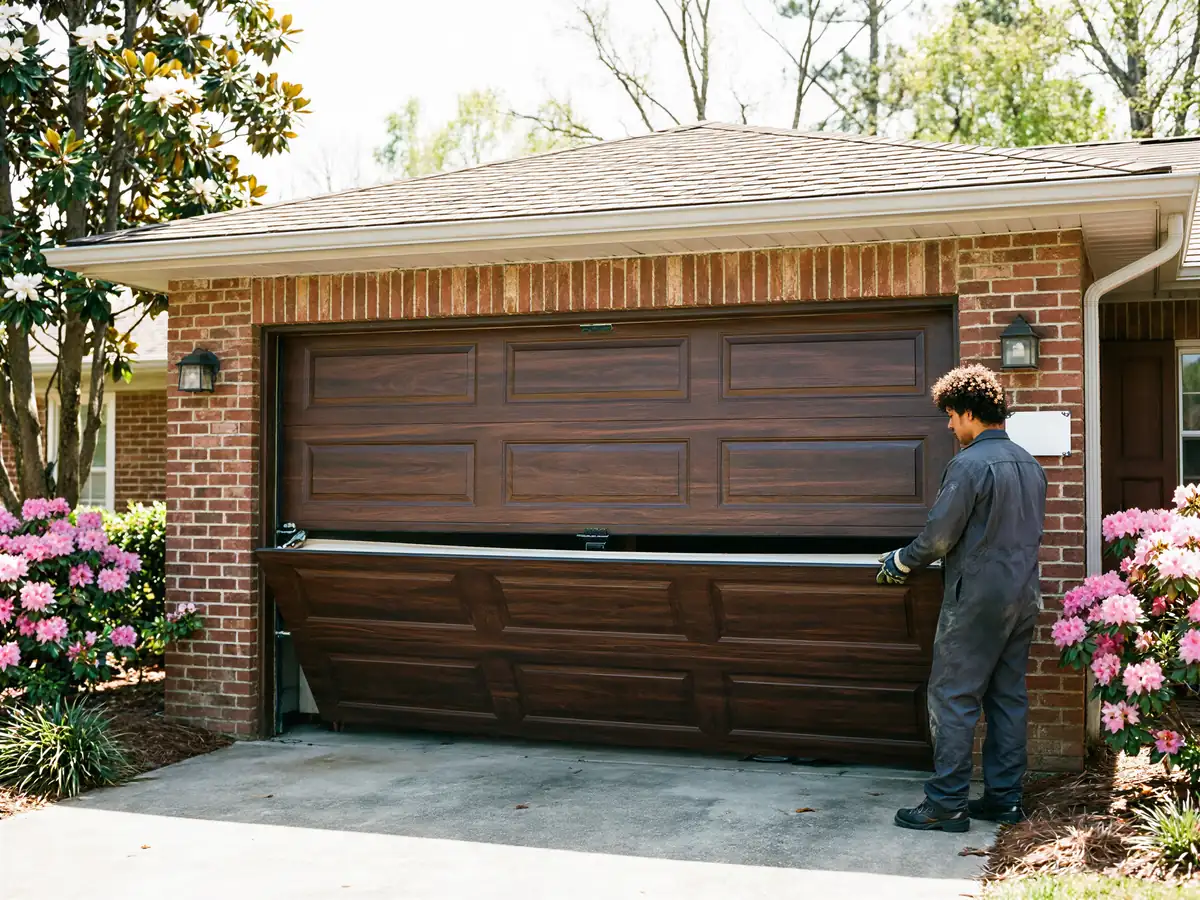
What actually fails on a panel in this town: a car bumper or a stray basketball puts a dent in the bottom section, hinges pull loose from years of flexing, or the paint and galvanizing wear through on a section that's taken decades of weather. On doors this old, you'll also see hairline cracks along the panel seams where the steel has fatigued from repeated opening and closing.
The honest limitation: if more than two or three sections are damaged, or if the door's track and hinge layout has drifted out of spec from age, panel swap stops making sense. At that point we tell you straight that replacement is the better dollar.
How Long It Takes
Most homes in Green Hill went up around 1978
Which puts the housing stock here ahead of the broader area's 1958-2005 build-out with its 1990 median. That earlier build year means doors and tracks that predate a lot of the standard panel sizing used industry-wide after the late 1980s. Matching a single section isn't always a same-day grab off a shelf truck.
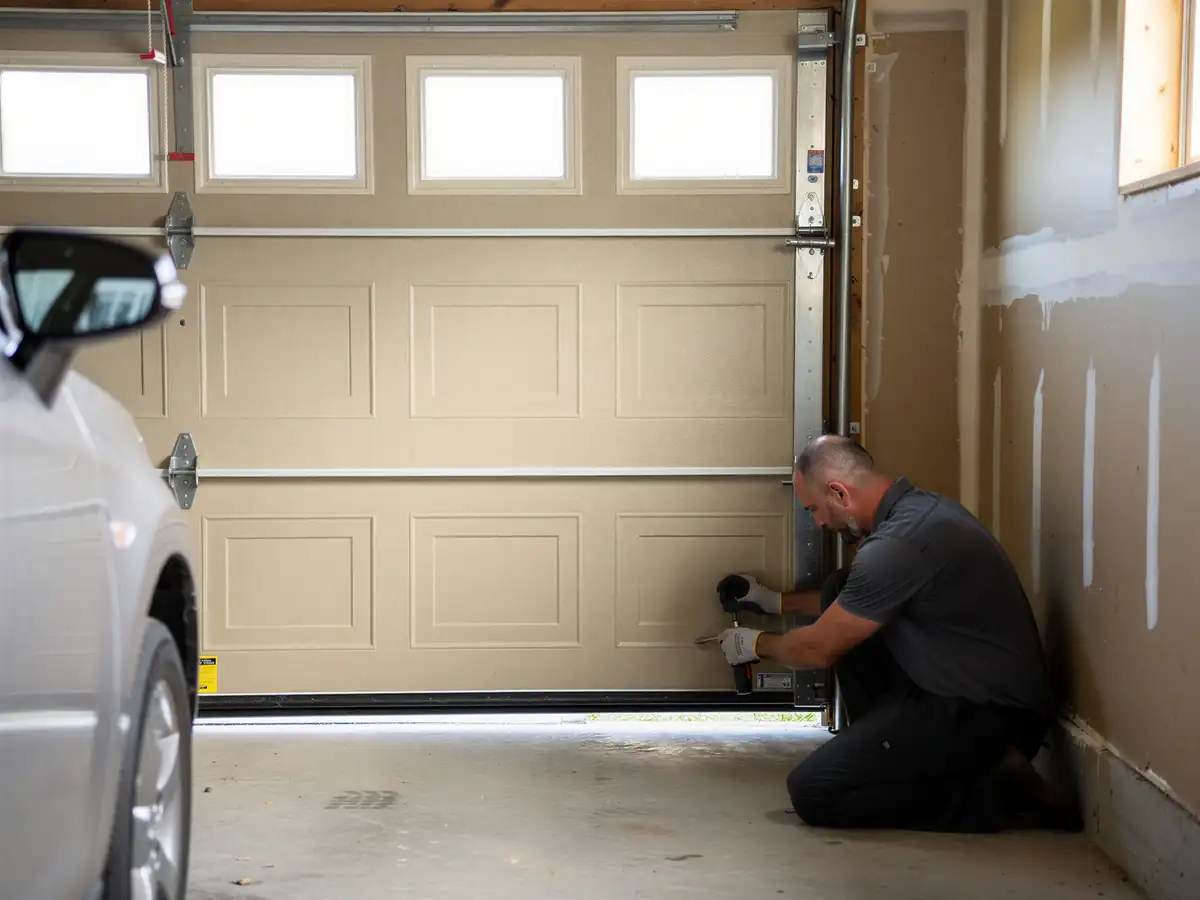
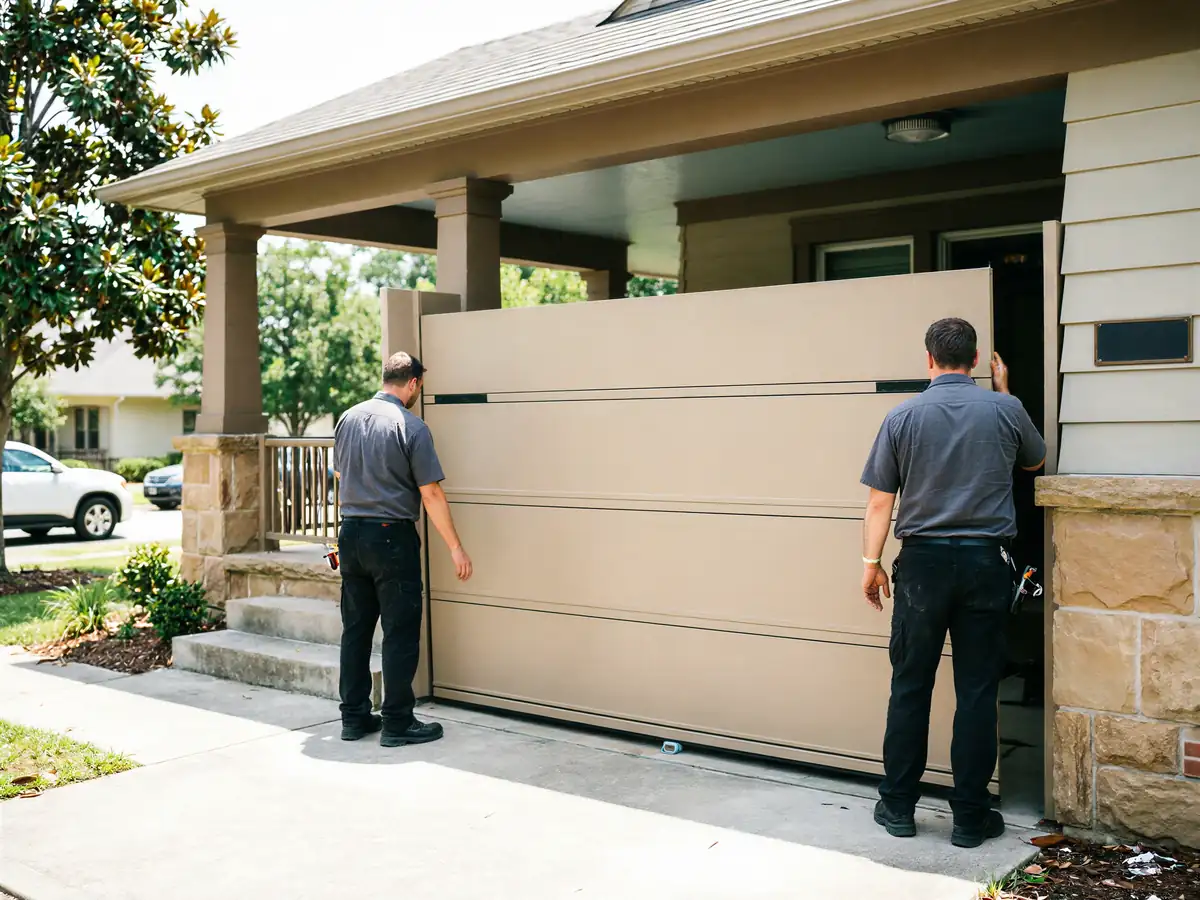
When the panel size and profile match current stock, a swap is a half-day job
Pull the damaged section, transfer hardware, reset the track. When it's an older, less common panel height or a discontinued finish, we may need to order the section before we come out, which adds lead time. We travel the 5 miles from Hendersonville for both scenarios, but we're straight with you on the phone about which one you're looking at before we schedule anything.
- 5 miles
How It Shows Up
On a 1978-era door, panel failure rarely announces itself as a sudden break. It shows up as a visible dent that keeps the door from sealing flush at the bottom, a section that's started to bow outward under its own hinges, or rust blooming along a seam where moisture has sat for years. Sometimes it's quieter: the door runs rough on one side because a warped or dented panel is dragging slightly in the track, putting uneven load on the opener and the cables.
In a town of 2,508 households, most of them sitting on doors from roughly the same era, we see the same handful of failure patterns repeat: bottom panel damage from backing into the door, mid-panel dents from stored items falling against it, and finish failure on the sun-facing side of the door where paint and galvanizing give out first. None of this is dramatic. It's wear, showing up exactly where thirty-plus-year-old steel wears.
The DIY Question
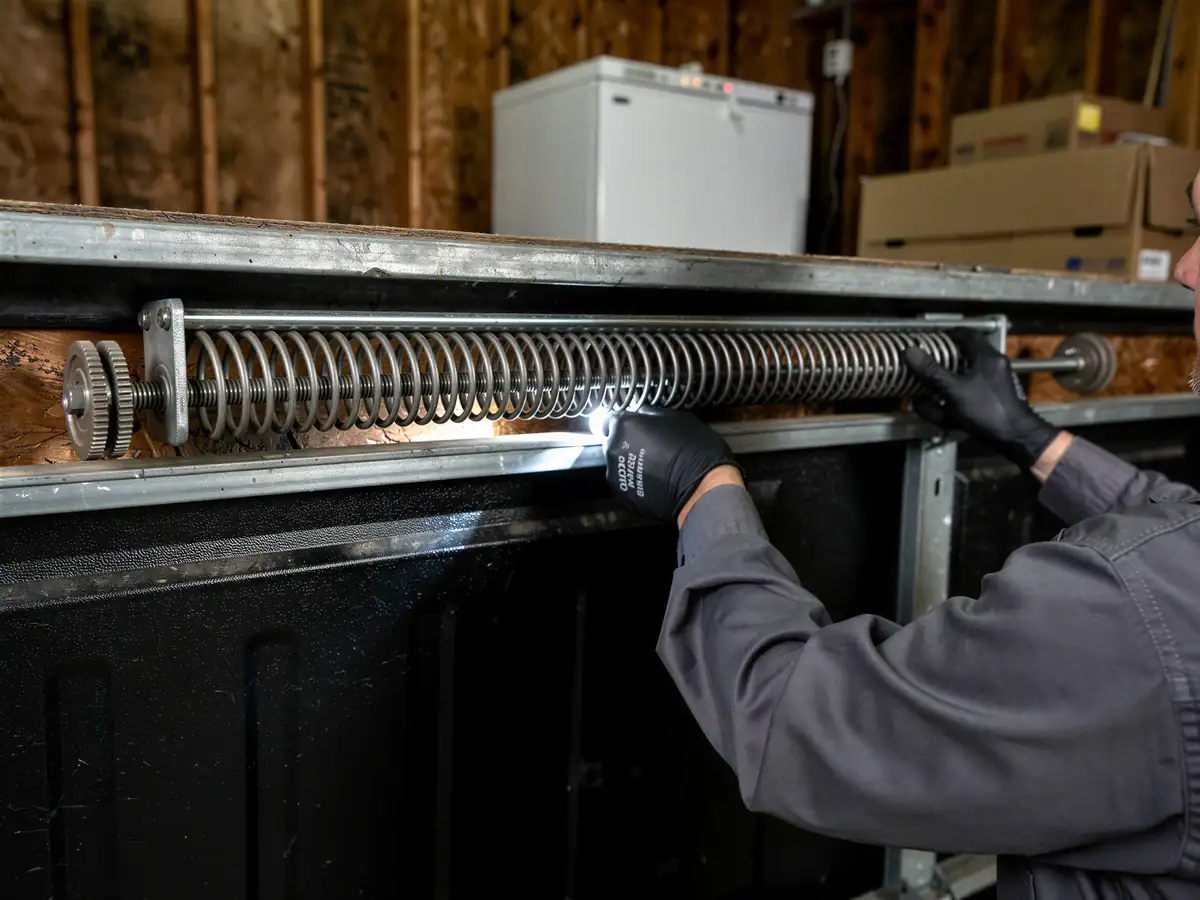
A homeowner who's handy can sometimes pull a single bolt-on panel and swap it without calling anyone, provided the door uses standard hinge spacing and the replacement section is an exact match. Where it goes wrong fast: torsion spring tension stays on the door the whole time you're working, and on an older door the spring and cable setup may not match what's sold with newer replacement kits.
Given the age of the housing stock here, mismatched hardware is the real risk, not the wrench work itself. If the section you buy doesn't sit flush with the existing panels, you're now running a door with uneven stress on one hinge, which shortens the life of the whole assembly. We'd rather you ask before you order a part than after.
Why This Fails Locally
The failure pattern in Green Hill traces straight back to build year
A door installed around 1978 was built to a panel spec and gauge of steel that newer doors don't use. Replacement sections sold at most suppliers today are sized for the 1990s-and-later stock that makes up the bulk of the wider area's 59,366 households and 34,671 owner-occupied houses. Green Hill sits on the older end of that range, which means a panel match here is more likely to require a specific order than a shelf pull.
- 59,366 households
- 34,671 owner-occupied
Climate plays a secondary role
This area sits in a cold-moderate band, which means freeze-thaw cycling on any section where water collects behind a dent or along a seam. On a panel that's already thirty-plus years old, that cycling accelerates rust at the exact spots where the steel has already fatigued. It's not a dramatic failure, just a slow one that catches up with doors of this specific age faster than it does with newer stock elsewhere in the area.
Parts We Carry
We stock common panel sections and hardware sized for the 1980s-90s stock that makes up most of the broader service area, which covers a good share of jobs here too since plenty of Green Hill doors were replaced once already since 1978. What we don't keep on the truck is a match for every original-spec panel from the late 1970s; those sometimes need a short order before the job gets scheduled.
We carry matching hinges, rollers, and end caps for standard panel widths, along with primer-matched and pre-finished steel sections in common colors. If your door takes a less common size, we'll tell you that on the first call, not after we've shown up. For the full rundown of what we handle out of Hendersonville, see our panel replacement page or check coverage for Green Hill.