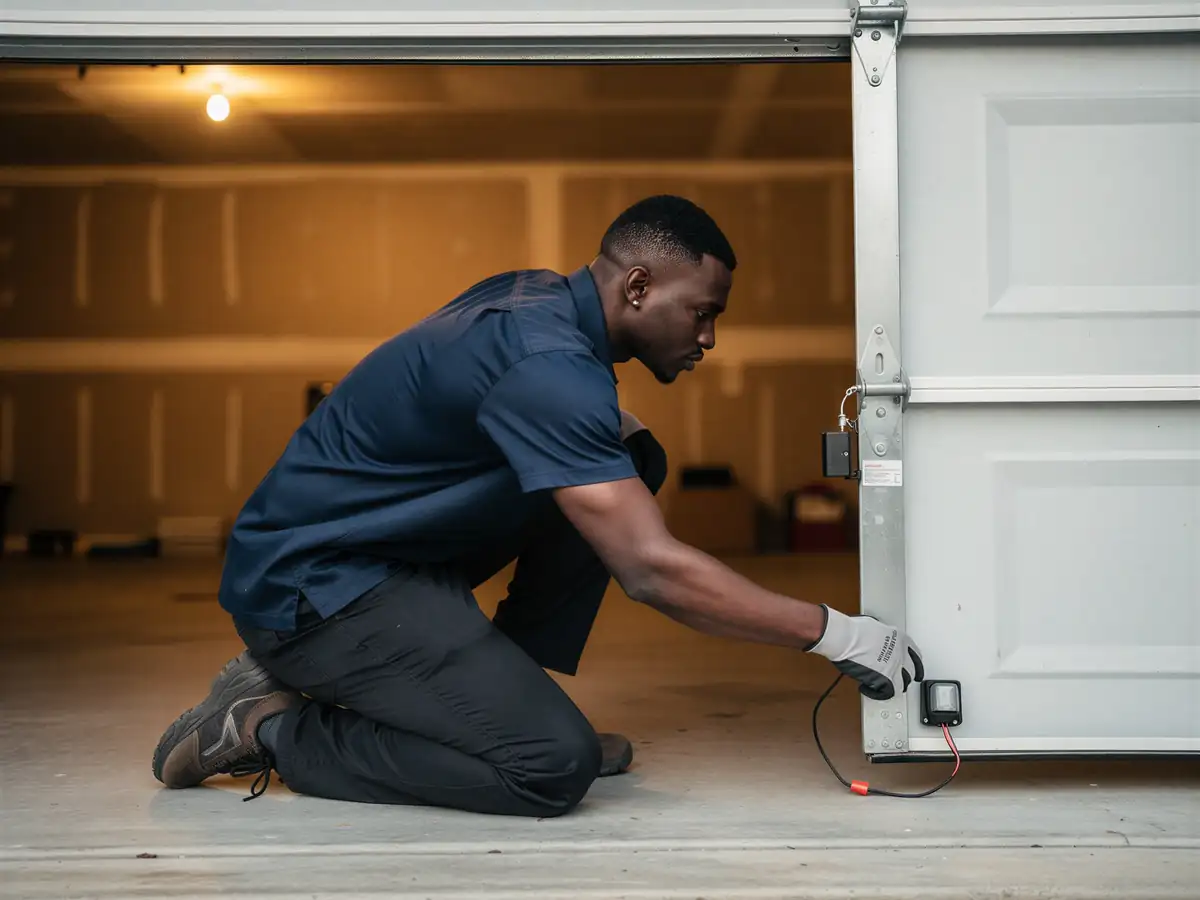
What Can Go Wrong
Green Hill is a small pocket - about 2,508 households, nowhere near the size of the wider service area we run out of Hendersonville (59,366 households across the territory). That size matters for maintenance work: a town this compact has a narrower band of ages and door types, which means the faults repeat in a predictable way instead of spreading across every era of hardware built since the 1950s.
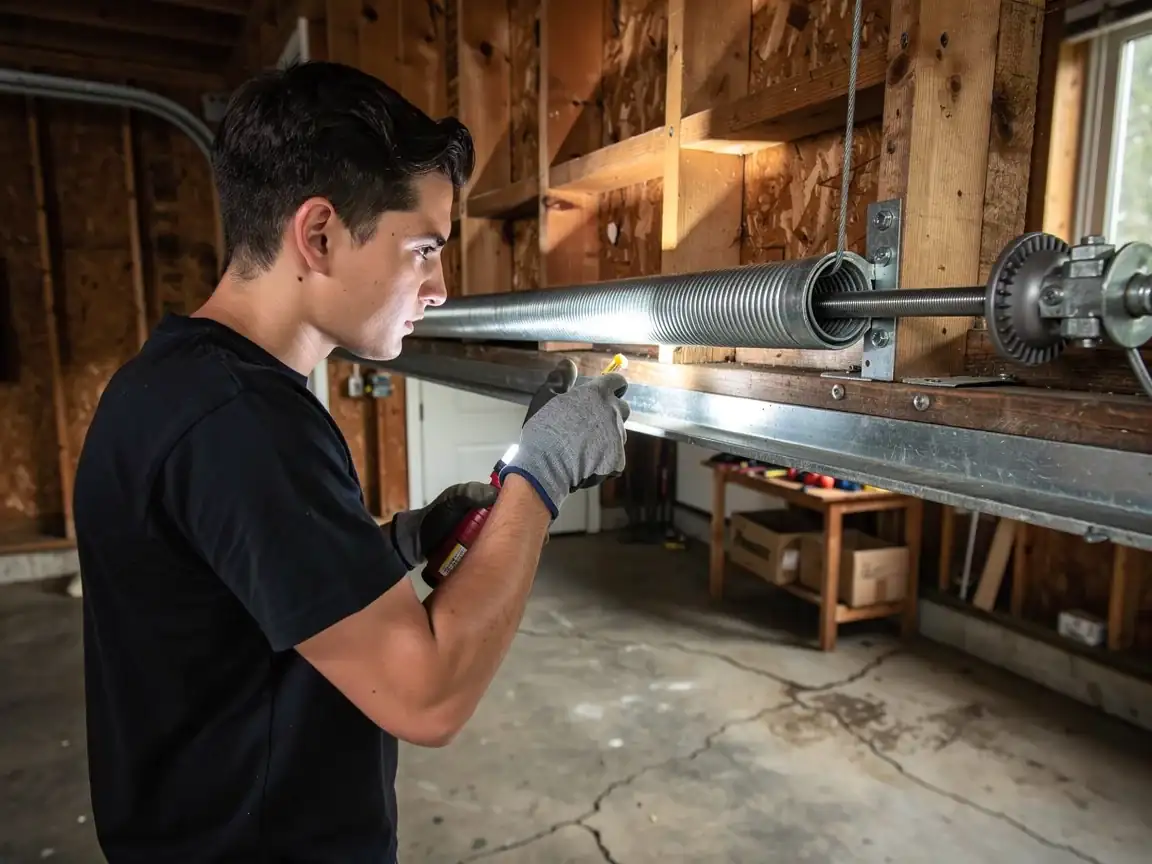
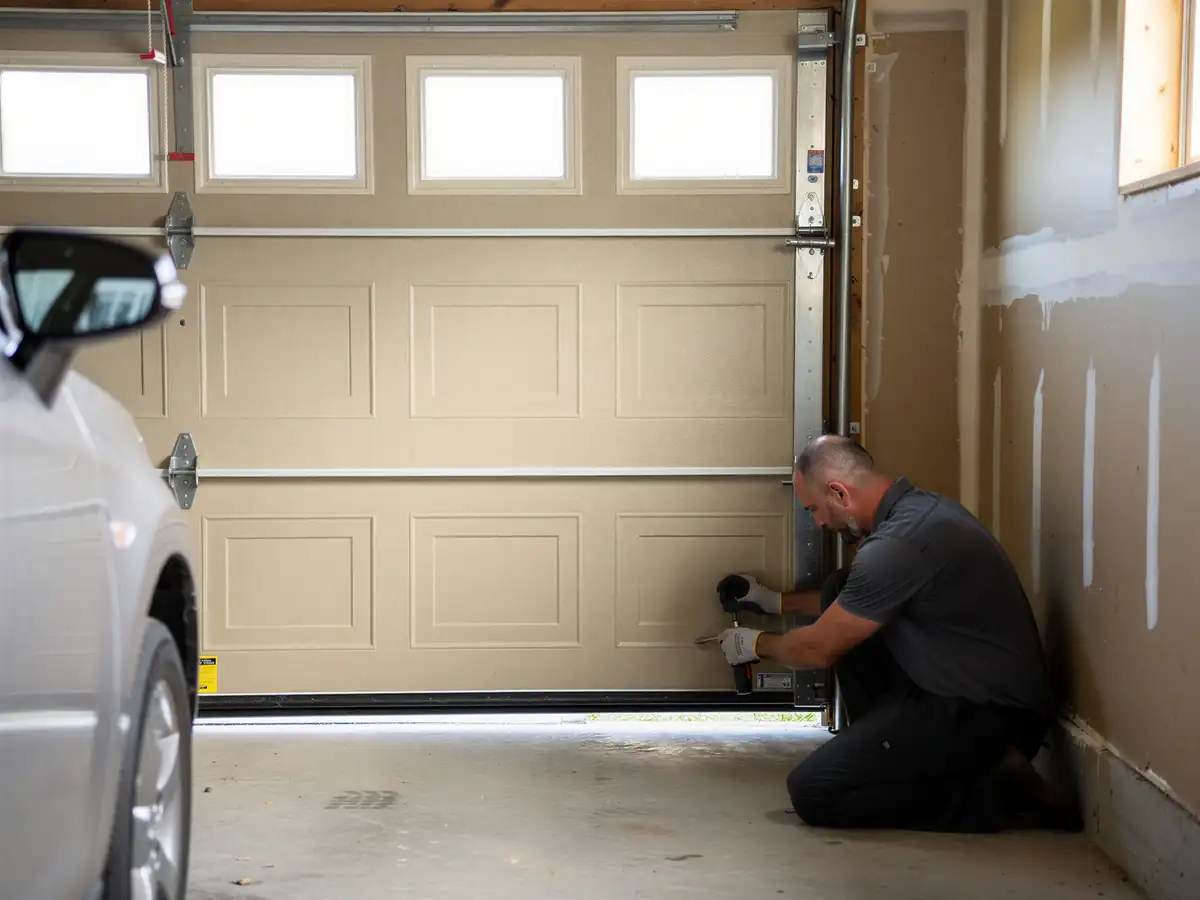
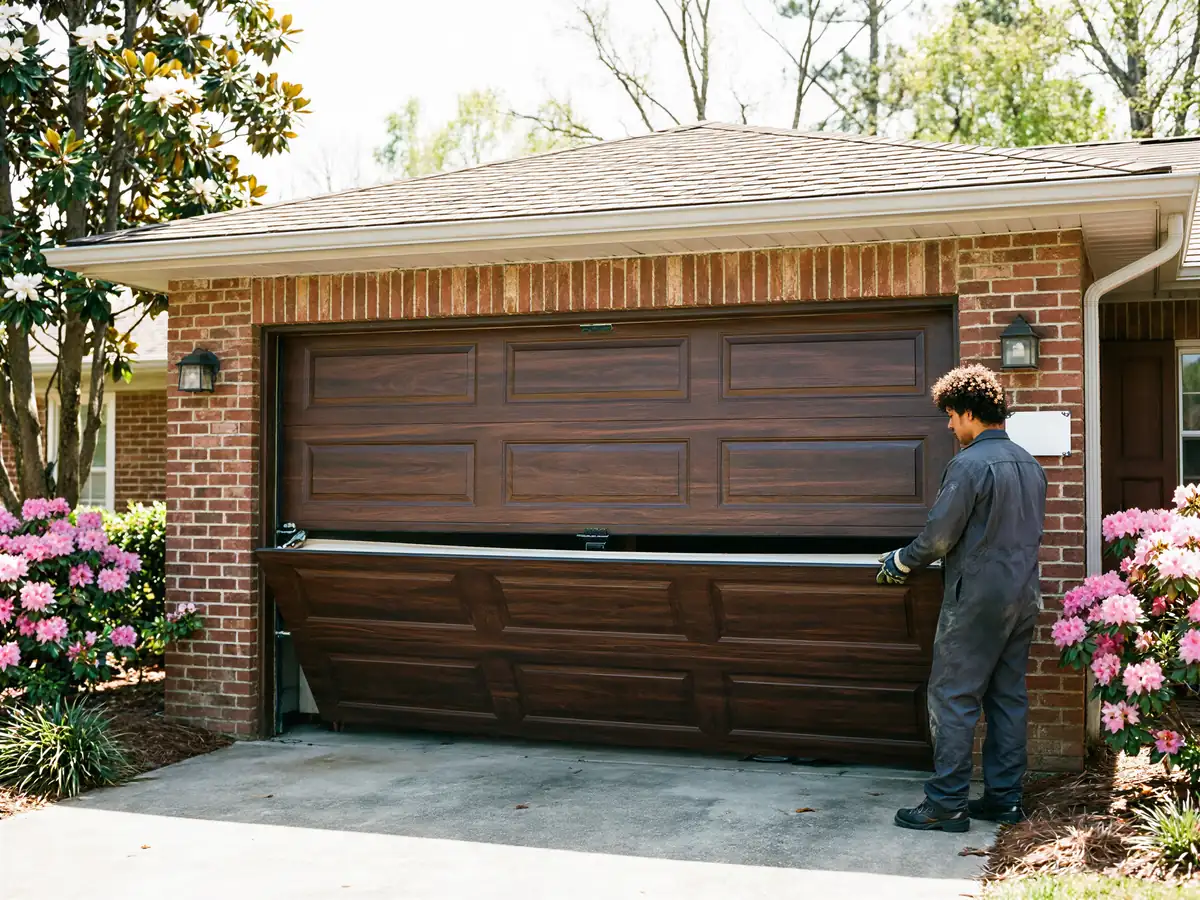
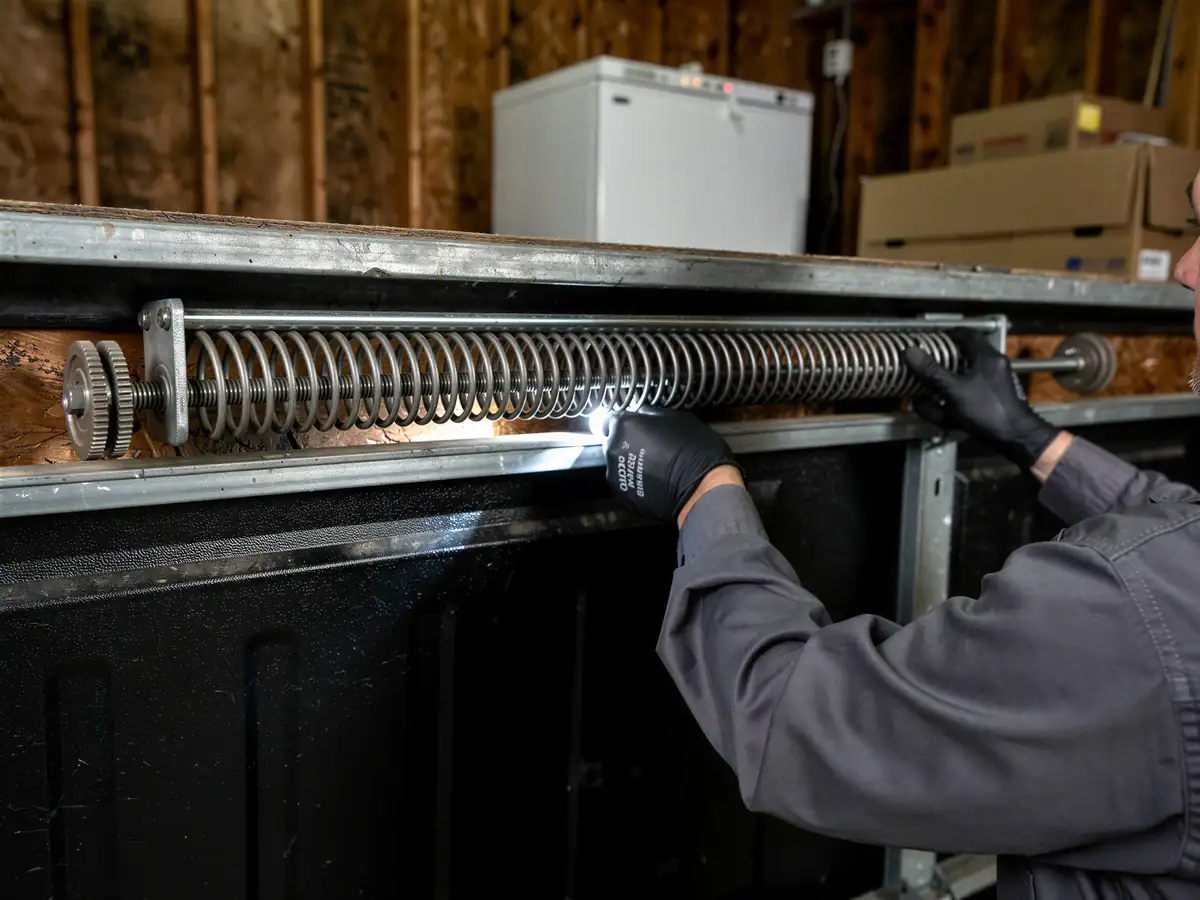
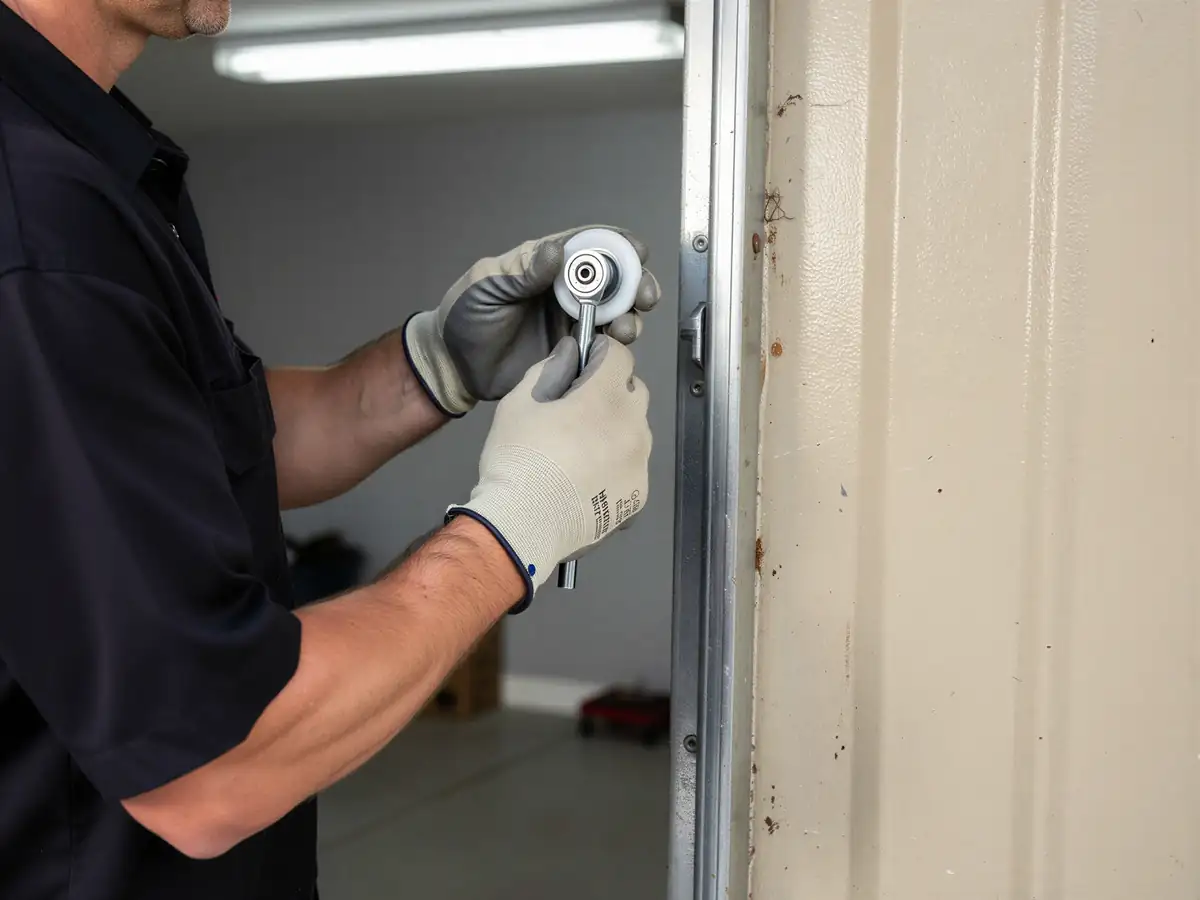
Here the median home went up around 1978, a good 12 years ahead of the 1990 median we see across the broader area. That earlier build year usually means the original torsion springs and openers have been swapped at least once by now, but the track and header hardware behind them is often still what went in at construction. On a door that old, the failure points are springs losing tension years before they snap, worn rollers rattling in tracks that were never resquared, and center hinges stretched from a couple decades of cycling. None of that announces itself with a loud bang - it shows up as a door that gets slower and louder every month until one day it doesn't open.
How It Shows Up
On a late-1970s door, the first sign is usually sound before it's function: a grinding roller, a scrape at the top of travel, or a spring that makes a flat clunking noise instead of a smooth release. Hendersonville-area households in this income bracket - Green Hill's median runs about $91,397, well above the $82,308 median for the service area overall - tend to catch these early and call before the door fails outright, which is the right instinct. The cold-moderate winters this area gets stiffen old grease and shrink metal tolerances just enough that a marginal spring or hinge that was fine in September quits in January.
The DIY Question
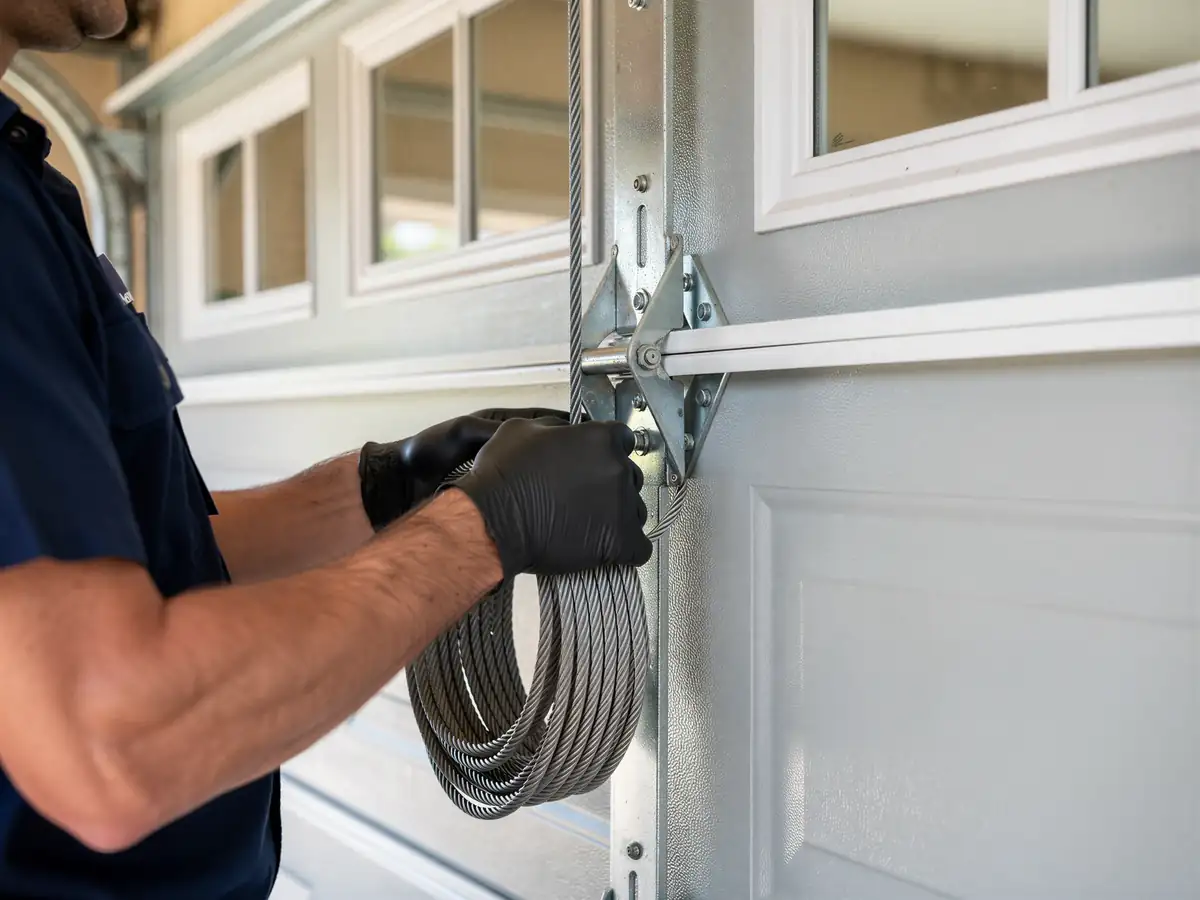
Lubricating hinges and rollers with the right garage door lubricant, and visually checking for frayed cables or a track that's pulled away from the frame, is reasonable homeowner work on any door. What isn't reasonable on a door built around 1978 is touching the torsion spring system - the tension on hardware that old can be inconsistent with what a torque chart for a modern spring would tell you, and the center bracket may not be rated the same way current brackets are. We won't pretend every call needs a truck. If your door is just noisy and still opens true, a can of the right lubricant and a visual check this weekend might be all it needs before you spend money on a visit.
Parts We Carry
We stock the rollers, cables, hinges, and standard torsion springs that cover most of what fails on doors across the Hendersonville service area, Green Hill included. Where we run into older hardware specific to a build like Green Hill's - a bracket style or a less common drum size from the late 1970s - that part sometimes has to be sourced rather than pulled off the truck, and we'll say so rather than force-fit something that doesn't match the original spec. That's the one honest limit here: a door this age occasionally needs a part that isn't a same-day item, and we'd rather tell you that than rush a fix that won't hold.